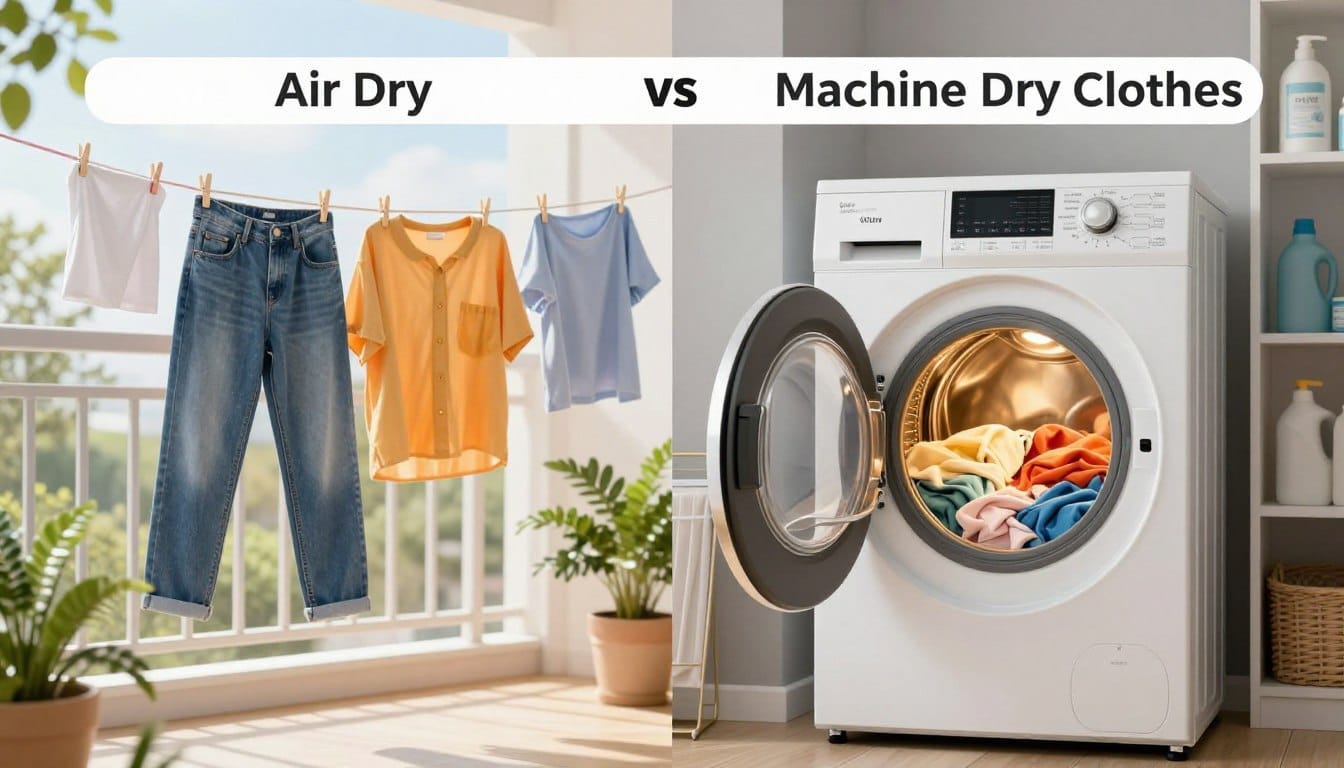
I get the tug-of-war: “air dry vs machine dry clothes” feels like a small but weighty decision when you face a pile of favorites. I stand with you in that quiet moment — wanting fresh garments, but not wanting to waste time or ruin a sweater.
Think of it like choosing a route home. One way saves energy and treats delicate fabric gently, but it asks for patience and space. The other is fast, handy, and great for towels, yet it can shrink items and wear fibers faster.
I’ll share practical tips that match your routine and priorities. You’ll get clear pros and cons on fabric care, energy use, and convenience. I’ll even link a few care tips you can try right away to keep favorites looking new: care tips.
Key Takeaways
- Line-drying saves energy and preserves delicate fabrics.
- Tumble drying is fast and useful for bedding and towels.
- Mix methods to balance time, wear, and space.
- Proper drying prevents mildew, discoloration, and odors.
- Small habits — like right heat and quick checks — protect garments.
What you’re deciding between today
This choice boils down to what fits your schedule and what keeps your favorites lasting longer. I’ll walk you through simple trade-offs so you can pick what works for your week.
If speed matters, a machine can finish a full load in under an hour. That’s handy on damp or cold days when outdoor options aren’t reliable.
If you have a bit of time and room, air drying saves energy and treats delicate garments gently. Outdoor line drying also adds fresh scent and sunlight benefits.
Short on space? Try a foldable rack or hang a few items from a shower rod. Busy households often use a mix: bulky bedding in the machine and fragile pieces hung up.
| Factor | Quick pick | When to choose it |
|---|---|---|
| Speed | Machine | Morning rush or cold, wet weather |
| Fabric care | Air | Delicates, wool, and items that shrink |
| Space needs | Compact racks | Small apartments or limited drying area |
| Routine tip | Mix methods | Match load size to method; hang a few overnight |
Think about your week. Some days you’ll need speed; other times you can let a few pieces finish by morning. Build a routine you’ll actually follow, not an ideal one you can’t maintain.
Air drying: what it does well and where it falls short
Here’s why hanging items can save fragile pieces — and when it becomes a hassle. I’ll explain the benefits in plain terms and offer quick fixes for small homes and busy weeks.
Why gentleness matters
Air drying is gentle because there’s no tumbling to pull or rub fibers. That keeps many fabrics in shape and cuts shrinkage risk for wool, silk, and knitwear.
Less friction also means fewer static snaps and softer seams. If you treasure a sweater, this method helps it last longer.
Energy, freshness, and the environment
Using no electricity lowers your bill and trims your footprint on the environment. Outdoor sunlight can brighten whites and lift light odors without chemicals.
Common pain points and fixes
The trade-offs are real: jeans and heavy items take longer, and tight homes need clever solutions. A compact rack by a sunny window plus a fan speeds things up.
- Shake garments before hanging to cut stiffness.
- Air dry tees and delicates; put towels in a cycle so they don’t stay damp.
- Smooth seams while wet to reduce wrinkles.
Machine drying: speed, convenience, and the trade-offs
When you need results fast, the dryer is the household workhorse that gets the job done. It saves time and gives you reliable, year‑round performance for bedding, towels, and bulkier items.
High heat and tumbling help by fluffing fibers and reducing bacteria at higher temperatures. That’s why towels feel cozy after a cycle.
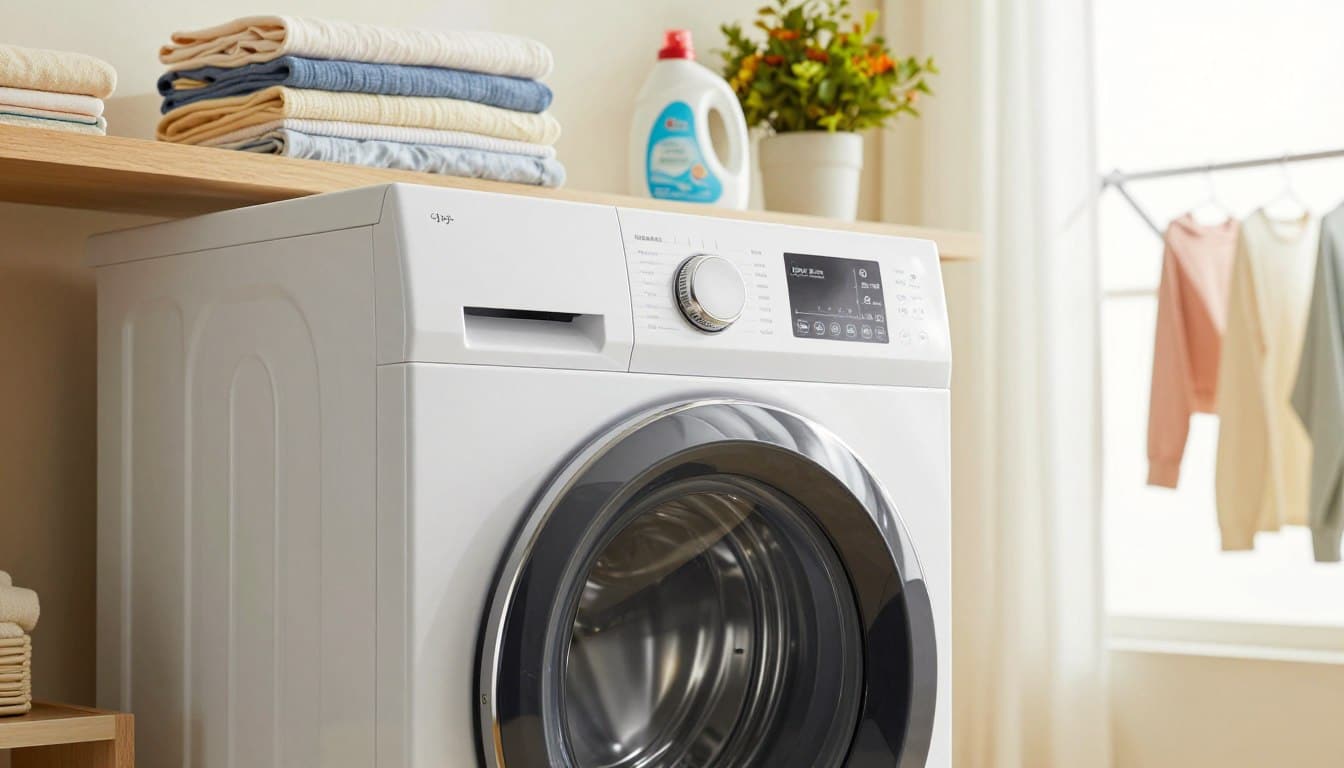
When heat and tumbling help (and when they don’t)
Use high heat for sturdy cotton sheets and towels. Lower settings suit knits, elastic waistbands, and delicate fabric to avoid shrinkage and damage.
Fluffy towels, large loads, and reliability
- Big loads and bulky items finish faster in the drum.
- Tumbling separates fibers, creating that plush feel.
- Prompt removal prevents deep wrinkles; shift to a hanger if still slightly damp.
Wear, energy use, and practical tips
Heat and motion mean more wear over time—fading, pilling, and shrinkage are real risks. The dryer is one of the higher‑energy appliances in your home, so choose smart settings.
| Use | Best setting | Tip |
|---|---|---|
| Towels & sheets | High heat | Avoid overloading for even drying |
| Delicates & knits | Low or gentle | Use mesh bags; stop slightly damp |
| Mixed loads | Medium | Remove items early to prevent damage |
Air dry vs machine dry clothes: head-to-head comparison
Let’s put these two methods side by side so you can see what really matters for daily life.
I’ll keep this short and practical. Think fabric care, energy, and how much time or space you have.
Fabric care and longevity
For gentle fabric care, air drying usually wins. Less rubbing and no heat mean fewer signs of wear and longer life for delicate pieces.
Use the machine for heavy towels and bulky items that need tumbling to stay soft. For mixed loads, split sensible items between both methods.
Energy use, greenhouse gas emissions, and costs
Air drying cuts energy use and lowers emissions. Each machine cycle draws power, which raises energy consumption and greenhouse gas emissions over time.
Even one or two loads a week left to air drying can trim your monthly bill.
Time, convenience, and space constraints
Machine cycles save time and work year‑round. If you lack space, try a small rack and a short machine finish on damp items.
- Fabric care: air drying for delicates; machine for bulky towels.
- Energy: air drying reduces consumption and emissions.
- Routine: mix methods to balance time and space.
| Priority | Quick winner | Why |
|---|---|---|
| Fabric care | Air drying | Less heat and friction |
| Energy & emissions | Air drying | No electricity for the process |
| Speed | Machine | Fast, reliable finish |
Pick by fabric: what I’d air dry and what I’d put in the dryer
I’ll walk you through simple, fabric-based rules so you can choose quickly and confidently. Think of this as a short cheat sheet for common fabrics and everyday items.
Delicates, wool, silk, and activewear
I air dry delicates like silk, wool, and cashmere because heat causes damage and loss of shape. Activewear with stretch also fares better left to finish on a rack.
Follow labels that say line dry or lay flat to avoid shrinkage and stretching.
Cotton tees, denim, towels, sheets, and comforters
Cotton tees and denim can go either way. A short cycle saves time; hanging reduces wear. Towels, sheets, and comforters do well in the dryer because tumbling evens out bulk.
Care labels: simple rules you can follow
- If the tag says line dry or lay flat, trust it—those cues protect fabric and color.
- For mixed loads, use low heat or stop early and let delicate pieces finish by air drying.
- When in doubt, start with air drying for anything you love; use the dryer on gentle settings when speed matters.
Quick rule: protect special pieces with gentle treatment and let sturdy items handle most heavy lifting in your washing routine.
Your home and climate: drying inside, outside, or both
Where you live and the weather you get shape the easiest way to finish a load. I prefer simple setups that match my space and routine.
Outdoor line drying for sunny, dry days
If it’s a sunny, breezy day, take advantage. Sunlight helps kill bacteria, brightens whites, and gives garments a fresh scent.
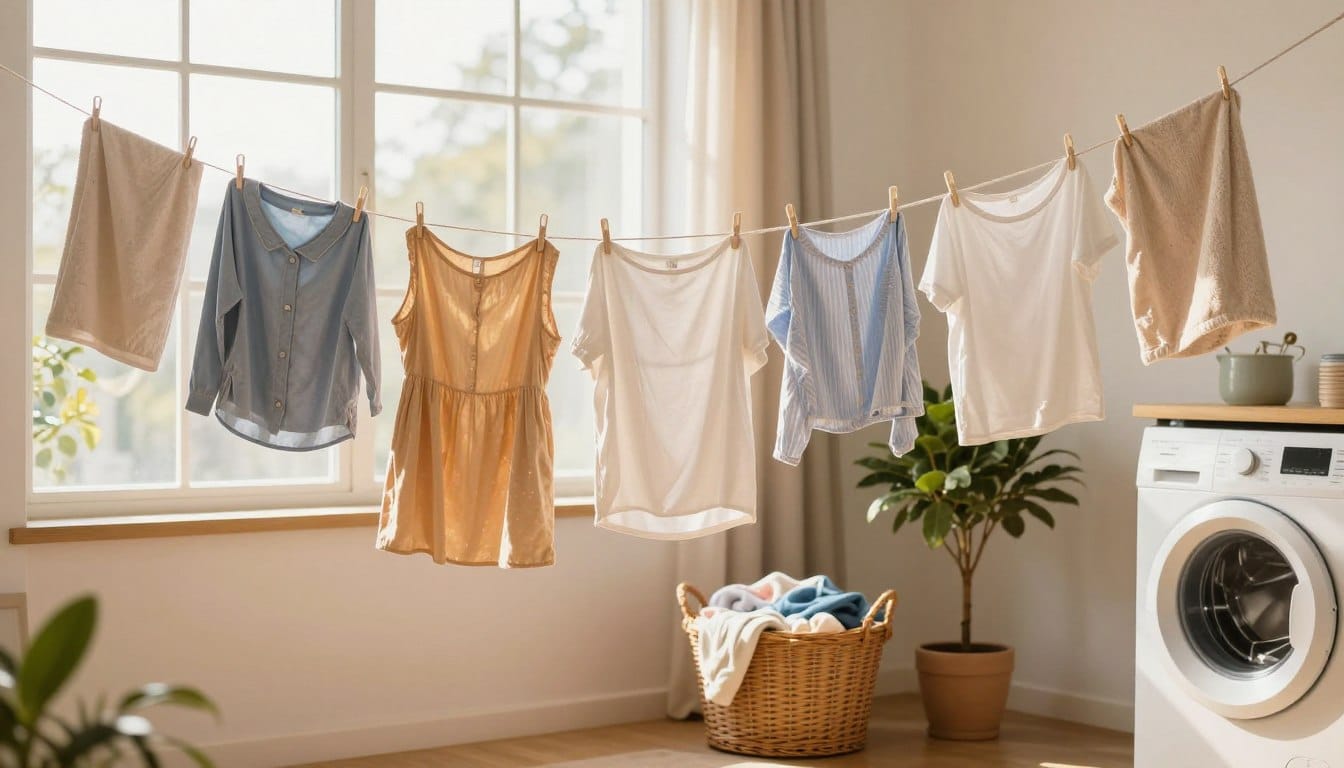
- Hang whites in direct sunlight and move colors to partial shade to protect hue.
- Use a sturdy rack or a clothesline and keep items spaced so wind can pass through.
- Try to use outdoor time whenever you can — it saves energy and is gentle on fabric.
Indoor air drying without the musty smell
Indoors, airflow matters more than heat. Place a slim rack by a window or near a fan, and leave a hand’s width between items.
- In tight space, use door hooks or the shower rod for a few pieces.
- Open a window or run a bathroom fan to push humid air out and stop mildew.
- If weather turns, start items inside and finish the rest outside when the sky clears.
Make either method work better: practical tips
A few quick steps transform how you finish a load so items come out fresher with less wear. I’ll keep this short and useful—tips you can try today to save time, cut electricity, and protect favorites.
Faster, fresher air drying
Shake garments and smooth seams before you hang them. Give each piece space on a rack so airflow reaches every layer.
Use sunlight for whites and point a small fan at the rack to speed drying without much electricity. Hang shirts on hangers and clip socks at the edges so thicker areas don’t stay damp.
Smarter machine drying
Keep the drum a sensible size; an overstuffed load stretches cycle time and won’t get items fully dry. Choose lower heat or an air-fluff setting for mixed loads to protect fibers.
Clean the lint trap every time and check the vent now and then. Dryers draw 1800–5000 watts, so shorter, cooler cycles cut electricity and cost.
Mix-and-match routine
- Stop the cycle while items are slightly damp and hang to finish—fewer wrinkles, less wear.
- Use wool dryer balls to separate items and shorten drying time naturally.
- Air drying delicates and using the dryer for towels and bedding balances time and care.
Energy, microfibers, and the bigger picture
Dryers use a surprising amount of power, and that has real consequences for your home’s footprint. Every cycle heats and moves air, which means noticeable electricity use and linked emissions when the grid relies on fossil fuels.
That adds up: residential laundry made a large share of household carbon in recent estimates. Small changes at home lower your carbon footprint without making life harder.
Why dryers pull so much electricity
Heating air and keeping it moving takes kilowatts. Longer, hotter cycles raise energy consumption and push up gas and carbon emissions when your power mix isn’t clean.
Microfibers, lint, and indoor air quality
Tumbling causes wear: heat plus friction tears tiny fibers free. Lint is visible loss, but ultra-fine microfibers escape filters and can enter indoor air or the outdoors.
Synthetics shed especially many microfibers, adding to microplastic pollution. Emptying the lint trap helps, but it doesn’t catch everything.
When renewable energy changes the equation
If you run appliances on solar or a greener grid, each cycle causes far fewer greenhouse gas emissions. That makes using the machine less costly to the environment.
Still, cutting cycle time, using lower heat, and shifting simple items to hang-up finishing reduce energy consumption and fabric damage.
| Impact | Why it matters | Simple fix |
|---|---|---|
| Energy use | Heating air needs power; longer cycles raise consumption | Shorten cycles and use lower heat |
| Emissions | Grid mix ties electricity to CO2 and greenhouse gas totals | Run loads when solar is producing or use renewable tariffs |
| Microfibers | Friction releases tiny fibers that escape filters | Stop cycles early, wash less often, clean vents and lint trap |
I try to balance convenience and impact: reserve the dryer for bulky towels and rainy days, and let lighter items finish on a rack when I can. For more ways to protect fabric and lower wear, check these practical care tips.
Conclusion
Here’s a clear, low-stress way to finish a load so your favorites last and your routine stays sane. A blended approach works: I air dry delicates and activewear, and I use the machine for towels, sheets, and heavy items when I need speed.
Stop a cycle slightly early and let items finish on a rack or line. That simple step protects fabrics and cuts wear. Indoors, keep airflow near the drying area to avoid musty smells. On sunny days, use natural light to brighten whites.
There’s no single right option. Choose what fits your day and your home. Build a repeatable routine, tweak as the seasons change, and you’ll get clean, ready-to-wear results with less fuss.