
I remember the sting of a towel that felt like cardboard after a wash, and I’ve learned simple fixes for that — including one tip on how to soften stiff clothes naturally that actually works. You’ll feel better fast when laundry comes out fluffy and kind to your skin, not rough or thin.
In this short guide I’ll share practical, home-friendly ways that use items you likely already own. Small changes like the right detergent dose, adding white vinegar in the rinse, and giving items a good shake before drying make a big difference.
I’ll also cover dryer tricks, water notes, and fabric-specific tips so towels, activewear, and microfiber perform the way you expect. No fancy products, just clear softening steps you can try tonight.
Key Takeaways
- Use a measured detergent dose and extra rinse to avoid residue on fabric.
- White vinegar and baking soda help lift minerals left by hard water.
- Wool balls or aluminum foil balls reduce static in the dryer without softeners.
- Shake garments and avoid overloading the drum for better fiber fluffing.
- Never mix chlorine bleach and vinegar; that combo can release toxic gas.
Why clothes feel stiff in the first place
If garments come out crunchy, I’ll bet the wash left soap or minerals on the fibers or the drum was too full. These are the most common, fixable causes. You can spot them and act fast.
Using too much detergent creates dense suds that cling to fabric and won’t rinse away. Leftover residue dries rough and can even encourage mold in the washing machine.
At the other extreme, too little laundry detergent in hard water means dissolved minerals stick to fibers. That mineral build-up makes towels and shirts feel scratchy and look dingy.
- Overloading: items can’t tumble, so detergent pools and rinse water can’t reach everything.
- Residue: soap and product buildup shows as grayish film or stiff fabric.
- Hard water: minerals cling and need the right dose or a booster like baking soda to release.
Watch for soap bubbles at the end of a cycle or towels that smell musty. Those are cues to run an extra rinse or adjust your dose. A little change in load size and detergent amount makes a big difference.
| Cause | Common Signs | Quick Fix |
|---|---|---|
| Too much detergent | Soapy residue, rough feel, lingering bubbles | Reduce dose, run extra rinse |
| Too little detergent + hard water | Scratchy fabric, mineral film, dingy whites | Increase dose for your water or add a booster |
| Overloaded drum | Uneven rinsing, some items stiff, others gummy | Right-size loads so items can tumble freely |
| Residue in machine | Musty smell, recurring buildup on fabrics | Run a cleaning cycle and wipe seals |
How to soften stiff clothes naturally
I’ll keep this simple and practical. Try one quick rinse tweak that often fixes rough results right away.
Quick start: the simplest rinse-cycle fix
When your washer reaches the rinse cycle, pour 1/2 cup (120 ml) white vinegar into the fabric softener dispenser. Vinegar strips excess soap and mineral residue so fabric comes out feeling softer and cleaner.
If your machine runs cool, use liquid detergent. It dissolves better than powder in low temperatures and cuts down on residue that dries crunchy.
Choose cooler water and an extra rinse when needed
Spot visible suds at the end of a wash? Run an extra rinse. That keeps residue from drying onto fibers and making garments rough.
Add 1/2 cup baking soda into the wash sometimes. It helps break down deposits and neutralize odors before the rinse stage.
- Shake each item before it goes into the dryer or on the line to fluff fibers.
- Line drying: shake again halfway through. Machine drying: pick moderate heat.
| Action | What it fixes | Best use |
|---|---|---|
| 1/2 cup white vinegar in softener dispenser | Removes soap and mineral residue | At rinse cycle for most loads |
| Liquid detergent on cool washes | Prevents undissolved powder residue | Cold or cool water cycles |
| Extra rinse | Flushes leftover suds and buildup | When you see suds or feel rough texture |
| 1/2 cup baking soda in wash | Breaks down deposits, reduces odors | Every few washes or for heavily soiled items |
Your wash routine that actually softens
A simple, repeatable wash routine beats one-off tricks when you want softer laundry every week. I’ll outline a short set of steps you can use every time you run a load. They fit busy days and slow afternoons alike.
Right-size loads so items can tumble and rinse
Fill the drum about three-quarters full. That gives garments room to move and lets water and detergent reach every fiber.
A loosely packed drum improves agitation and avoids pockets of soap that dry into rough patches.
Use the correct detergent dose for your water hardness
Follow the dose on the detergent label and adjust up for hard water or down for soft water. Too much detergent leaves residue; too little won’t break up mineral deposits.
Liquid detergent is a safer pick on cool cycles because it dissolves quickly and cuts gritty spots.
Run a proper rinse cycle and add an extra rinse if sudsy
Always use a full rinse. If you spot suds or feel a slimy film, run an extra rinse to clear what remains.
Shake items before drying. That small step fluffs fibers and reduces creases, making the final result softer and easier to fold.
- Right-size load: 3/4 full drum
- Correct detergent dose for water hardness
- Cool or warm water for most loads
- Full rinse every wash; extra rinse if needed
- Shake garments before drying
| Step | Why it matters | Quick tip |
|---|---|---|
| Fill drum ~75% | Allows proper agitation and rinse coverage | Don’t cram items; small loads waste water |
| Dose by water hardness | Prevents residue or poor cleaning | Check your soap label and local water notes |
| Choose cool/warm water | Gentle on fabric, effective with correct dose | Use liquid detergent on cool cycles |
| Run full rinse | Removes leftover detergent and minerals | Add an extra rinse if sudsy |
Natural softeners you already have at home
I keep a trio of kitchen staples near my washer for fast, budget-friendly fabric fixes. They’re simple, safe, and work well whether you line dry or use a dryer.
White vinegar in the fabric softener dispenser during the rinse
Pour 1/2 cup white vinegar into the fabric softener dispenser at the rinse stage. It strips soap and mineral film and leaves fibers feeling softer without added perfume.
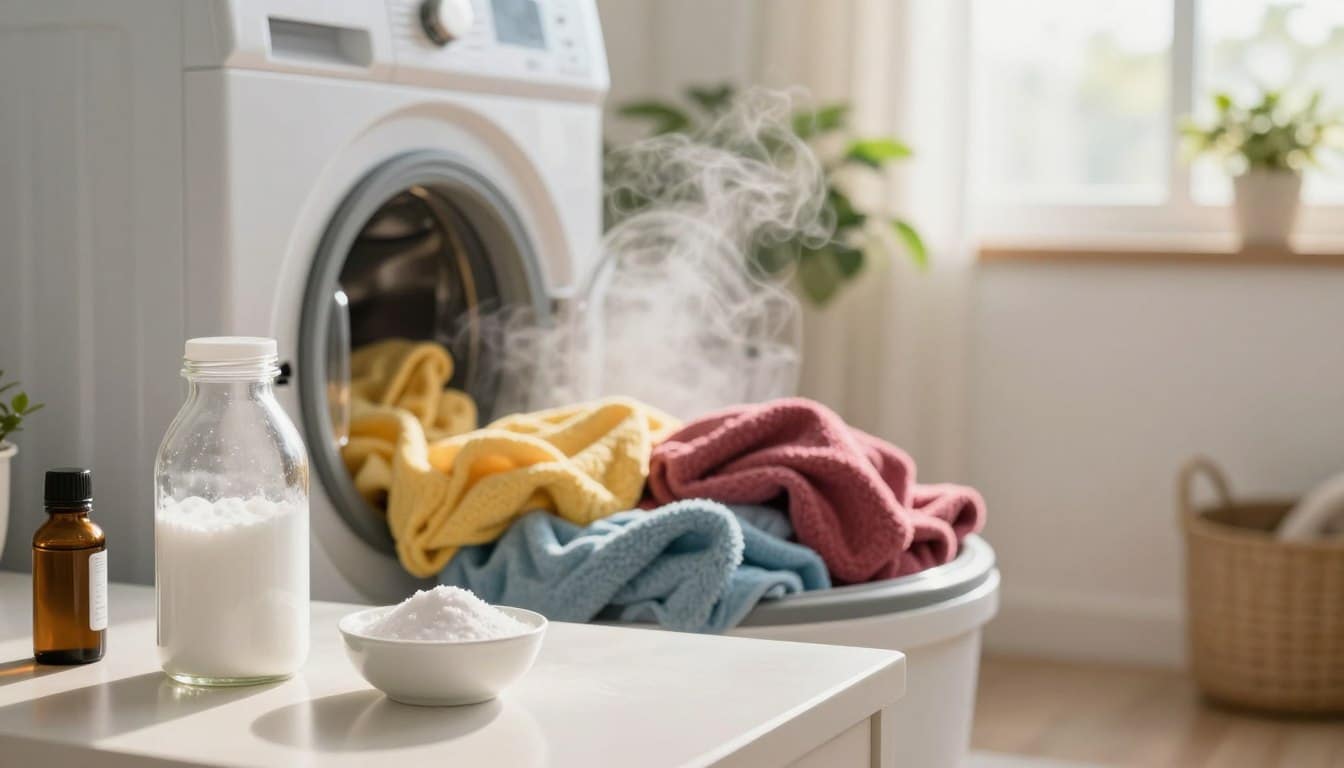
Baking soda in the wash cycle for pH balance and odors
Add 1/2 cup baking soda directly into the wash cycle. Baking soda helps regulate pH, breaks down residue, and keeps clothes smelling fresh.
Borax for hard water and brighter whites
If you have hard water, toss 1/2 cup borax into the wash. It helps neutralize minerals, improves feel, and brightens whites.
Optional combo: a safe pre-mix
Prefer a pre-mix? Combine 1 cup baking soda with 7 cups white vinegar and keep it for rinse use. Add 1/3 cup of that mix into the fabric softener dispenser.
- Don’t mix chlorine bleach with vinegar — keep them in separate cycles for safety.
- If static is the issue, toss 2–3 aluminum foil balls into the dryer as a quick fix when wool dryer balls aren’t handy.
- Keep a small measuring cup nearby so these amounts are quick and foolproof.
| Pantry item | Amount | Main benefit |
|---|---|---|
| Baking soda | 1/2 cup in wash | Balances pH, reduces odors, breaks down residue |
| White vinegar | 1/2 cup in softener dispenser (rinse) | Removes soap/mineral film, softens fabrics |
| Borax | 1/2 cup in wash (hard water) | Softens water, brightens whites, improves feel |
| Pre-mix (baking soda + vinegar) | 1/3 cup in dispenser | Convenient rinse booster for routine use |
If itchy items are the problem, this guide pairs well with a short fix I found — try this quick read for more tips: itchy fabric quick fixes.
Dryer strategies that boost softness
I’ll keep this practical and to the point, with simple steps you can try on your next load.
Wool dryer balls or tennis balls lift fibers
Drop in 3–4 wool dryer balls or two tennis balls. They bounce and separate items as the drum tumbles. That lets warm air reach more surface and speeds drying.
Shake items before drying and avoid over-drying
Give each piece a quick shake before it goes in. This spreads fibers so air moves through, which helps garments finish softer.
Choose moderate heat and skip long timed cycles. Over-drying makes fabric feel crisp and rough later.
Use sensor-dry instead of timed high heat
Pick sensor-dry when possible. The dryer stops when items are dry, saving energy and keeping fibers springy. Timed high heat often runs past safe dryness.
Aluminum foil balls for static in a pinch
If you don’t have dryer balls, crumple foil into 2–3 tight balls and toss them in. They cut static and act like reusable dryer aids when supplies run low.
- Remove items as soon as the cycle ends to avoid creases and flattened fibers.
- For bulky loads, pause once mid-cycle, shake and redistribute for better airflow.
- These moves work without any fabric softener, so they’re great if you prefer scent-free laundry.
| Strategy | Why it helps | Best use |
|---|---|---|
| Wool dryer balls / tennis balls | Lift and separate items for faster, gentler drying | All mixed loads; 3–4 balls per load |
| Sensor-dry | Prevents over-drying and fiber damage | Every load for consistent results |
| Shake before drying | Spreads fibers so warm air penetrates evenly | Quick habit before every load |
| Aluminum foil balls | Reduce static when dryer balls aren’t available | 2–3 foil balls per dry cycle |
Hard water fixes that make a difference
Hard water quietly adds minerals to fibers, and over time that makes fabrics feel coarse. I’ll help you spot the signs and try quick fixes that work now.
Signs you have hard water and why it stiffens fabric
Look for towels that feel rough, dingy whites, or a gray film on darks. These show minerals clinging to fabric even when you follow detergent directions.
At-home tweaks: boosters and dosing adjustments
For many loads, add a booster: 1/2 cup borax or 1/2 cup baking soda in the wash. Then set detergent dose for hard water as the label suggests.
If you still see suds late in the cycle, run an extra rinse so mineral-soap films don’t dry on garments.
Long-term option: a water softener system
A whole-home softener swaps minerals for sodium or potassium. That cuts limescale in your machine, lets you use less detergent, and improves how clothes feel over time.
If a system isn’t possible, the boosters plus correct dosing and smart drying will still make a noticeable difference.
- Signs: rough towels, dingy whites, gray film.
- Quick fix: 1/2 cup borax or 1/2 cup baking soda + proper detergent dose.
- Long-term: install a softener to reduce minerals and appliance scale.
| Issue | Quick fix | Long-term fix |
|---|---|---|
| Mineral film on fabrics | 1/2 cup baking soda in wash; extra rinse | Whole-home water softener |
| Stiff towels, dingy whites | 1/2 cup borax; adjust detergent dose | Softener installation; routine appliance descaling |
| Limescale in machine | Run cleaning cycle; use boosters | Water softener and regular maintenance |
What to do by fabric type
Treating items by material keeps them working and feeling right. I’ll give quick do’s and don’ts so your towels, activewear, and microfiber stay soft without losing performance.
Towels: skip fabric softeners and keep absorbency
Don’t use a fabric softener on towels. The oils in softeners coat loops and cut absorbency, leaving towels slick rather than plush.
Wash towels with the correct detergent dose and add a vinegar rinse when they feel coated. Dry with wool dryer balls or tennis balls to lift loops and keep them fluffy.
Activewear and microfiber: preserve wicking and stretch
Avoid fabric softeners on activewear and microfiber. Residue from softeners can block wicking and dull performance fabrics.
Wash these items on cool or warm using a small amount of liquid soap. Add an extra rinse if you notice any slick film. Shake garments before drying and use moderate heat so fibers don’t crisp or lose stretch.
- Wash microfiber separately from cotton towels to limit lint and preserve smooth surfaces.
- If your skin is sensitive, keep scents low and rely on a vinegar rinse to clear residue that can irritate skin.
- If something still feels off, rewash with a little liquid detergent, add a vinegar rinse, and dry with balls to reset softness.
| Fabric | Do | Don’t |
|---|---|---|
| Towels | Vinegar rinse, correct detergent dose, dryer balls | Use fabric softener that coats loops |
| Activewear | Cool/warm wash, light soap, extra rinse if needed | Apply fabric softeners that reduce wicking |
| Microfiber | Wash separately, avoid lint, gentle drying | Mix with cotton towels or heavy lint producers |
If you want a quick reset trick for a stubborn piece, try this simple fix: rewash and reset trick.
Mistakes to avoid for softer laundry
Little mistakes in the wash can quietly make your laundry feel rough and unhappy. I’ll give a calm checklist you can skim and fix today.
Overusing detergent or fabric softener alternatives
More detergent doesn’t mean cleaner. Excess leaves residue that dries hard on fabric and can make clothes feel sticky.
Be careful with baking soda or vinegar dosages. Measured amounts work best, so you don’t trade one build-up for another.
Never mix chlorine bleach with vinegar
Never combine chlorine bleach and vinegar, including white vinegar, in the same cycle. That mix can form dangerous chlorine gas.
If you need both, run separate cycles and air the area well between uses.
Stuffing the washer and skipping the shake-out
A stuffed washing machine prevents water and soap from moving through fibers. That leaves gunk and residue on fabric.
When suds remain, add an extra rinse cycle before drying. Drying sets residue and makes it harder to remove later.
- Go easy on detergent and fabric softener products—measure, don’t eyeball.
- Give garments a quick shake before drying; ten seconds per item helps fibers separate.
- Use sensor or lower heat and pull items out on time; long high-heat cycles can make items crisp.
- Watch patterns: same items rough? Adjust dose, load size, or add a vinegar rinse for that load.
| Mistake | Why it matters | Quick fix | Product note |
|---|---|---|---|
| Too much detergent | Leaves residue that stiffens fabric | Reduce dose; run extra rinse | Adjust dose by water hardness |
| Overusing softeners or baking mix | Can coat fibers or leave films | Use measured amounts; occasional use only | 1/2 cup baking soda or 1/2 cup white vinegar when needed |
| Mixing bleach and vinegar | Creates toxic chlorine gas | Never mix; separate cycles and ventilate | Keep bleach and vinegar stored apart |
| Overloaded washer | Poor rinsing, uneven cleaning | Fill drum ~75%; shake items before drying | Smaller loads improve rinse action |
You’ve got this—soft laundry, the natural way
A few small habits at the washer and dryer end will change how your garments feel fast. I wrote this guide so you can act tonight and see results within a load or two.
Keep it simple: load the drum about 3/4 full, dose by your water, use cool or warm washing, and run a full rinse. Add 1/2 cup baking soda in the wash and 1/2 cup vinegar in the rinse when a boost helps.
Use wool dryer balls — they lift fibers, cut dry time, and skip the liquid softener. If you want a light scent, add a drop of essential oil to a vinegar mix.
These tips work at home. You’ll feel the difference, and wash day gets easier fast.