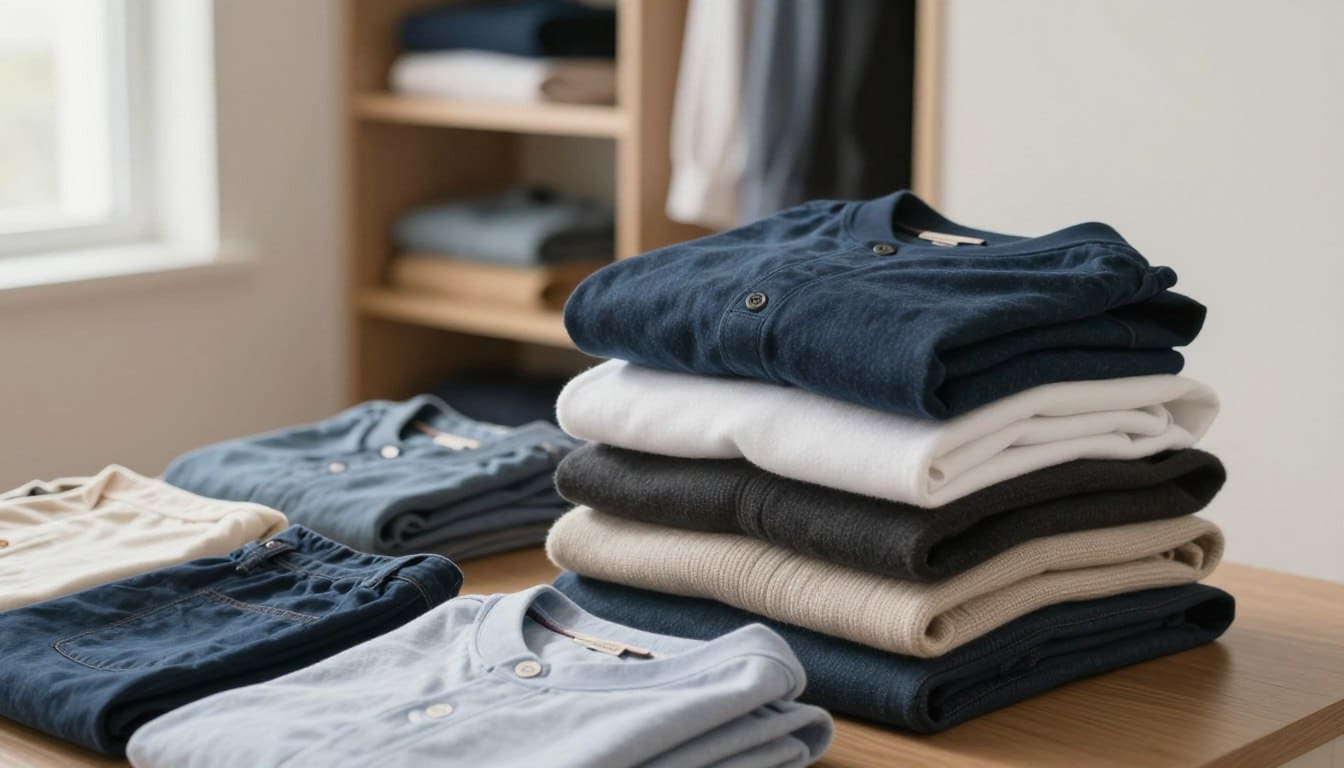
clothing care tips on a budget is something I wish someone handed me when I first did my own laundry. I remember standing over a mountain of shirts, feeling unsure which setting would keep them soft and last for years.
I’ll share simple ways to wash and dry that help you save money without fuss. Small changes — colder washing, measuring the right amount of soap, and using an air rack — add up fast.
These ideas fit busy life rhythms. You’ll learn how to build the right load, protect fabric, and lower water and dryer use with tiny habit shifts.
Key Takeaways
- Use colder settings to cut energy per load and keep clothes looking new.
- Measure detergent — about one tablespoon for an average load prevents buildup.
- Right-size loads and sort to reduce re-washing and save water.
- Air dry when possible and use a rack to extend fabric life.
- Do laundry in off-peak hours to lower electricity costs.
Start with smarter wear-and-wash habits
I use one quick test before I add things to the basket: do they look dirty or smell off? If not, I usually wear them again. This saves time, water, and money and helps items last longer.
How many wears is okay? Simple rules you can follow
Here are easy guardrails I follow at home. They are flexible, not strict rules.
- Wash underwear, socks, swimwear, leggings, workout gear, and baby clothes after each wear.
- Jeans, bath towels, and sheets: about once a week unless there are stains.
- Sweaters, pajamas, and hoodies: three to four wears before washing.
- Coats and heavy jackets: a few months between washes unless life happens.
Real-life examples: when I wash right away vs. wait
If I spill food or notice sweat marks, I wash right away and spot-treat so the stain won’t set. If I’ve worn a top for a short errand and it still smells fresh, I hang it overnight and decide in the morning.
I keep a small basket for “wear again” pieces so they don’t mix with dirty laundry. That helps me build a sensible load without over-washing and uses less detergent over time.
Dial in your wash settings to save money and protect fabric
Small changes to your washer settings can cut bills and keep clothes looking better. I usually pick lower temperature and shorter programs when soil is light. That simple habit saves energy and water without extra effort.
Use cold water to cut costs and reduce shrinkage
Cold water cleans everyday dirt well and halves the energy most loads need. A warm load can cost about $0.68 versus $0.04 for cold. Swap one daily warm wash for cold and you could save roughly $214 per year.
Quick wash vs. regular cycle: when a shorter cycle works
Quick cycles run around 20 minutes on many HE machines. Regular cycles can take an hour or more. I use quick washing for lightly worn tees and fragile blends. For muddy or heavily soiled items, I choose the longer cycle.
Pick the right machine mode for mixed loads
Many machines offer a mixed load mode that balances motion, water, and temperature. I use it for tees, shirts, and soft pants. It saves time and keeps fabrics gentler than a hot heavy cycle.
Wash at off-peak hours to save on energy
Off-peak electricity often falls between 11 p.m. and 7 a.m. or most weekends. A timer on the machine makes it easy to start late. Small shifts like this cut cost without changing your routine.
| Setting | Typical time | Energy / water note | Best for |
|---|---|---|---|
| Cold Quick | ~20 minutes | Low energy, low water | Lightly worn tees, delicates |
| Cold Regular | 45–60 minutes | Moderate energy, saves colors | Everyday loads, mixed fabrics |
| Warm Regular | 60–75 minutes | Higher energy use | Towels, sheets, heavy soil |
| Mixed Load Mode | 35–50 minutes | Balanced water and motion | Tees, shirts, lightweight pants |
Use less detergent (and the right kind)
I learned fast that using less soap often does the job just fine. Measuring the right amount keeps clothes soft and machines cleaner. It also saves money without extra effort.
How much detergent you actually need per load
Researchers suggest about one tablespoon for an average 8-pound load. Too much can leave residue, make fabrics stiff, and even trap odors. Store laundry detergent often costs around $0.21 per load; many homemade mixes run $0.05–$0.10 per load.
Stretching detergent further with hard-water helpers and smart measuring
Use a marked spoon or small measuring cup and stick to it. If your water is hard, add a spoonful of washing soda or borax alternative to boost cleaning so you can keep the detergent low.
- Pre-treat stains so the full wash dose stays small and targeted.
- Skip scent boosters and fabric softener for most loads; they can leave films.
- Powder or liquid works — pick what dissolves well in your water and machine.
- For extra dirty loads, nudge the amount up slightly, then reassess.
Load size and sorting: the easy way to save water, energy, and time
Smart sorting and sensible loads make laundry feel less like a chore. I keep this part simple so it fits busy days. Running the right load saves water and cuts total cycles.
Match load size to soil level
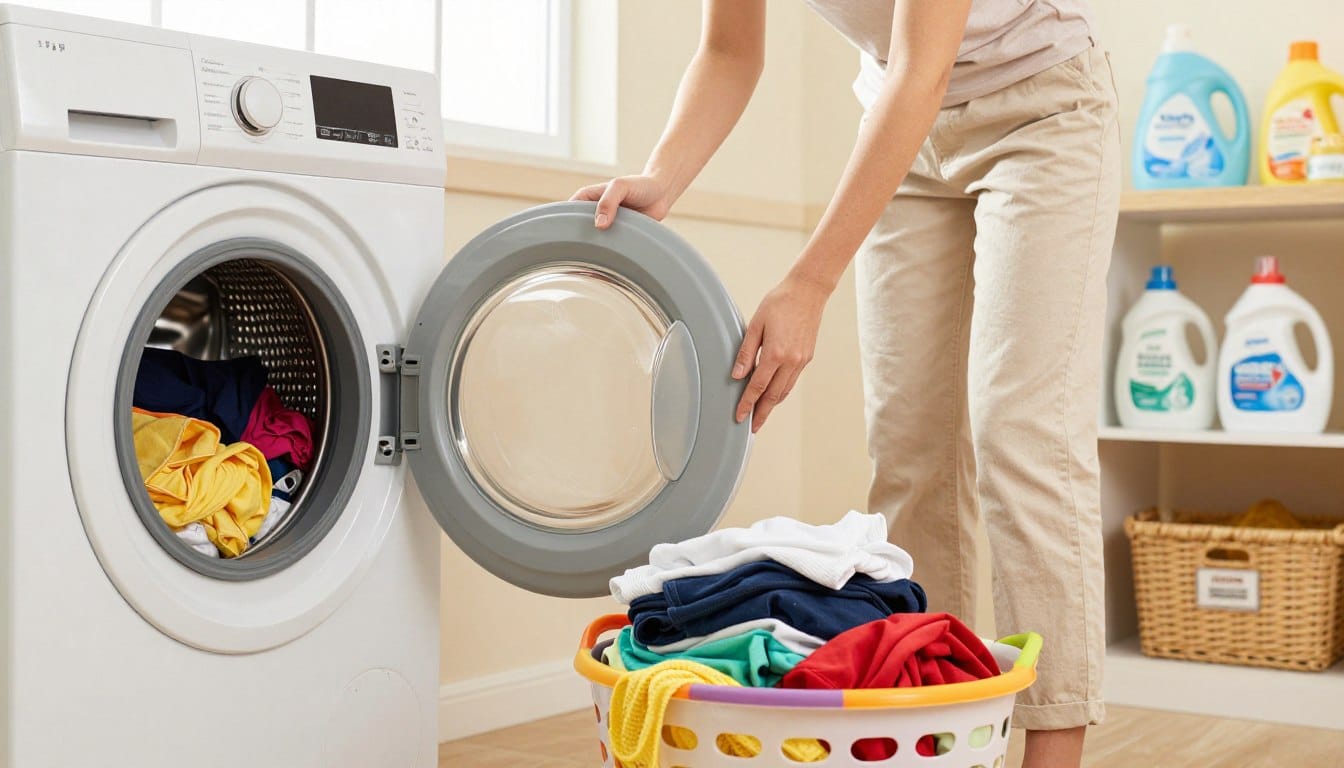
I build a full load for lightly worn clothes. A full drum uses almost the same energy as a half one, so you get more done per cycle.
For muddy work gear or kids’ play clothes, I run smaller loads. That lets the washing machine move water through each item and prevents re-washing.
Quick sorting that prevents re-washes and protects quality
I sort by lights and darks, then by clean-ish versus dirty. This basic split keeps colors bright and stops stains from setting on nicer pieces.
- Towels together: they shed lint and can take a higher temperature without harm.
- Pre-treat visible stains and add those items to the dirty pile so they get the tougher cycle.
- Leave about a hand’s width at the drum top so clothes move freely and wash well.
- Use a mesh bag for fuzz-prone items and check pockets and zippers before starting the machine.
Smart load building and simple sorting save water and time. You end up with cleaner clothes the first time and fewer repeats.
Drying that saves money and makes clothes last longer
How you dry laundry matters as much as how you wash it — and it can cut bills. Small shifts in where and how you dry clothes reduce wear and help you save money without extra fuss.
Air dry more: racks, lines, and hanger tricks for small spaces
I air dry many items year-round. A folding rack or a line across the bathroom fits tiny homes. Hanging clothes on hangers from a shower rod keeps airflow around shirts and skirts.
When to use the dryer: moisture-sensing cycles, low heat, dryer balls
Use the dryer sparingly. Pick moisture-sensing cycles on low heat and add wool dryer balls. They cut time and reduce wrinkles. Skip dryer sheets—they leave residue and don’t speed drying.
What to hang vs. what to tumble to avoid stiffness
Hang jeans, tees, and activewear to keep shape and color. Give heavy towels and hoodies a short tumble, then finish on a rack to avoid stiffness. Cleaning the lint trap before each run keeps the machine efficient and safe.
Fabric-specific care that adds years to your clothes
Knowing how each fabric behaves in the wash helped me stop guessing and start protecting my favorites.
Wool and knits: gentle handling and reshape
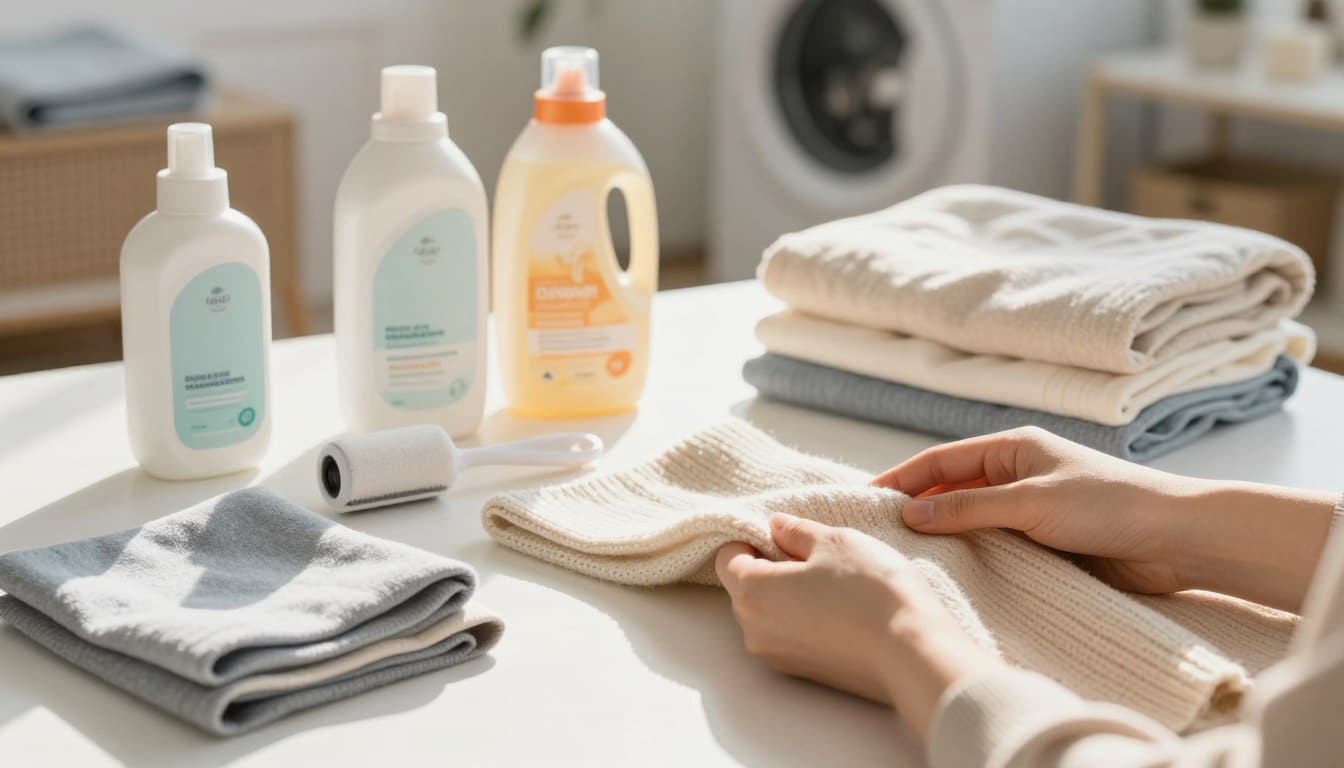
I hand-wash wool and delicate knits in cool water with a small dash of detergent. I press out excess water; I never wring. Then I reshape each piece and dry flat to keep form and fit.
This limits stretching and keeps wool looking fresh for many seasons.
Shirts, jeans, and towels: temperature and drying choices
Most shirts and jeans do well on cold or low temperature cycles. Hang them to dry or run a short, low-heat tumble to protect seams and color.
Towels can handle warmer washes for cleanliness. I stop the dryer when towels are nearly dry and finish them on a line to cut stiffness.
Synthetic fabrics: stop microfibers and avoid high heat
Synthetics like polyester and nylon shed microfibers. I wash these pieces inside a capture bag and skip high dryer heat to protect elastic and shape.
Spot-treat stains on collars and cuffs before washing. Gentle brushing lifts buildup without harsh scrubs.
- Keep a small delicates pile for hand-wash or the machine’s gentle cycle.
- For mixed loads, use mesh bags and moderate spin speeds to limit stretching.
- Start with one change, like hanging jeans, and watch how your clothes last longer.
| Fabric | Wash | Dry | Why it helps |
|---|---|---|---|
| Wool & knits | Hand-wash, cool water | Dry flat, reshape | Prevents stretching and pilling |
| Shirts & jeans | Cold/low temperature | Hang or low-heat tumble | Protects color and seams |
| Towels | Warm wash for freshness | Short tumble then line finish | Keeps absorbency and reduces stiffness |
| Synthetics | Capture bag, cool wash | Low heat or air dry | Limits microfibers and protects elastic |
For simple, proven steps to keep items looking like new, see how I keep clothes looking new with this short guide: keep clothes looking new.
Storage, small fixes, and tools that pay off
A few simple tools and tiny habits can stop wear and tear before it starts. I keep my approach low-cost and doable so you can get results without fuss.
Better hangers and folding to prevent stretching and bumps
I use sturdy, shaped hangers for coats and blazers and soft or bendable hangers for knits to avoid shoulder bumps. Heavy sweaters stay folded on a shelf or rack to protect their shape.
Steam or iron? Fast ways to remove wrinkles without damage
My go-to is a handheld steamer. It’s quick, gentle, and keeps delicate pieces safe from shine marks. If you prefer an iron, use low to medium heat, press inside out, and add a pressing cloth for fragile fabrics.
De-pill, spot-treat, and mend: quick fixes that delay replacement
- Refresh knitwear with a fabric shaver or careful razor pass to remove bobbles.
- Treat a stain right away: blot, pre-treat, then wash normally to save time and extend life.
- Keep a small mending kit for buttons, short hems, and zip fixes—these five-minute repairs protect quality and delay replacement.
Conclusion
One simple laundry change can stretch your favorite pieces and trim household costs.
Try one cold water wash and finish some items on an air dry rack. That small move cuts energy use and can save money across the year.
Build full, well-sorted loads, measure laundry detergent, and use mixed or gentle machine modes to protect fabric and quality. Skip dryer sheets and use moisture-sensing cycles when you run the dryer.
Small daily habits—quick stain care, hanging shirts, and short steamer sessions instead of a long iron—save time and help clothes last longer for years.
I’m cheering you on: start with one change today, keep what works, and enjoy easier laundry day routines.