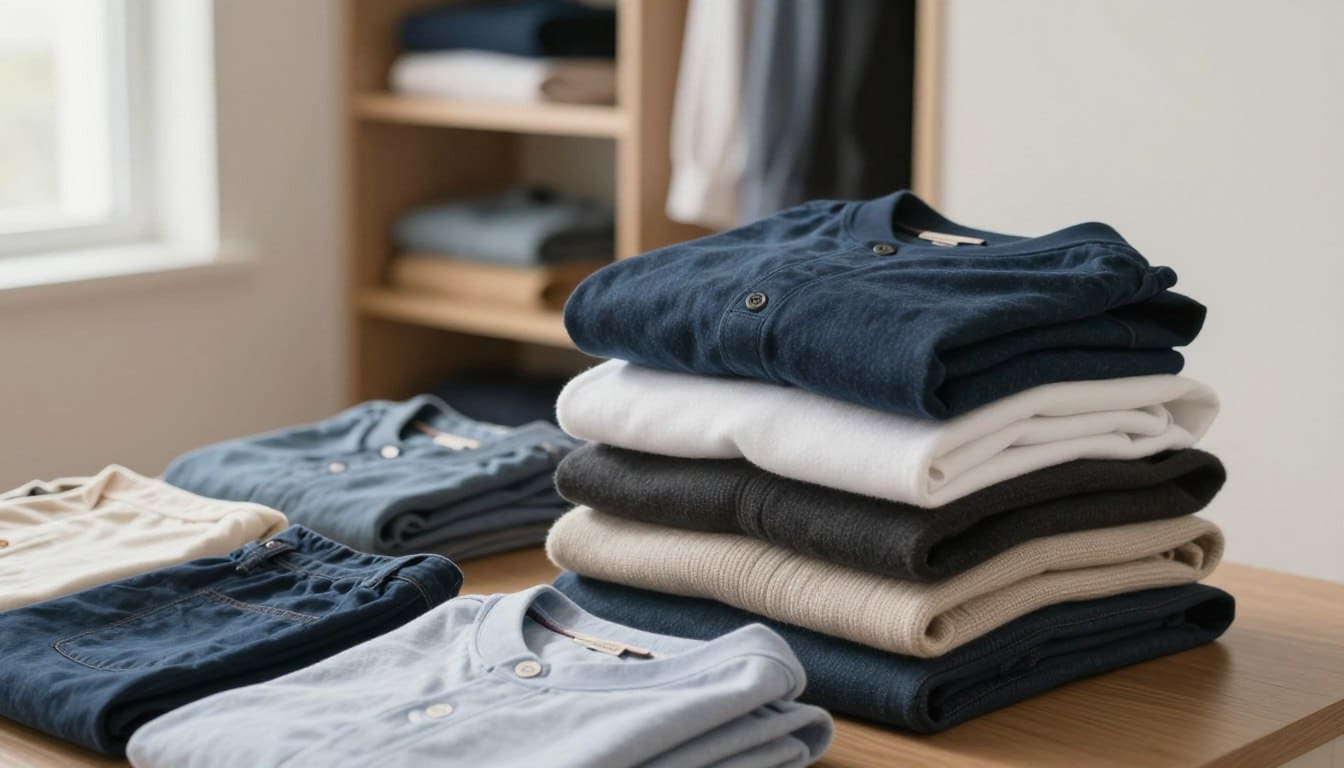
I’ll show you the best way to fold clothes for space saving with a quick, friendly method you can use tonight. I get how frustrating it feels to dig through a messy drawer when you’re running late, and a simple visual—shirts standing upright like little books—can calm that morning scramble.
I use practical tips that organizers recommend: fold everyday pieces like T‑shirts, jeans, bras, and underwear so they stand and stay visible. File folding keeps shirts easy to spot, and zipping jeans, folding lengthwise, then tucking the crotch helps them fit neatly in a drawer or on a shelf.
If a garment feels stretched or wonky, I also link useful fixes you can try with simple steps at fix stretched items. Little shifts in how you handle shirts and pants save time and make your wardrobe feel calmer and more useful.
Key Takeaways
- Stand shirts vertically so you can see each piece at a glance.
- Zip and fold jeans lengthwise, then fold to fit drawers.
- Prioritize daily items—loungewear, tees, and activewear—up front.
- Use consistent folding habits to cut morning rummage time.
- Small changes add up: fewer piles, more visible items, less stress.
Why folding smarter saves space, time, and stress
A few simple folding habits make your wardrobe calmer and shave minutes off your daily routine. I mean real wins: less digging, fewer wrinkles, and more room on shelves and in drawers.
File folding stands shirts and tops upright so you can see every item at a glance. That cuts the time you spend searching and stops stacks from toppling when you grab one piece.
If a garment wrinkles easily, hang it. Most everyday items—tees, casual pants, and knit tops—do fine folded and take up much less room. That’s kinder to fabric and makes laundry put‑away faster.
Real-life wins: less rummaging, fewer wrinkles, more room
- You pull one shirt without collapsing the rest, so the drawer stays neat between laundry days.
- Efficient folds remove air pockets, giving you extra shelf and drawer room.
- Group similar items—pants, workout gear, and shirts—so your brain finds outfits on autopilot.
| Item | Folded | Hung |
|---|---|---|
| T-shirt | Compact, visible | Unnecessary unless delicate |
| Sweater | Protects fabric | Stretches shoulders |
| Dress shirt | Use only if no hanger | Best for avoiding wrinkles |
Quick setup: what you need and how to prep
Start with a flat surface and a few small tools, and the whole process becomes simple and repeatable.
I lay garments on a flat surface and smooth wrinkles before any folding. Then I sort by type so my hands repeat the same motion. Tuck similar items together and work from the middle of the pile outward.
Clear a surface and sort by type
Clear a bed or table so each piece lies flat. Sorting clothes into shirts, pants, and small pieces speeds the job. When you repeat the same move, you finish faster.
Use simple helpers: dividers, bins, and a folding board
- Keep a few drawer dividers and slim bins nearby to create lanes and neat storage.
- Small bins corral socks and underwear, keeping them from spreading into other categories.
- A folding board gives consistent sizes, which stabilizes vertical rows in a drawer.
- Work in batches of 10–15 items so you don’t burn out and can place stacks right into their homes.
| Helper | Benefit | Quick tip |
|---|---|---|
| Drawer divider | Keeps rows upright | Place at equal widths for lanes |
| Slim bin | Contains small items | Label front for fast spotting |
| Folding board | Creates uniform stacks | Use for tees and lightweight tops |
The file folding method (KonMari): stand items up to see everything
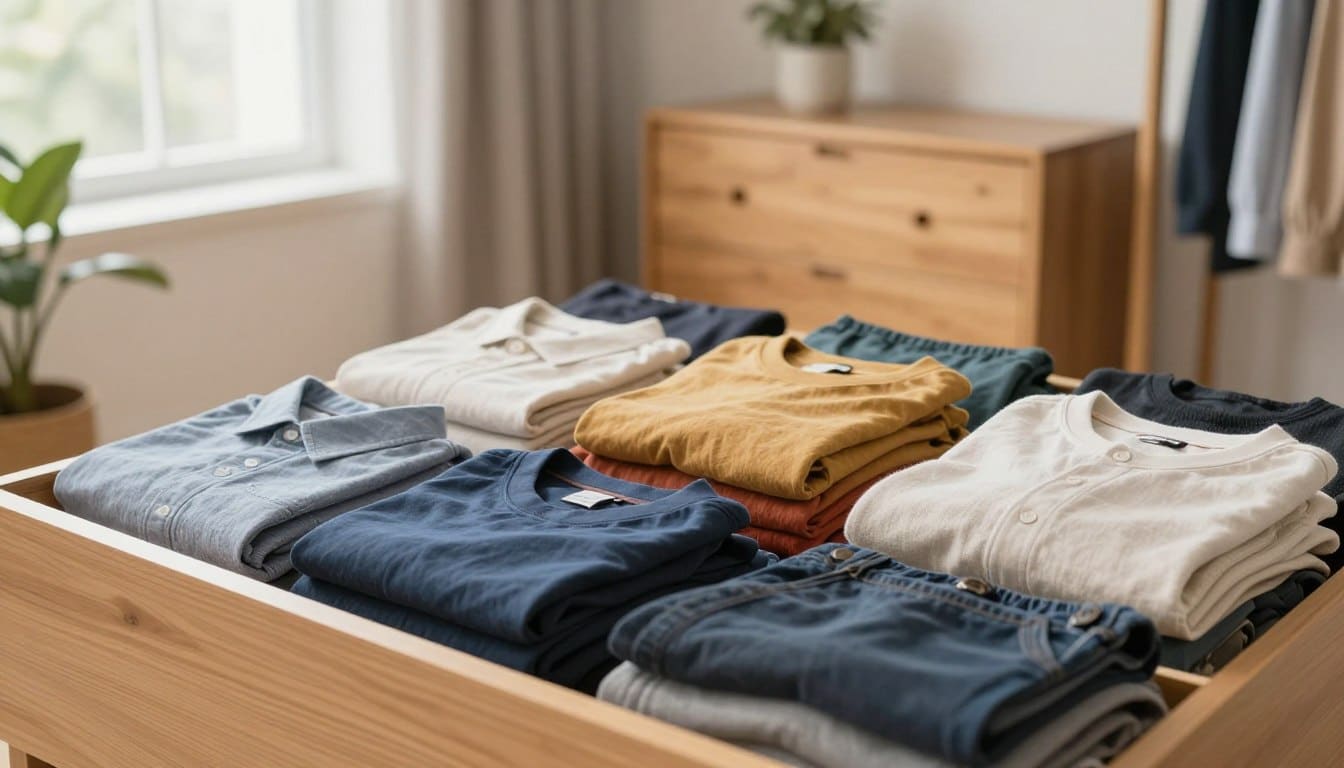
File folding turns a messy drawer into a neat row of visible pieces you can grab fast. I use this KonMari-inspired method when I want clear sight lines and less digging. It works for T-shirts, jeans, and thicker sweaters.
Step-by-step: fold sides in, then halves and thirds
Lay a garment flat and smooth wrinkles. Fold one side toward the center, then the other side so you have a compact rectangle.
Fold from top to bottom into a half, then into thirds if needed so the piece stands on its edge. For a shirt, lay it face-down, fold sleeves in, then fold into a small block.
When this method shines and how to keep rows neat
- Jeans: zip, fold half lengthwise, tuck the crotch, then fold up to fit the drawer.
- Sweaters: fold flat rather than hang to protect knit and help them stand.
- Add a divider in the drawer so rows don’t tip when you pull one item out.
If an item won’t stand, tuck one more fold at the bottom or tighten the thirds until the block is stable. This simple way fold keeps items visible and easy to maintain.
Rolling clothes: a travel-friendly way to save space
Rolling is my go-to when I’m packing a suitcase and need to squeeze in a few extra outfits. It cuts bulk and helps prevent deep wrinkles when done with steady tension.
How to roll without creating wrinkles
Lay the shirt or tee flat and smooth any creases. Fold each side in toward the center so you have a tidy column.
Start at the bottom and roll up tight, keeping pressure as you go. A snug roll limits air pockets and keeps items from shifting.
If a shirt feels too loose, fold it in half lengthwise before you roll. That gives a compact shape and fewer creases.
When to roll versus file fold
I reach for rolling when I pack a carry‑on, a gym bag, or bulky soft items. It fits sweatshirts, leggings, and towels well.
At home, file folding is better for drawer storage and visibility. Use a mix: roll for travel and soft storage, file fold for daily drawers.
- Lay flat, fold sides to the center, then roll from the bottom up.
- Keep rolls snug so they don’t unspool in transit.
- In shallow drawers lay rolls horizontally; in taller bins stand them upright.
| Scenario | Roll | File fold |
|---|---|---|
| Travel suitcase | Compact, soft items | Tees upright if space allows |
| Shallow drawer | Lay rolls flat | Rows for visibility |
| Bulky items | Sweatshirts, towels | Not ideal |
Shirts and tops: simple folds that reduce wrinkles
Small, careful folds keep shirts smooth and make mornings less frantic. I’ll spell out steps you can copy right away in plain language.
Start with the garment laid on a flat surface and smooth it so you have a crisp base. That first move cuts down on wrinkles and gives you a clean shape.
T‑shirts
- Lay the shirt face‑down and fold each sleeve and side inward so you have a neat rectangle.
- Fold that rectangle in half from top to bottom. Use halves for shallow drawers; use thirds if you want it to stand.
- Keep the bottom edge aligned so stacks don’t bulge and colors show at a glance.
Dress shirts when you can’t hang
- Place the shirt face‑down and cross the arms over the back.
- Fold once into a half, then into thirds to make a tidy block that stays crisp.
- For delicate tops, use gentle pressure and avoid sharp creases so the fabric keeps its shape.
Jeans and pants: compact folds for drawers or shelves
I’ve learned a few simple moves that keep denim slim and trousers crisp so your storage looks and feels organized.
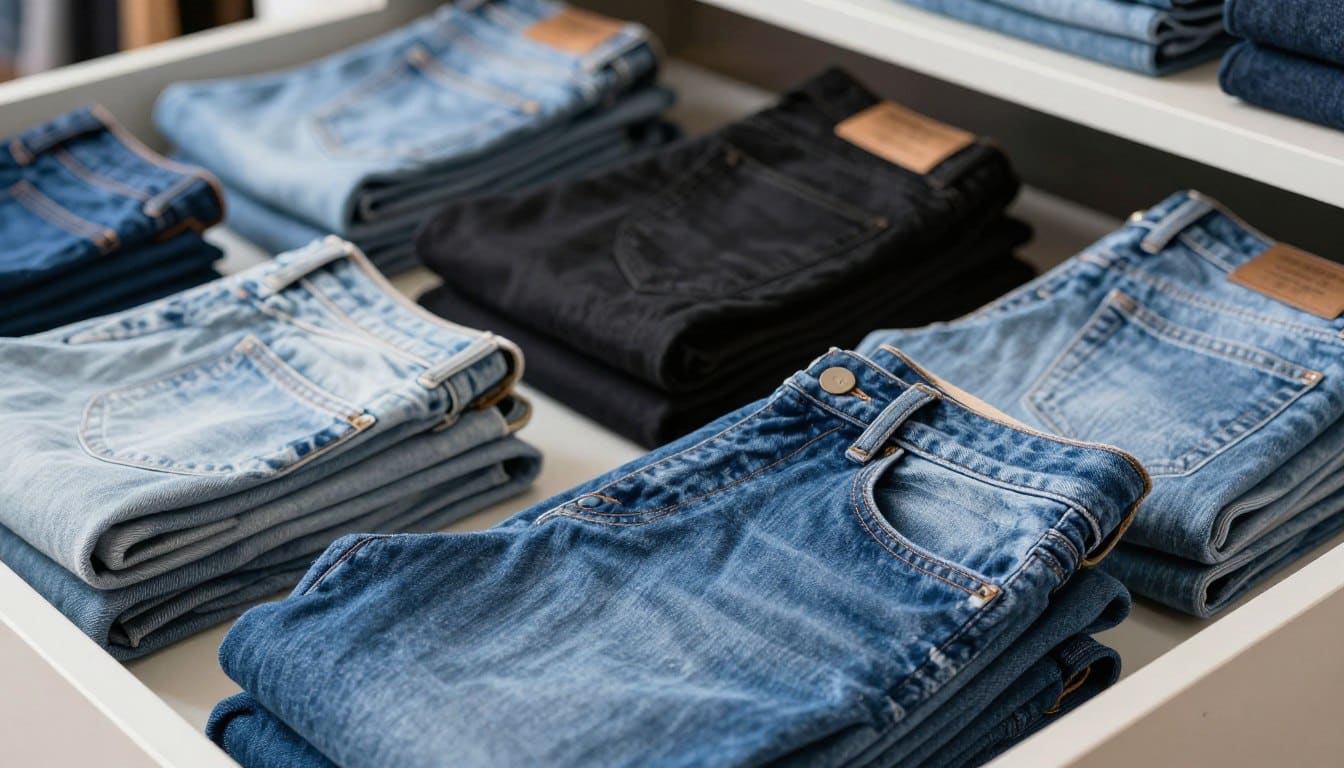
Quick steps for denim
Zip and button your jeans first so the waistband stays flat. Lay the garment flat and smooth any wrinkles.
Fold in half lengthwise, tucking the crotch along the seam so you get one straight line.
Fold up from the bottom to size the bundle. Use thirds if you want pairs to stand in a drawer, or add another half for shelf stacks.
Neat handling for dress trousers
Align the side seams so the legs sit flush. Fold lengthwise for a clean crease.
Then fold into thirds or quarters based on your shelf or drawer depth. This keeps the silhouette crisp and easy to pull out.
- Keep shades together so you grab dark jeans for work and light pairs for weekends.
- If a drawer is narrow, place the folded edge at the front for easy pinching.
| Item | Fold style | Storage tip |
|---|---|---|
| Jeans | Half lengthwise, tuck crotch, thirds | Stand in drawer |
| Dress pants | Align seams, lengthwise, quarters | Stack on shelf |
| Mixed garments | Size from bottom, adjust | Group by use |
Sweaters, socks, bras, and underwear: protect fabric and save space
Small pieces—sweaters, socks, and undergarments—deserve thoughtful handling in drawers. I keep directions short and kind to delicate fabric. These moves make it easy to find things and extend garment life.
Sweaters
Don’t hang knits. Weight stretches the shoulders and ruins the shape.
Lay a sweater on a flat surface. Fold sleeves inward, then fold the body widthwise. You can stand the bundle on its edge or stack it with the bottom at the front for quick grabs.
Socks
Skip the ball. Stack pairs heel to toe on a flat surface, fold in half, then in half again.
Line them in a drawer or use small bins so rows stay tidy and elastic lasts longer.
Bras and bralettes
Fasten the back and tuck straps. Nest cups without pushing one inside the other.
Bralettes: lay face‑down, fold straps to the band, then bring sides to the middle into a neat square.
Underwear
File upright in small rows or keep neat piles if you prefer speed. Keep delicate knits away from sharp hardware to avoid snags.
| Item | Best storage | Quick tip |
|---|---|---|
| Sweaters | Stack or stand in drawers | Fold sleeves in, body widthwise |
| Socks | Bins or lined rows | Stack heel-to-toe, fold twice |
| Bras | Shallow trays or bins | Nest cups, tuck straps |
| Underwear | Rows or small piles | File upright or stack by type |
Best way to fold clothes for space saving in drawers, closets, and a suitcase
I’ll keep this simple so you can try it tonight. Clear rules for each spot help your wardrobe feel easy and calm.
Drawers: file fold in rows by category and label the fronts
In drawers, use the file folding method so shirts and tees stand upright. Group one row per category—tees, workout pants, underwear—so you scan at a glance.
Add dividers and label the front edge so anyone can put items back correctly. Tuck belts and small accessories along the side so rows stay neat.
Closets: use shelves for denim and sweaters; add risers for vertical room
Keep jeans on shelves and always fold sweaters to protect knits. Add shelf risers or stacking baskets to capture unused vertical room.
Place heavy stacks at the bottom and lighter items on top in deep spaces for stability.
Suitcase: roll thicker items, file fold tees, pack upright when possible
For travel, roll bulky pieces and file fold tees so you can see everything when you open your bag. Pack upright if the case allows—this saves room and keeps outfits visible.
- Use bins for socks so categories don’t drift.
- Choose the routine you’ll keep: file folding for daily visibility, rolling for tight packing.
| Area | Technique | Quick tip |
|---|---|---|
| Drawers | File rows, label fronts | One category per lane |
| Closet shelves | Stack jeans, fold sweaters | Add risers for more room |
| Suitcase | Roll thick, file fold tees | Pack upright when you can |
| Accessories | Tuck along sides or bins | Keep belts at the drawer edge |
Conclusion
A small, repeatable system can turn chaos into calm in under an hour. I promise the lift is immediate and keeps your wardrobe easier to live with each day.
Pair file folding for visibility with rolling when you pack or handle bulky pieces. Use labels, dividers, and shelf risers so your work stays put and looks neat.
Fold clothes like sweaters, jeans, T‑shirts, socks, and bras the ways we covered: simple moves that protect fabric and make items easy to find. If you forget a step, go back to sleeves or sides in, fold in half, finish in thirds, and stand the piece up.
Pick one drawer tonight. Fold a few shirts and build from there at your own pace. You’ve got this.