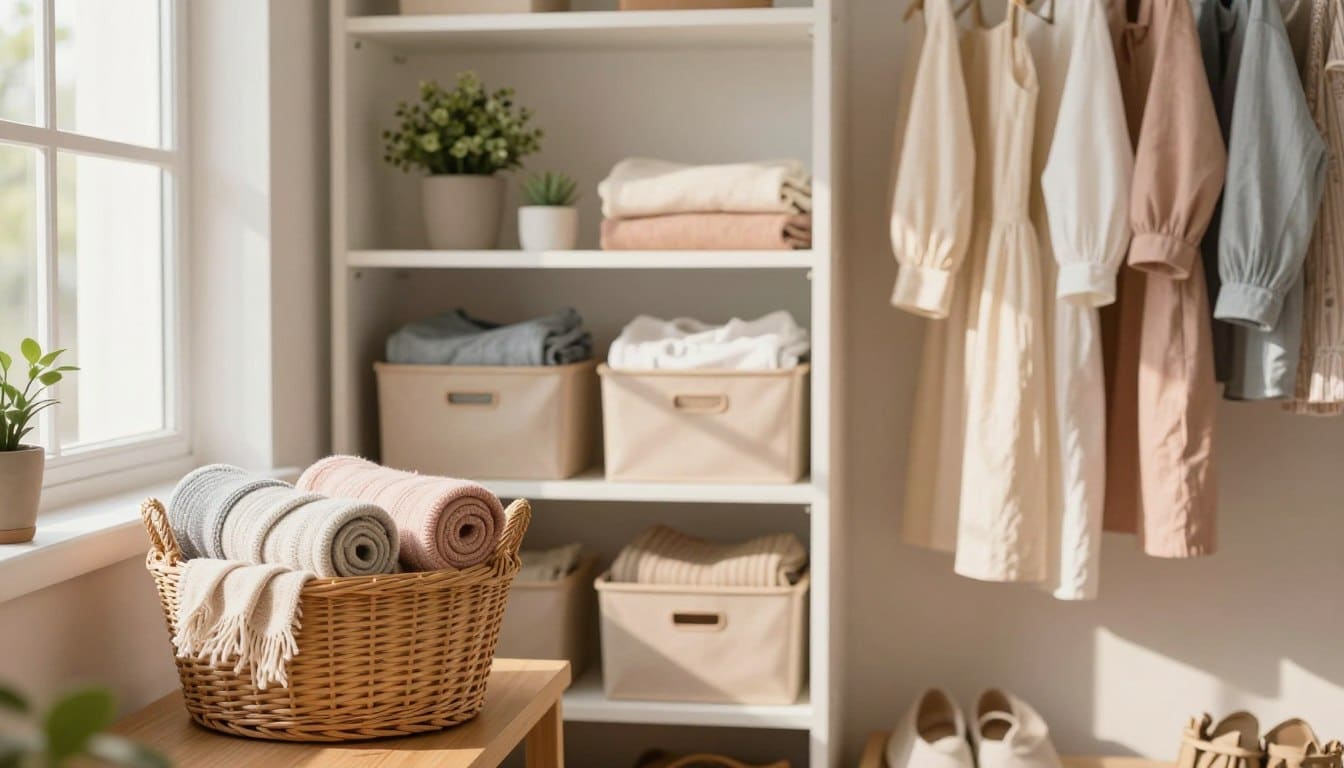
I remember standing in front of an overflowing closet and thinking, “There has to be a better way.” I’ll show you a calm, practical approach that respects your time and keeps favorite pieces ready for wear.
Start by rotating what stays accessible so your wardrobe matches current weather. Keep about 20% empty space so folding and finding items feels easy instead of frantic.
Pick cool, dry spots for off-season bins — top shelves, under-bed boxes, or a guest closet work well. I also keep one coat, a pair of boots, and a sweater handy for surprise cold snaps.
Key Takeaways
- Rotate accessible items each season for quick outfit choices.
- Leave breathing room in your closet; avoid overstuffing.
- Use cool, dry spots like top shelves and under-bed boxes for storage.
- Keep a few just-in-case pieces within reach for surprise weather.
- Choose clear containers and simple labels so rotation is fast.
Start by editing your wardrobe so you only store what you love and wear
Begin by laying everything out so nothing hides—honesty starts with visibility. Pull items from the closet, drawers, and bins onto your bed. Seeing all pieces at once makes decisions faster and kinder.
Quick purge rules I use before storage
Use fast checks: if it doesn’t fit, isn’t comfortable, or you didn’t reach for it this past year, it’s a no. Ask yourself: would I run out for coffee in this right now?
- Sort in one focused session so bags don’t sit in your trunk.
- Keep your closet about 80% full for breathing room.
- Limit the season’s space—let the boundary guide your choices.
Make a simple exit plan: donate, sell, or toss
Decide the exit path immediately. Schedule a Salvation Army pickup, list items on Poshmark or Depop, or post on a local Buy Nothing group. Finalize the purge in one go; you can organize and containerize later when energy dips.
Clean everything first to prevent stains, smells, moths, and mildew
Before packing, I give each item a quick check and clean. Dirty spots and body oils can set over months and invite pests. A little effort now saves wear and headaches later.
What to wash vs. dry-clean (and why it matters)
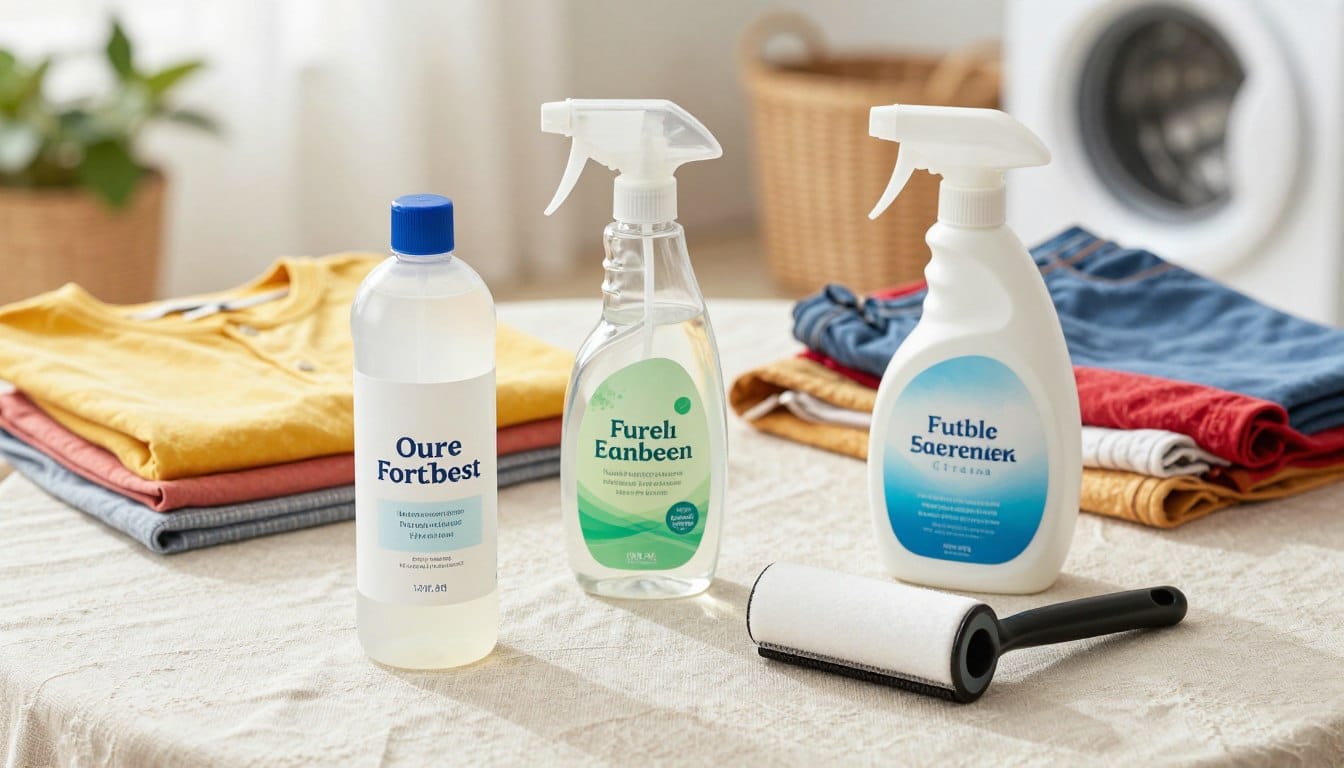
Machine-wash everyday fabric and summer basics. Hand-wash delicates with a gentle, no-rinse formula for safe fabric care.
Anything labeled dry-clean only, or made of wool, silk, or cashmere, should get professional cleaning first. Clean organic fibers help stop moth damage.
Drying all the way: the 24-hour rule
Make sure every piece is fully dry before folding. Give freshly cleaned clothing at least 24 hours on a rack.
Trapped dampness leads to mildew. A quick sniff test catches any lingering smell—rewash if it doesn’t smell fresh.
Prep your space: vacuum closets, wipe drawers and bins (no bleach)
Vacuum shelves and wipe drawers inside and out. Skip bleach; it can harm surfaces and fabrics.
Empty pockets and remove stray items like lip balm or receipts that cause stains later. Use tight-latching plastic bins, like Iris WeatherPro, to keep bugs and dust out for months.
- Clean before you pack—stains set over months and attract pests.
- Wash basics; dry-clean wool, silk, and cashmere.
- Dry fully for at least 24 hours to avoid mildew.
- Vacuum and wipe storage areas; no bleach.
| Fabric | Action | Why |
|---|---|---|
| Cotton & blends | Machine wash | Removes oils and stains |
| Wool, silk, cashmere | Dry-clean | Protects delicate fibers from damage |
| Delicates | Hand-wash, no-rinse | Gentle care preserves shape |
Choose storage containers that fit the fabric and the space
Pick containers that match what you own and where you’ll keep them. I’ll spell out which option works for each fabric so you can choose fast and move on.
Clear plastic, canvas, and cedar — when each makes sense
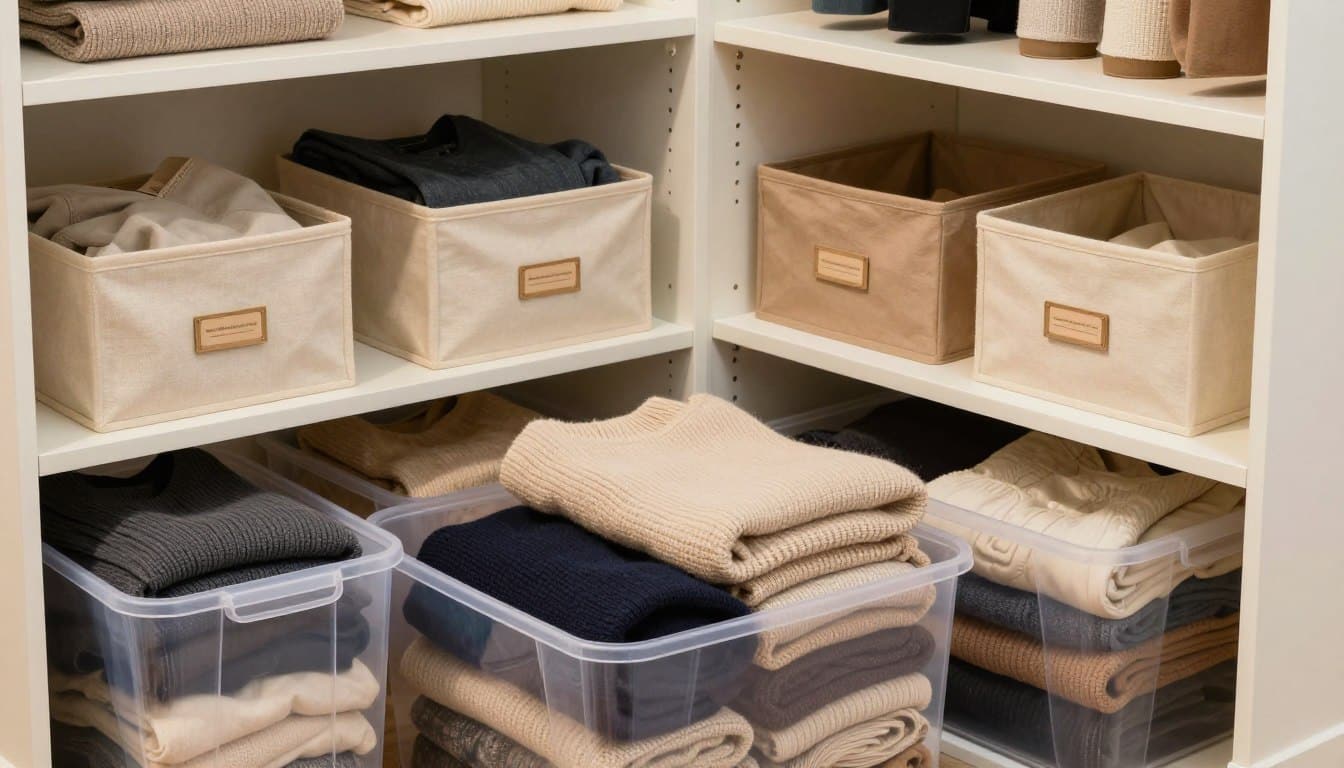
For everyday cotton and blends, clear plastic boxes with tight lids are my go-to. They seal out dust and pests and let you see what’s inside without opening every bin.
Delicate fibers like silk, wool, and cashmere do better in canvas or linen containers. Line them and wrap each piece in acid-free tissue to protect color and texture. This keeps air flowing while guarding shape.
Vacuum bags and what to avoid
Vacuum bags save serious space for bulky cotton stacks such as tees and sheets. Skip them for delicate knits that need air. Puffy coats and down should be hung in breathable garment bags, not compressed.
- Avoid cardboard and flimsy bags — pests and moisture will get in, and boxes can collapse in long-term storage.
- Cedar chests add scent and light pest help, but clean, sealed containers are the real protection.
- Pick sizes that slide onto top shelves or under the bed, and label the sides so you can read stacked boxes at a glance.
how to store seasonal clothes the right way by fabric and garment type
Sort garments by weight and shape first, then pick the right support for each item. I keep steps short so you can finish this in one sitting.
Knits, sweaters, and tees
Fold sweaters and knits. That prevents stretching at the shoulders and necklines. Tees stack neatly when folded; label the pile if you need quick access.
Structured jackets, dresses, and suits
Use sturdy wooden hangers for suits, coats, and heavier dresses. Wooden hangers spread weight and preserve the garment line. Avoid thin wire hangers that bend and ruin shape.
Delicates like wool, silk, and cashmere
Place each piece in a breathable container with acid-free tissue between layers. Let air reach the fabric so fibers rest without crushing. Skip plastic dry-cleaning bags; swap them for cotton garment covers.
Leather and down
Support leather by stuffing sleeves and the torso with tissue and wrapping zippers. Hang down and puffy outerwear so loft keeps its bounce. If a dress is heavy, add shoulder flares or a padded guard.
| Item type | Do this | Don’t do | Why |
|---|---|---|---|
| Knits & sweaters | Fold flat | Hang on thin hangers | Prevents stretched shoulders |
| Structured suits & coats | Use wooden hangers | Compress in sacks | Maintains line and shape |
| Wool, silk, cashmere | Breathable box + tissue | Plastic sleeves | Allows air and prevents yellowing |
| Leather & down | Stuff, wrap zippers, hang | Fold tightly | Protects finish and loft |
Protect against moisture and mildew with a smart environment
Humidity is the quiet enemy of fabric — and most damage starts long before you notice it. Pick a cool, dry spot in your home and keep boxes away from direct sun. Heat and light will fade colors and weaken fibers over time.
Best places in your home: cool, dry, and out of direct sun
Avoid damp basements, hot attics, and sunny walls. If concrete floors are your only option, lift plastic boxes on a low shelf or pallet. That reduces condensation and protects contents.
Dehumidifiers and DampRid: what works for closets, attics, and basements
For small, closed closets or nooks, moisture absorbers like DampRid help curb humidity. Replace packets as they fill. For larger areas such as basements, use a 50‑pint dehumidifier for steady control.
- Use airtight plastic boxes with fitted lids to limit air swings and pests.
- Never seal damp items — trapped wetness invites mildew.
- If sunlight hits shelving, move boxes or drape a light cover.
- Check mid‑season that humidity products are still working and freshen as needed.
Need quick tips for freshening items between washes? Try this simple refresh trick for small odors without a full clean.
| Space size | Best option | Why it works |
|---|---|---|
| Small closet | DampRid & airtight boxes | Targets local humidity; boxes limit exchange |
| Medium room | Portable dehumidifier (30–50 pint) | Maintains steady dryness for multiple boxes |
| Basement/attic | Whole‑room dehumidifier + shelving | Controls broad humidity swings; keeps boxes off floor |
Keep pests away—especially from wool, silk, and cashmere
Protecting fine fibers is about small, steady moves—cleaning, sealing, and gentle deterrents. I treat pest prevention like part of the routine so your pieces come back fresh after months away.
Cedar blocks and lavender sachets as natural deterrents
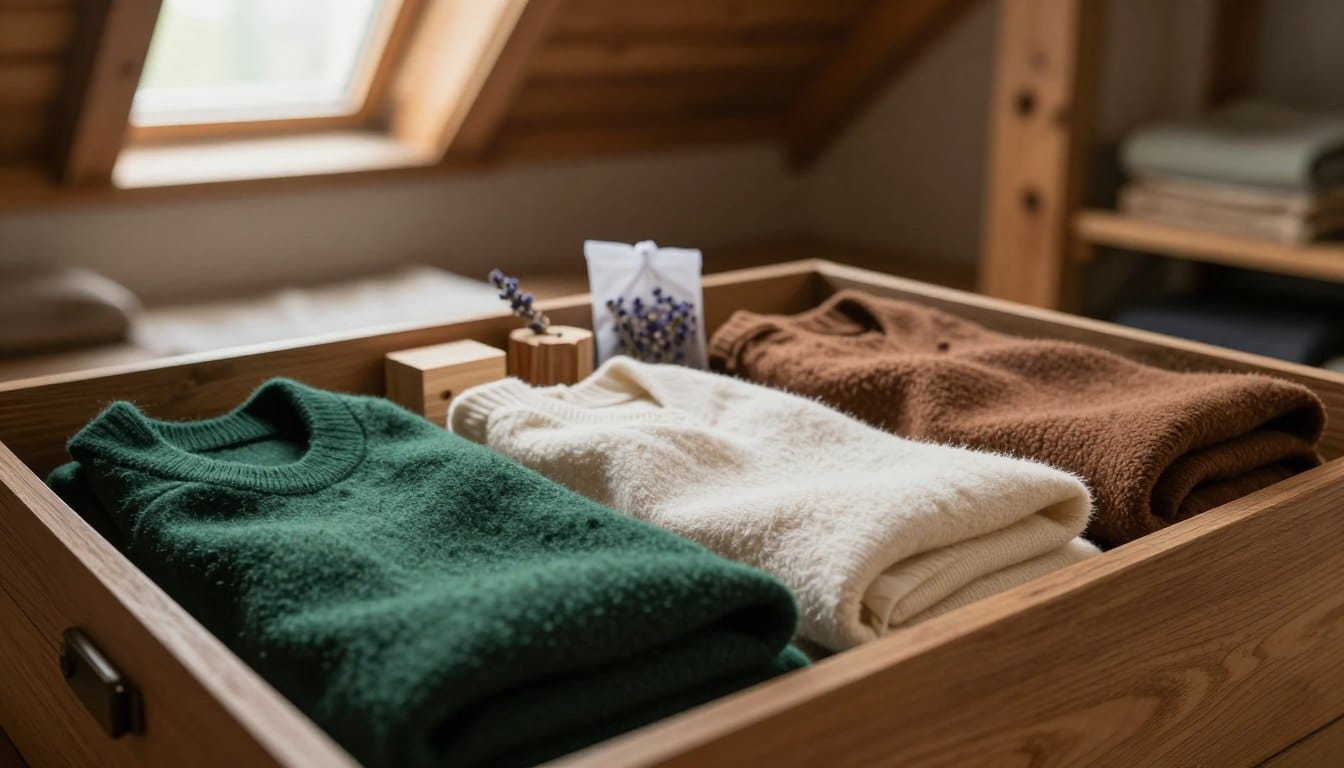
Cedar blocks and lavender sachets add a pleasant scent and a mild barrier against bugs. Tuck them near vulnerable items rather than packed directly on top.
Refresh cedar by lightly sanding when the aroma fades. Lavender can be renewed by switching sachets each year.
Why clean clothing and airtight bins matter more than anything
Moths and pantry pests are drawn to body oils and food traces. Start with clean clothing; it beats any fragrance or deterrent every time.
- Use well-sealed boxes for long-term storage so pests can’t slip inside.
- Don’t overfill closets—airflow helps hide problems early.
- If you find holes or webbing, unpack, launder, and vacuum before repacking.
- Keep floors and baseboards clear of dust and crumbs; they attract the wrong visitors.
| Deterrent | Effectiveness | When to use | Notes |
|---|---|---|---|
| Cedar blocks | Moderate | Near wool, silk, cashmere | Sand to reactivate scent every few months |
| Lavender sachets | Low–moderate | With folded items in breathable boxes | Replace yearly for best freshness |
| Airtight plastic bins | High | Long-term storage | Clean items first; label contents for easy checks |
The best way to prevent damage is simple: clean first, seal well, and check your items when you rotate. That calm routine keeps clothing safe and gives you peace of mind.
Use the right garment bags, hangers, and folding methods
A few simple swaps keep shape and stop damage. I’ll make the choices easy: which bag, which hanger, and a quick fold that holds its form.
Skip thin plastic dry-cleaning bags. They trap moisture and can yellow delicate pieces. Instead, pick cotton garment bags for suits, dresses, and special items. Cotton lets fabric breathe while keeping dust away.
Choose sturdy wooden hangers over wire hangers. Wooden hangers spread weight across the shoulder and keep lines neat. Wire hangers bend and leave marks; they’re fine for quick wear, not long-term protection.
Practical tips you can use now
- Use cotton garment bags for special pieces so fabric breathes while covered.
- Ditch plastic dry-cleaning sleeves; they can trap moisture and discolor over time.
- Pick sturdy wooden hangers for structure; avoid wire hangers that create creases.
- Fold knits and tees instead of hanging; stack with tissue between layers to prevent impressions.
- If you seal a bag, leave a small gap at the bottom for airflow rather than taping it shut.
| Item | Best cover | Best hanger or fold |
|---|---|---|
| Suits & dresses | Cotton garment bag | Wooden hanger with broad shoulders |
| Delicate silk & wool | Cotton bag or breathable box | Wooden hanger or flat fold with tissue |
| Knits & tees | Breathable box or drawer | Fold flat; stack with tissue between items |
| Everyday outerwear | Cloth or heavy-duty garment bag | Strong hanger; keep heavy pieces lower on rods |
Label, rotate, and leave a few “just-in-case” pieces accessible
Clear names and a short inventory list make finding items nearly effortless. A little planning now saves a surprising amount of time later and keeps your daily routine calm.
Labeling that saves time: clear categories and simple names
Use broad categories like “Sweaters,” “Boots,” or “Scarves + Hats” on the front and side of bins and boxes. Add a tiny list of 3–5 items so you know what’s inside without opening everything.
QR codes and inventory notes to track what’s stored
If you like tech, add a QR sticker that links to a short note or phone album with photos of items. That makes inventory checks fast and helps you remember what went into each container.
Keep a coat, boots, and a sweater handy for surprise weather
Keep one small “weather surprise” set in your main closet: a coat, boots, and a sweater. Store less-used boxes higher and keep transitional items within easy reach for quick swaps between seasons.
- Label bins and boxes by simple category for quick grabs.
- Write 3–5 key items on the label so you know what’s inside at a glance.
- Rotate on a calendar each season so the job takes less time each year.
- When unpacking, donate one item that didn’t earn its spot last year.
| Label type | Ease | Best use |
|---|---|---|
| Handwritten tag | Very easy | Quick home editing of items |
| Printed label | Easy | Stacks of boxes or frequent swaps |
| QR sticker | Moderate | Full inventory and photos |
Keep your labeling wording consistent and place tags in the same spot on every box. That small habit makes your wardrobe feel thought-through and ready next time you reach in.
Make the most of your space: under-bed storage, top shelves, and guest closets
You probably have more usable room than you think—let me show practical spots I use at home. Under the bed, high shelves, and a guest closet can handle the overflow without special purchases.
Keep the area cool and dry. Off-season or winter items do best away from damp floors or hot attics. Choose clear containers when you can so finding pieces is fast.
Shoes and boots: compartment bins and tissue-stuffing to hold shape
Store shoes under the bed in compartmented organizers to keep pairs apart and prevent scuffs. Tall boots go upright in dedicated boot bins; stuff them with acid-free tissue so they hold their shape.
- Use low-profile storage bins under the bed for off-season clothes and footwear you won’t need daily.
- Pick containers that fit your frame height so sliding bins is simple, not a wrestling match.
- Separate shoes in compartments so soles won’t mark uppers and pairs don’t rub.
- Park bulky sweaters and coats on top shelves so your main closet stays streamlined.
- If you have a guest closet, set aside a section for overflow and add clear labels for easy retrieval.
| Location | Best for | Tip |
|---|---|---|
| Under-bed | Low-profile storage bins, shoes | Choose containers that slide easily and seal out dust |
| Top shelves | Bulky sweaters, winter coats | Pack heavier pieces at the bottom and lighter on top |
| Guest closet | Overflow and mid-season items | Label sections and keep a small list of contents |
Pack with care and keep one bin near the front for items you might still reach for. That small habit makes clothes storage feel effortless next season.
Conclusion
Wrap up with one quiet truth: small, steady steps protect what you already own.
I’ve kept this simple: edit first, clean well, and dry completely before packing. Pick the right boxes or breathable containers for each fabric. Keep everything in a cool, dry home spot away from sun and moisture so mildew won’t start.
Use cotton garment covers and wooden hangers for delicate pieces. Avoid plastic dry‑cleaning sleeves and wire hangers. Label each box with a short list of items and keep one tiny all‑weather set in your main closet for surprise weather.
You’ve got this. Start with one shelf or one box today and your wardrobe will thank you next season—less fuss, less damage, more time.