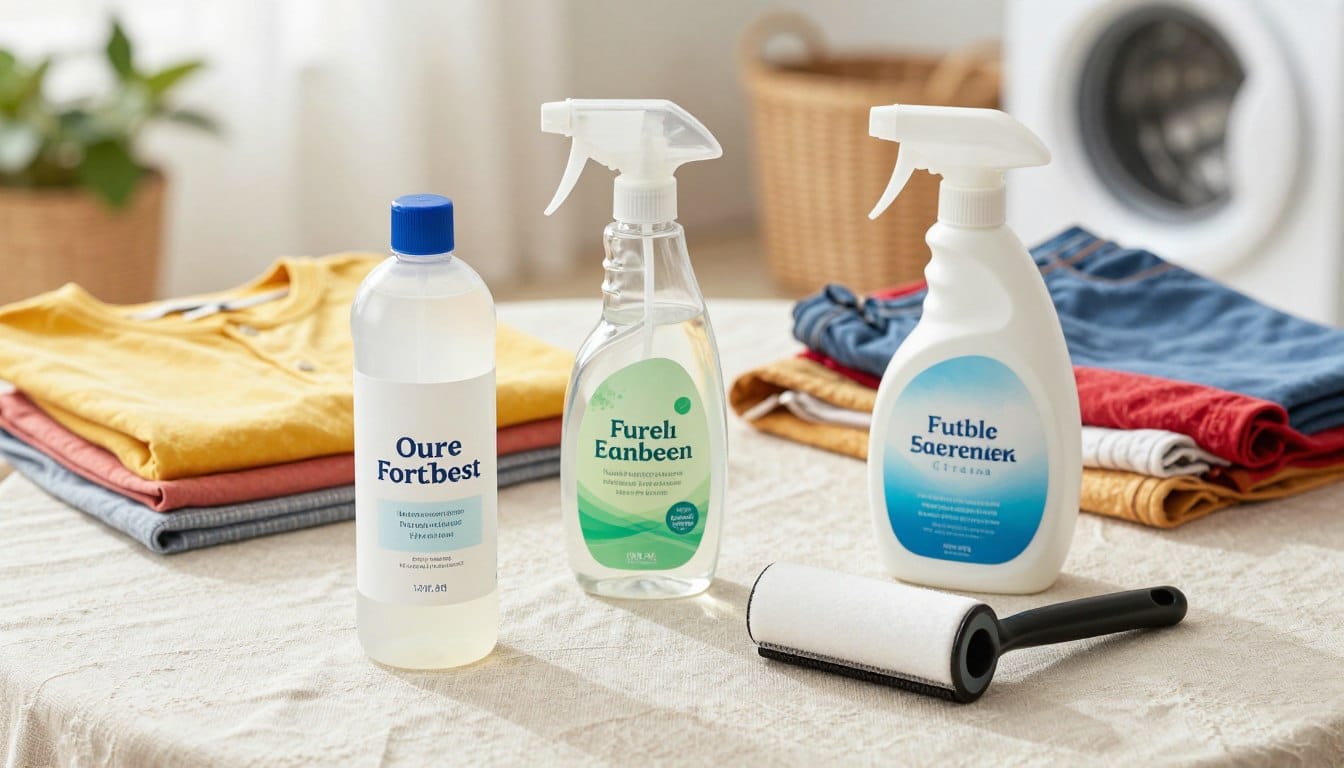
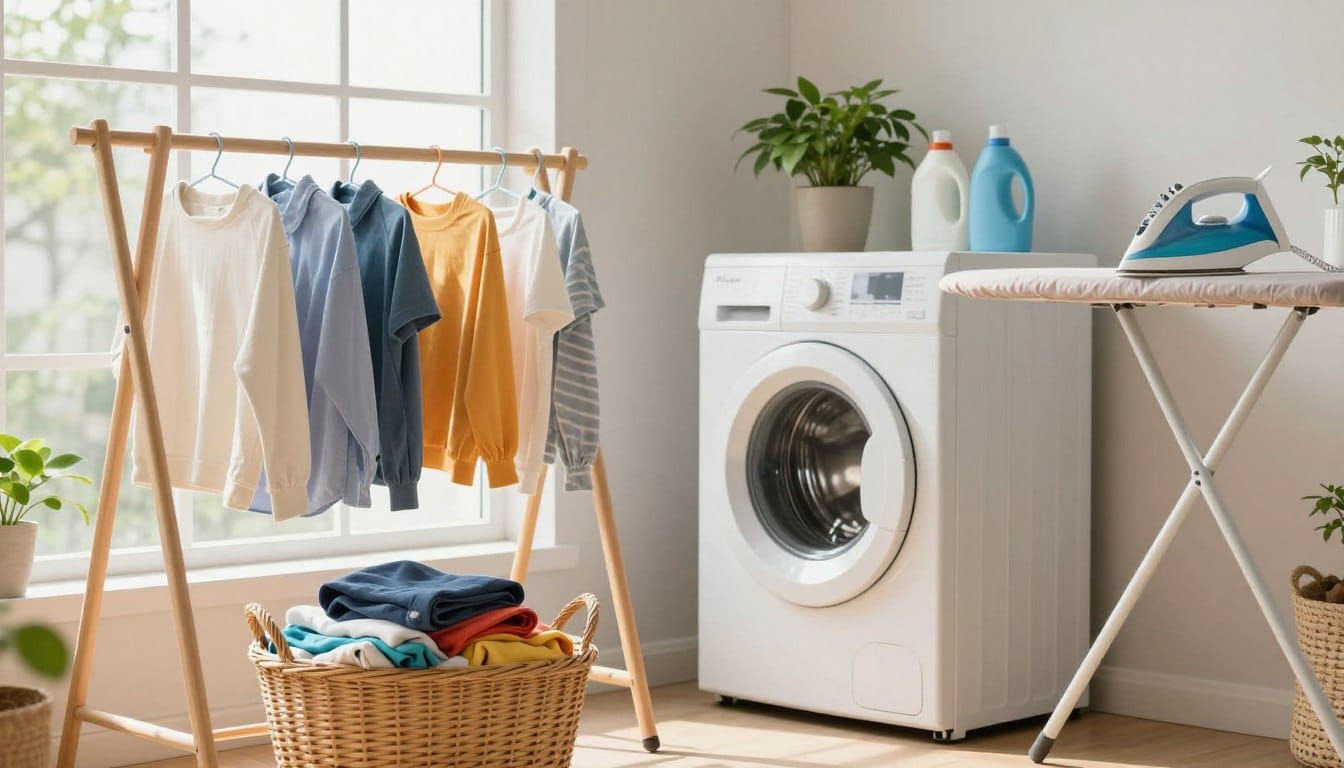
I get how frustrating it feels when a tiny closet keeps repeating the same pieces, so I learned simple laundry moves that stretch each favorite shirt and dress a little longer.
At home I use a magnetic lint bin on the dryer, decant detergent into clear canisters, and tuck a folding rack behind a door. Those small choices make a real difference in fabric life and in daily calm.
Try one small load a day or one per person to avoid piles. Hang-dry on a bar between cabinets or on a collapsible rack. A shallow shelf above the machines hides hoses and holds jars, dryer balls, and a change bowl.
Cover wire shelves with thin wood to stop snags. Use a lazy Susan for stain removers and label canisters so you use the right amount every time. These ideas fit tight setups without a remodel.
Key Takeaways
- Small, repeatable habits protect fabrics and cut stress.
- One small load a day keeps clutter away and items in rotation.
- Decanting soap and labeling clear canisters prevents overuse.
- Magnetic lint bins, lazy Susans, and shallow shelves save space and time.
- Cover wire shelves and use collapsible baskets to avoid snags and maximize room.
Why a small wardrobe needs gentle, simple care
When you own fewer pieces, each wash feels more important. I learned that gentle settings, cool water, and light loads protect fibers and keep favorites wearable for years.
In a tight laundry room or closet, smart organization matters as much as wash choices. Clear canisters, labels, and a slim shelf make the most of the space and cut fumbling time.
Light colors and good light change the way a small room feels. They help you spot stains early so you treat clothes the right way the first time.
Vertical storage saves floor space and keeps the area calm. A narrow cabinet or wall shelf keeps towels, detergents, and everyday gear within reach without crowding the room.
- With fewer clothes, gentle cycles and cool water extend wear over years.
- Clear bins and decanted products improve organization and stop over-pouring.
- Set a steady routine—one small load most days—to avoid harsh, last-minute washes.
Sort smarter so you wash less and wear longer
I found that tiny, steady habits save the most time and keep clothes looking fresh.
I start with tiny “like-with-like” piles. Light tees with light tees. Gym gear together. That reduces friction and stops wear.
Try a simple system: one person’s load each day from start to finish. It clears the closet and trims your weekly chores into manageable chunks.
- I keep a mesh bag clipped by the door for socks and delicates; toss it straight into the washer so nothing goes missing.
- Use a slim rack or a sorter with two baskets to keep lights and darks moving without chaos.
- Label bins as “wash,” “repair,” and “dry-clean” to avoid needless re-washes and save time.
- Pre-treat stains right away. A small spray on a lazy Susan makes it easy to grab and go.
- Five minutes to sort at night gets you out the next morning. Over-the-door hampers keep floors clear and organized.
Wash settings that make a big difference in years of wear
Choosing the right temperature and load size makes a noticeable difference over time. I default to cool water and the gentle cycle for most pieces. It slows fading and keeps fibers from breaking down in the machine.
Light loads let garments move and rinse fully. Overstuffing traps soap and causes friction. Your dryer will also work better when clothes aren’t tangled.
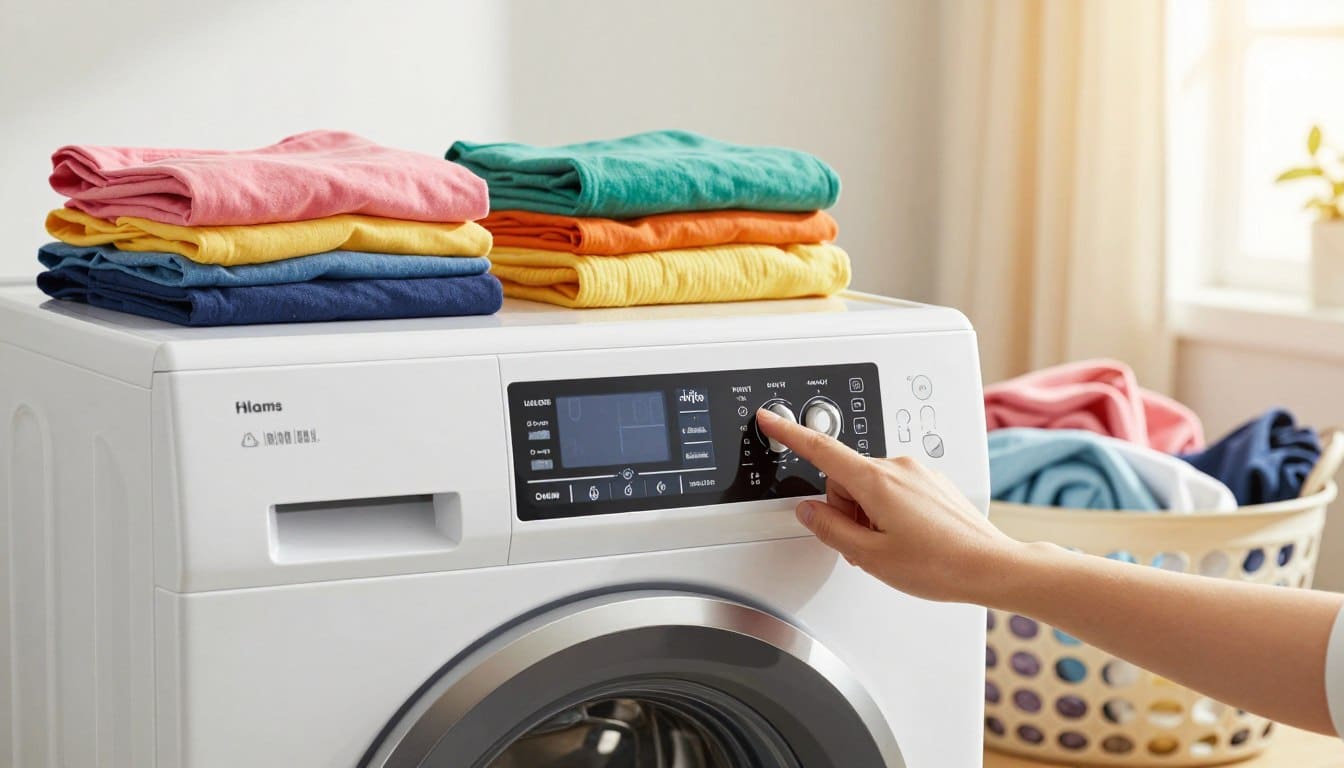
- I decant detergent and boosters into clear, labeled canisters so you can see levels and pour the right amount every time.
- Keep a small scoop taped inside the lid or hung from the shelf so dosing is simple and consistent.
- Use a mild detergent and skip heavy softeners that coat fibers and trap odor; less product usually does more good.
- Wash towels on warm when needed, but use a gentle spin. Over-drying roughens loops faster than cooler washing.
- If you’re unsure, choose the gentler setting—it’s the easiest way to make a lasting difference in fabric life.
For quick guidance on preventing shrinkage and other easy steps, see this short guide: stop clothes from shrinking.
Drying that protects shape and fabric (and saves space)
A few simple drying habits stopped heat damage and freed up usable space in my laundry area. I favor air-first methods and small tools that fit between cabinets.
Air-dry where you can
Heat harms elastic and knits, so I hang items on a wall bar, a folding rack, or an over-door rod. A rack that slides between the machine and wall tucks away when not in use.
Short tumble, then hang
I spin well, tumble briefly to loosen wrinkles, then move clothes to a rack to finish. This saves energy and keeps fabric shape longer.
Smart storage and tidy habits
A narrow shelf above the washer holds drip-safe trays. Magnetic bins on the dryer collect lint and pocket trash. Keep dryer balls in small baskets instead of heavy softeners.
- Hooks for towels and kitchen cloths boost airflow.
- Clear floor space makes loading and folding easier.
| Method | Best use | Space need |
|---|---|---|
| Wall bar | Shirts, delicates | Low |
| Folding rack | Sweaters, everyday wear | Medium (slides away) |
| Short tumble + hang | Tees, light towels | Low |
Storage solutions that maximize space and minimize damage
I learned to treat storage as part of outfit care—where you put things matters almost as much as how you wash them.
Under-bed fabric bins and long boxes with wheels make room for bulky sweaters and sweatshirts. I keep a low, wheeled box under my bed so heavy pieces slide out without a mess.
Over-the-door organizers use vertical space on the back of a door. They hold lightweight pieces, towels, and scarves without crowding a closet or shelf.
If you have wire shelves, add a simple wooden cover or thin board. It stops snags and keeps knitwear from tipping through the gaps. A solid shelf looks cleaner and protects fabrics.
- Label every bin—detergent, stain care, dryer tools—so you grab things fast and avoid buying duplicates.
- One or two baskets are enough; keep categories tight so your room doesn’t overflow with unused pieces.
- A shallow shelf can hold jars for dryer balls and a small repair box with needle, thread, and spare buttons.
I like clear bins when possible. You can see what’s inside at a glance and put items back in the right place.
Small laundry room, big results: space-saving systems
I swapped a wire shelf for closed wall cabinets and suddenly the space worked, not fought me. Gaining reachable storage cleared the floor and made daily chores simpler.
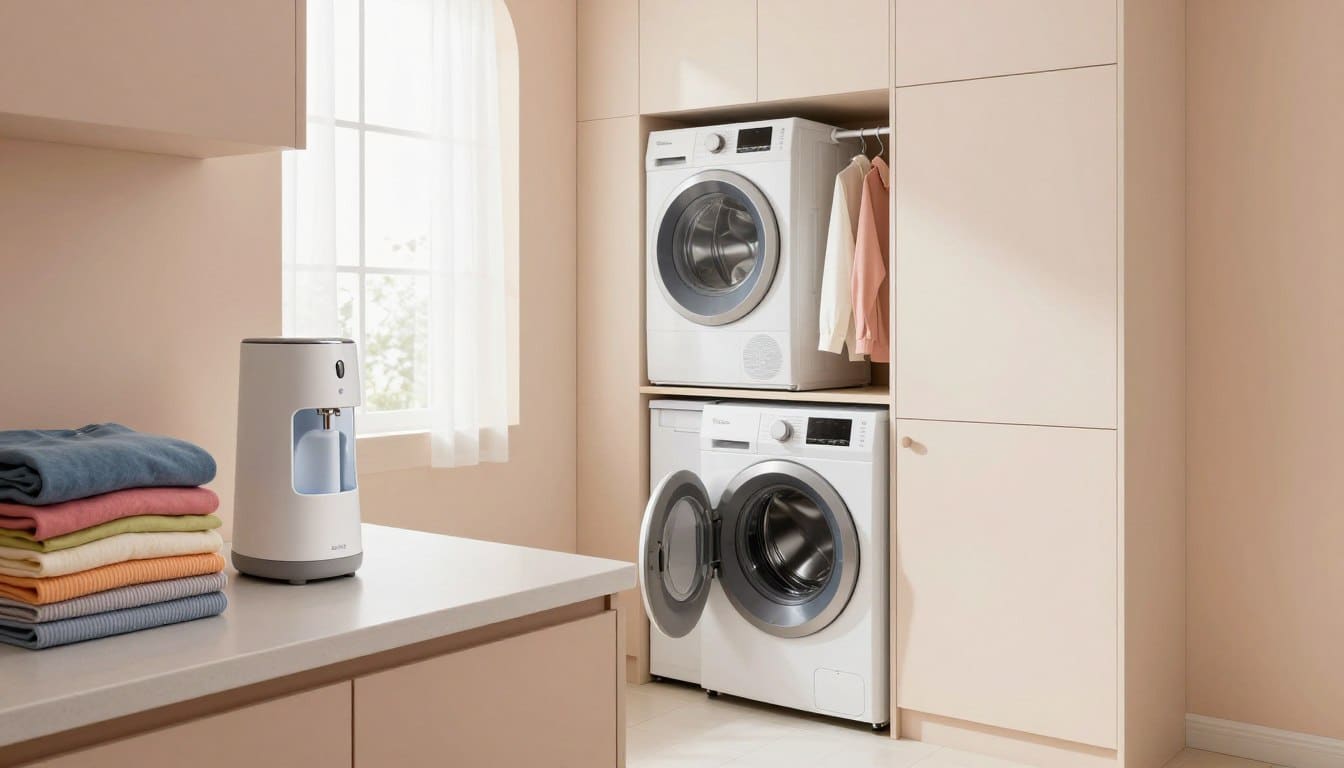
Use wall cabinets and a shallow shelf
Closed cabinets hold more and look tidy. I added crown trim to make the design feel finished. A shallow, wall-to-wall shelf above the appliances hides hoses and gives a tidy landing zone for jars and tools.
Collapsible baskets and a folding stool
Collapsible baskets tuck away when not in use. I keep a folding stool nearby so I can reach high shelves without pulling things down and making a mess.
Lazy Susans and bright light
A small lazy Susan corrals stain removers, lint rollers, and dryer sheets so I spin and grab without digging. Light paint and a low-profile fixture keep the room calm and help spot stains early.
- Wall cabinets free the floor for movement.
- Shallow shelves hide hoses and act as a useful work ledge.
- These solutions fit a full room or a tight closet with appliances tucked in.
laundry tips for small wardrobes you can start today
Start today with one small change that keeps your favorite pieces wearable and your closet calm.
I use a slim folding rack or a bar between cabinets so hanging beats folding when I can. Over-door hooks add hanging space without crowding the room. Pick one hook spot and make it the go-to place for most-worn items.
Hang more, fold less: racks, hooks, and a simple door system
A narrow rack saves space and stops creases. A bar between cabinets is low-effort and stays out of the way.
Hook a few sturdy hangers on the door for tees and towels. You’ll cut dryer time and keep things fresh longer.
Keep a small “repair and refresh” bin front and center
Keep a tiny bin with a needle, thread, spare buttons, and a lint shaver within reach. Spend five minutes on fixes and you avoid replacements.
Give delicates a mesh bag home so they’re simple to grab on wash day.
Edit your closet seasonally so every piece gets airtime
Box up off-season items and rotate every few months. That keeps your closet neat and lets each garment earn its place.
Try one small load a day as a system. It keeps the space clear and your weekend free.
- Use your best rack spot for top wears.
- Put towels and gym gear on hooks to dry between wears.
- Choose one place for stain tools so you treat spots fast.
| Action | Why it helps | Time |
|---|---|---|
| Folding rack | Reduces creases | Instant |
| Repair bin | Extends garment life | 5 minutes |
| Seasonal edit | Prevents overcrowding | 30–60 min |
Real-life placement ideas when closets are tiny
A few well-placed storage spots outside the bedroom changed how I get dressed every morning.
Use a slim bookshelf beside machines
A narrow bookshelf beside a stackable near the kitchen holds heavier appliances low and supplies up top. It keeps detergent and helpers close to the laundry room without stealing closet space.
Consider a living-room credenza or media cabinet
If mornings clash, a credenza in the living room stores daily wear so two people can get ready at once. It doubles as surface space and hidden storage that matches your design.
Set up a mini “front-of-closet” rack
A short rack at the closet front keeps most-worn outfits visible and rotating. Add one shelf with labeled bins and a couple of baskets to hold spare hangers and stain tools.
- Try an over-door hamper on a magnetic hook near the kitchen or entry.
- Magnetic bins on the dryer clear shelf clutter and hold lint and sheets.
- One or two baskets by the front door corral shoes and quick layers.
| Place | Best use | Why it helps |
|---|---|---|
| Bookshelf by machines | Appliances, bins | Saves closet space and keeps supplies handy |
| Living-room credenza | Daily wear | Prevents morning traffic in one closet |
| Front-of-closet rack | Most-worn outfits | Improves outfit rotation and visibility |
Conclusion
Small changes make the room work harder and your clothes last longer.
I keep one steady load a day, decant soap into clear canisters, and stash a magnetic bin on the dryer. These habits save time and protect fabric over years.
Use a slim bookshelf or a shallow shelf above the machines, add a folding rack, and hang an over-door hamper. Cover wire shelves with thin wood and choose light paint and bright bulbs so you can spot stains fast.
Label bins, keep products in one place, and air-dry delicate pieces when you can. Start with one change today and keep it simple—consistency wins every time.