I get it — that favorite tee that was once deep and rich can look tired after too many washes. You might feel a little annoyed when color dulls, especially if you wear dark pieces a lot.
Start with small changes that fit your routine. Wash garments inside out and use cold water whenever possible. Choose a detergent made for dark colors and skip bleach and fabric softener; these things strip dye and speed color loss.
Air-dry away from direct sun, or tumble on the lowest heat and remove items promptly. Between washes, spot clean or steam to cut down on full cycles. Little shifts like these add up and keep your wardrobe looking sharper for longer.
Key Takeaways
- Turn garments inside out and wash in cold water.
- Use detergents formulated for dark color care.
- Avoid bleach and fabric softeners that strip dye.
- Air-dry out of sunlight; use low dryer heat if needed.
- Spot clean or steam between washes to reduce full laundering.
Why black clothes fade and what you can do about it
Some of your wardrobe fades faster simply because of the fabric and the way you treat it. Over time, dyes break down and the original color lifts from the threads.
Frequent washing, drying in sunlight, and high dryer heat speed that process. Natural fabrics like cotton lose dye faster than polyester or nylon. Wool blends and some synthetics hold color better, while linen and acetate can bleed and go dull sooner.
You don’t need a dramatic routine change. I peek at labels, wash inside out, and pick cold cycles. I also cut back on unnecessary loads and avoid hot dryers when possible.
- Dyes weaken with friction, heat, and light, so more washing means faster wear.
- Sunlight accelerates clothes fading — dry away from direct rays and store in a dim closet.
- Agitation rubs off dye molecules, so gentler cycles and smaller loads help clothes keep their shade.
Bottom line: small steps now give the best return over time. Choose fabrics that hold dye and treat daily wear with low heat and gentle washing, and you’ll see less black clothes fading down the road.
The real culprits: heat, friction, and light
Heat, rubbing, and sunlight quietly steal the rich tone from your favorite dark pieces.
Heat from the dryer and hot water in the wash speeds the chemical breakdown of dye. I set the temperature low and avoid hot water on dark loads unless a care label says otherwise.
The washing machine’s motion also matters. Over-agitation and full loads tug at fibers and rub pigment away. I use gentle cycles and smaller loads so items bounce around less.
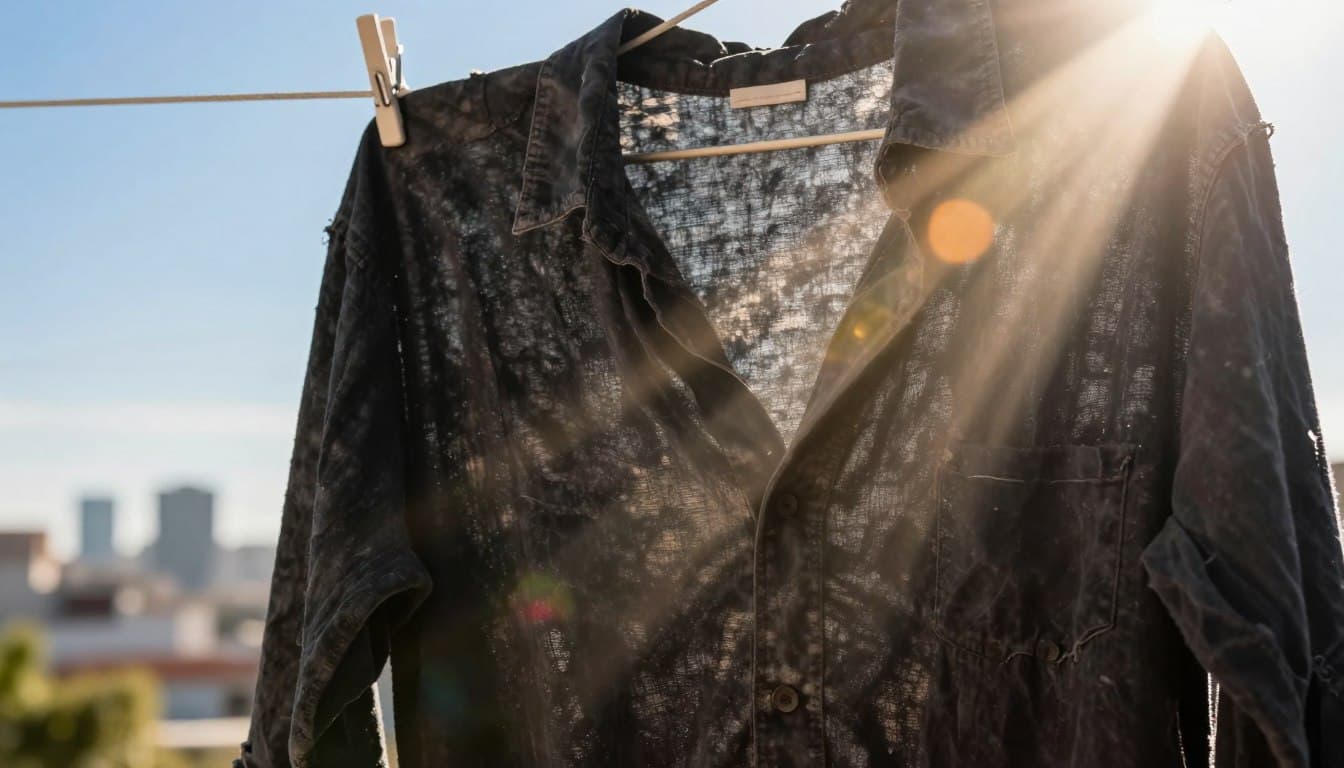
- Heat speeds dye loss, so skip high temperature settings when possible.
- Even warm water nudges color toward dull, so I default to cold water for most washes.
- UV light fades fabric fast; dry in shade or indoors and avoid sunny windows or a hot car.
- Turn garments inside out and remove them promptly after a short, low-heat cycle if you must use a dryer.
Prep before you wash: small steps that save color
A few quick checks before a load make a big difference for dark garments. Spend a minute now and you cut wear down the road.
Check the care tag first
I always read the garment tag before any wash. The label tells me the best temperature and drying method for that fabric.
If it says cold and line dry, I follow that. Matching settings keeps shape and color intact.
Sort by shade and weight
Sort by both color and weight. Heavy towels and denim can abrade finer knits in the same load.
Smaller loads reduce friction in the washing machine and lower the chance of rubbing off dye.
Turn items inside out and use mesh bags
Turning clothes inside moves scuffs to the less visible side. For delicate pieces, a mesh bag stops zippers and hooks from snagging.
New pieces get a short solo wash the first time so dye transfer is less likely.
- Read tags and follow the recommended wash cycle.
- Keep loads small so the washing machine is gentle on fabrics.
- Close zippers and empty pockets to avoid extra wear.
- Treat new dark items like delicates for the first few washes.
| Prep Step | Why it matters | Quick action |
|---|---|---|
| Read care tag | Matches temperature and drying method to the fabric | Set wash and dry per label |
| Sort by weight | Prevents heavier pieces from abrading lighter ones | Separate towels/jeans from knits |
| Use mesh bags | Protects delicate surfaces from hardware and friction | Place delicates in a bag before washing |
Want more practical wash suggestions? See these wash tips for dark clothing for easy routines that fit a busy life.
How to keep black clothes from fading in the wash
I treat the wash as a gentle step, not a battle. Set a low temperature and pick a soft cycle, and you’ll cut dye loss without fuss.
Use cold water and a gentle or delicate wash cycle
Set your washing machine to cold water and choose the delicate or gentle cycle. These two settings lower heat and agitation, which means less rubbing and less dye loss.
Turn items inside out before loading. Shorter cycles help too — less time in the drum means less wear.
Pick detergent made for dark colors or use pre-measured pods
Use a detergent made for dark clothing or a pre-measured pod so you don’t overpour. Too much soap leaves residue that dulls deep tones.
- Set the machine to cold water and a gentle cycle — this slows fading by cutting heat and friction.
- Use detergent for dark clothes or a pod; stick with the smallest effective amount.
- Group similar weights and add an extra rinse if the label allows to remove leftover suds.
| Setting | Why it matters | When to use |
|---|---|---|
| Cold water | Protects dye and reduces shrinkage | Most dark loads |
| Delicate cycle | Less agitation, gentler on fibers | Knits and tees |
| Extra rinse | Removes soap residue that can dull color | When items feel soapy |
If you want more habits that make laundry easier, check these wash tips for dark clothing.
Wash less, wear longer: set your laundry rhythm
A little pause between wears can add weeks of life to a favorite top. Experts agree: fewer full cycles slow dye breakdown and stretch the life of garments.
When to wash versus when to spot clean or steam
If an item smells fresh and has no visible soil, air it overnight or give it a quick steam. A steam cycle in many washing machines refreshes fabrics without a full wash.
Blot spills immediately with a damp cloth and a tiny drop of gentle detergent. That small step often prevents a full laundering session.
Simple in-between care to keep odors down without a full wash
Rotate outfits during the week so garments can breathe. For sweaty areas, a targeted fabric refresher or a quick rinse and hang is enough before a proper laundry load.
- Plan laundry time around actual dirt or odor, not a calendar.
- Use spot cleaning and steaming to delay washing.
- Rinse gym items right away and wash later with a full dark clothes load.
| Action | When to use | Result |
|---|---|---|
| Air out overnight | Lightly worn tees | Reduces odors, delays wash |
| Spot clean | Small stains | Avoids unnecessary washing |
| Machine steam/refresh | Wrinkled or musty items | Freshens without full cycle |
Drying the right way so your darks stay dark
What happens after the wash matters just as much as the wash itself for darker pieces. I favor a calm, simple routine that gives color a chance to last.
Air-dry away from direct sunlight
I hang dark garments in a shaded spot whenever I can. Sunlight pulls at dye and makes clothes fade faster, so shade is the safe choice.
Heavier knits rest flat on a rack to keep shape. Good airflow helps items dry evenly and prevents stiff patches.
If you must use a dryer: low heat, short cycle, remove promptly
Set the dryer to the lowest safe setting and pick the shortest cycle that gets things dry. Dry items inside out and remove them as soon as the cycle ends.
Run fewer pieces per load so the drum doesn’t overwork the fabric. If your machine has an air or no‑heat option, use it for color care.
- Hang in shade for best results.
- Flat dry heavy knits to avoid stretching.
- Lowest dryer setting, short cycle, remove promptly.
| Method | Best for | Impact on color |
|---|---|---|
| Air-dry (shaded) | All dark garments | Lowest risk of color loss |
| Low-heat dryer | When speed is needed | Moderate risk; use short cycle |
| Air/no-heat cycle | Delicates and tees | Gentle on fabric and color |
Follow this simple path and your favorite black clothes will look fresher longer after you wash black clothes.
Extra care that makes a difference over time
A few small habits protect color and stretch the life of your favorite dark pieces. These steps are low-cost and easy to add into your routine.
Store in a cool, dry place away from sunlight
Keep storage simple: a shaded closet or a drawer is best. Direct light dulls tones and makes fabric fragile over years.
Use breathable hangers for shirts and fold heavy knits to avoid shoulder dust lines.
Rinse cycle add-ins: white vinegar can help; skip salt and fabric softener
Add about 1/2–1 cup of white vinegar during the rinse cycle to clear residue and support color. Vinegar acts like a mild natural softener.
I skip salt—there’s little evidence it helps modern dyes. I also avoid liquid fabric softener; it can leave a film that dulls color.
Bring back depth with a careful over-dye when pieces look tired
When an item looks flat, a home dye kit can restore depth. Follow the kit instructions and test on a hidden seam first.
For quick refreshes, use a dark-color detergent and cool water in a small load. Repeat small habits—shade drying, vinegar rinses, gentle washing—and your garments will hold richer color longer.
- Store away from direct light.
- Use 1/2–1 cup white vinegar in the rinse cycle.
- Avoid salt and fabric softeners; choose dryer balls for softness.
| Care Step | Why it helps | Quick tip |
|---|---|---|
| Shaded storage | Protects dyes from UV breakdown | Closed closet or drawer |
| Vinegar in rinse | Removes residue, helps set color | 1/2–1 cup during rinse cycle |
| Over-dye | Restores depth for tired items | Follow fabric-specific kit steps |
Conclusion
A gentle laundry rhythm protects deep tones and cuts down on wasted garments. Start with cold water, a gentle cycle, and a detergent made for dark items. Those three simple moves are the biggest wins.
If you need a dryer, use the lowest heat and pull items out promptly. Turn pieces inside out, keep loads small, and treat new items with care.
Wash less often by spot cleaning, airing, or steaming. Try a vinegar rinse now and then, and consider an over-dye if a favorite looks tired.
Follow these tips and your black clothes will hold color longer. You’ve got this — a kinder wash routine makes a real difference for your wardrobe and your time.