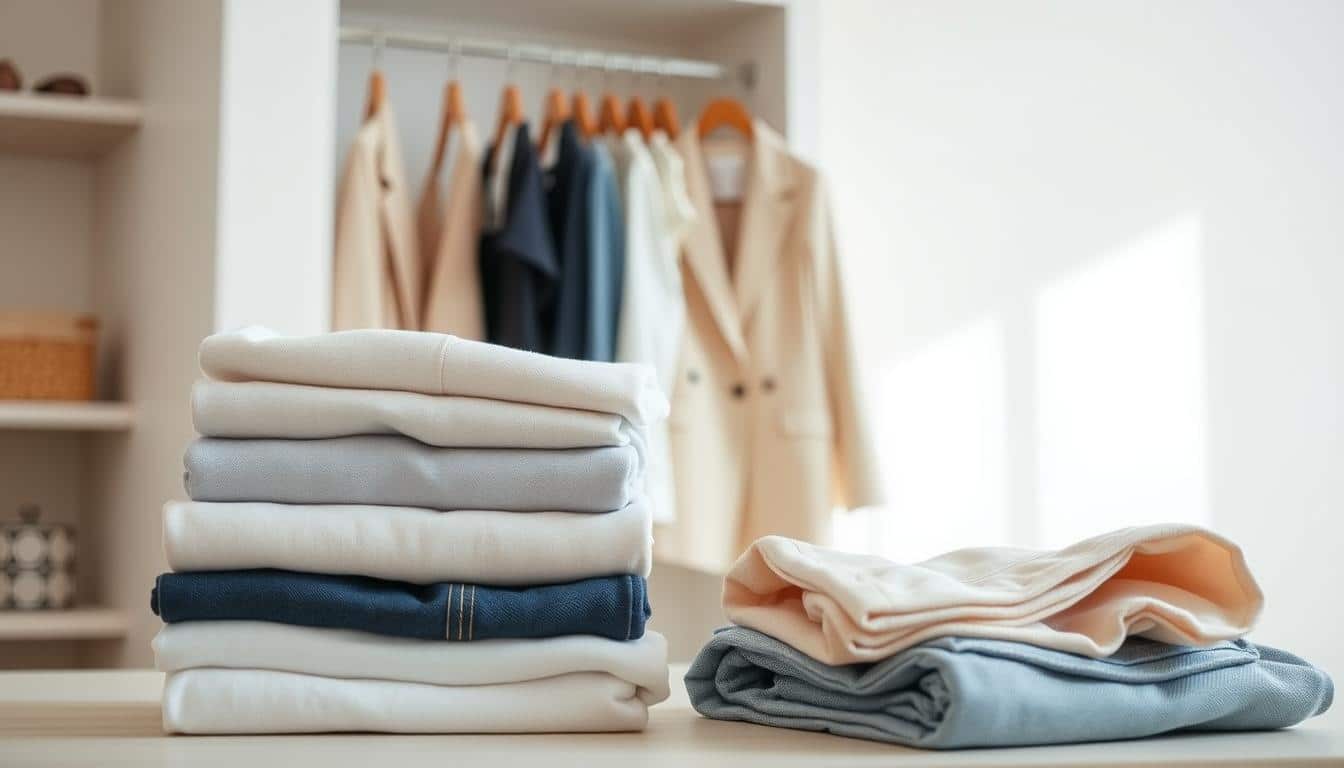

I love style, and I also love seeing more in my bank account — that’s why I plan purchases around real savings and smart timing.
I used to buy whatever caught my eye and end up with a closet full of unused pieces. Now I shop with a simple rule: buy for a gap in my wardrobe and pick pieces that mix well with what I already own.
I’ll share the quick math I use in the aisle and the calendar beats I follow — from holiday weekends to Amazon Prime Day — so your shopping feels calm and purposeful, not frantic.
Key Takeaways
- Plan shopping around major discount dates to get real savings.
- Use cost-per-wear thinking for smarter purchases.
- Lean on secondhand for great brands and lower prices.
- Build a small, mix-and-match wardrobe that works every month.
- Adopt simple care habits so items last longer through the year.
What changed my closet (and budget) for the better
I switched from impulse grabs to purpose-driven buying, and that shifted everything. I now start every decision with a short list of gaps in my closet and a clear idea of outfits.
The “gap-first” mindset that stops impulse buys
I write three missing items before browsing. If a piece won’t finish at least three outfits, I skip it. That little rule cut random purchases and made my wardrobe work harder.
Cost per wear: my quick math before I buy
I do fast math in my head. A $100 coat worn 100 times is $1 per wear. Worn five times it’s $20 per wear. That helps me compare a pair of jeans I’ll wear weekly with a dress I might wear once.
Why I ditched trends for personal style
I stopped chasing seasons. I pick quality pieces that feel like me and last years. When a trend calls, I wait a week and check secondhand or a sale if I still want it.
- I keep a tiny “maybe” list on my phone and delete it if the urge fades.
- My goal: fewer, better pieces that earn their place.
- Try a one-week challenge: create five outfits from what you already own first.
Smart shopping moves that save right away
A little timing and a polite question at checkout trimmed my bills fast. These are quick steps you can try next trip to a store or when ordering online.
Time your buys: end-of-season and holiday sales
I aim for end-of-season clearance: June–July for spring/summer, January for fall/winter. Big sales—MLK Day, Memorial Day, Fourth of July, Labor Day, Black Friday, Cyber Monday, Prime Day—are great targets.
I keep a short list of items and watch those dates. That helps me compare prices across retailers and wait for a drop before I click.
Ask for small discounts on damaged or floor samples
When I spot a tiny flaw, I point it out calmly and ask if they’ll adjust the price. A loose thread or small snag often trims the tag by a noticeable amount.
If I miss a sale, I reach out to customer service and ask about a post-purchase adjustment. Many stores honor it within a short window.
- Scan clearance first, then browse regular racks only for items on your list.
- Screenshot a lower online price and ask for a match at checkout.
- Set a target price for big-ticket pieces and use alerts or wish lists.
| Timing | Typical Items | Practical Tip |
|---|---|---|
| January (end of winter) | Coats, knitwear | Check clearance bins first; compare final prices at three retailers |
| June–July (end of spring) | Swimwear, light layers | Buy basics now for next year; store alerts help track price drops |
| Holiday weekends & major sales | Mixed categories | Use screenshots and polite price-match requests at checkout |
| After new arrivals drop | Trend pieces | Wait a few weeks; items often go on marked-down racks |
How to save money on clothing with secondhand and resale
A few taps on resale apps usually gives me the same look for less and keeps my closet interesting.
Secondhand isn’t dusty racks anymore. Sites like thredUP and Poshmark let you filter by size, brand, and condition. That means you can find specific items fast and skip endless browsing.
I lean into brand-run resale programs for nearly-new pieces. J.Crew Always, Madewell Forever, M.M. LaFleur Second Act, Eileen Fisher Renew, and Michael Kors Pre-Loved list pieces that often look almost new.
- I start searches with brands I already own. It gives the look I want without a full-price tag.
- Local stores like Buffalo Exchange and Crossroads Trading buy for cash or trade credit. I use that credit for fresh, new-to-me clothes.
- I read measurements and fabric notes on every listing. That cuts returns, especially for fit-sensitive items.
- I sell pieces I don’t wear and roll the balance into future finds. It keeps my wardrobe fresh for years.
| Option | What you’ll find | Best for | Quick tip |
|---|---|---|---|
| Large platforms | Overstock, returns, many brands | Filter by size and brand | Save searches and act fast |
| Brand resale | Curated, like-new pieces | Trusted fit and quality | Check official listings first |
| Peer apps | Vintage, unique items | People selling direct | Ask for measurements, photos |
| Local thrift stores | Seasonal finds, bargains | Immediate cash or credit | Visit weekly for best picks |
Build a wardrobe that works hard (not just looks good)
I started treating my wardrobe like a toolbox—each piece has a job. That switch made getting dressed faster and easier.
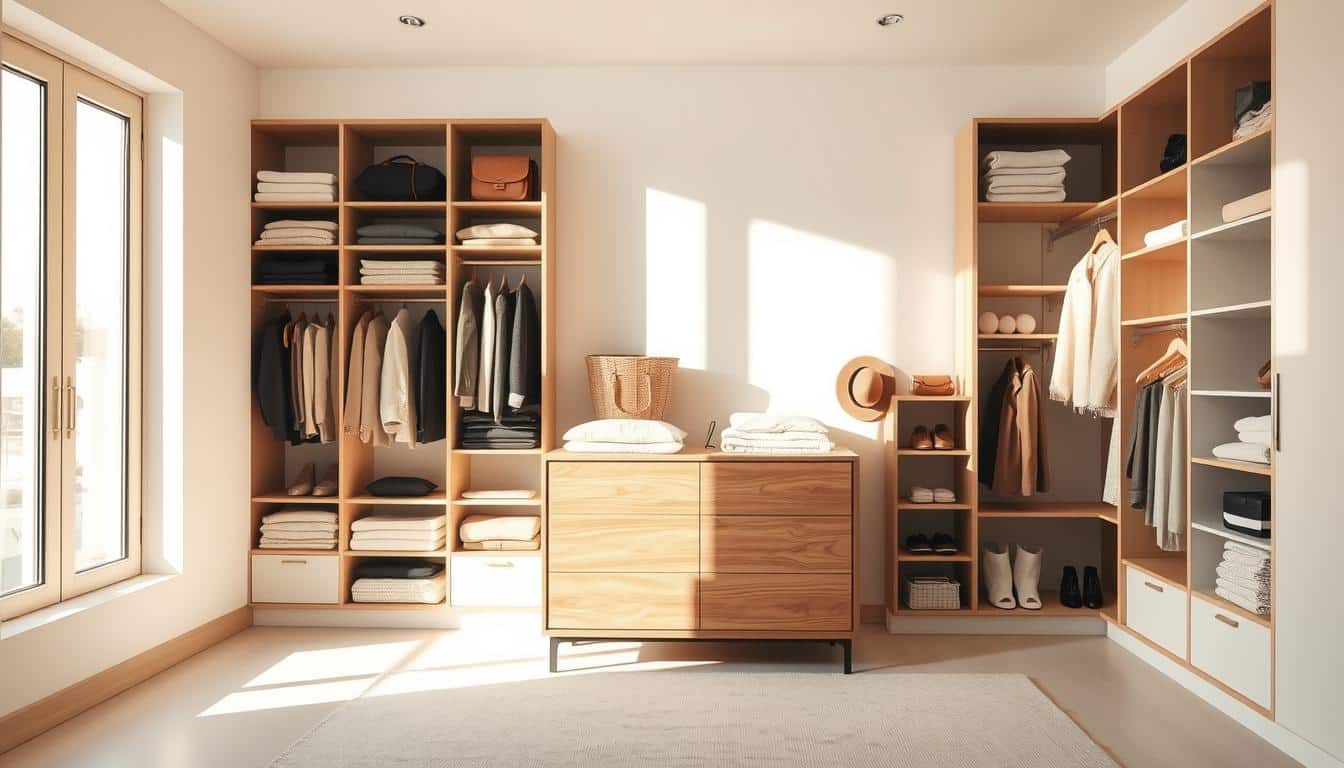
Create a simple capsule with mix-and-match pieces
I built a small capsule: neutral bottoms, versatile layers, and a couple standout pieces. Everything mixes well, so each item gets worn more times.
Use the “one in, one out” rule to stay lean
If a new piece comes home, something I don’t wear leaves. This rule keeps my closet tidy and stops impulse duplication.
Shop your own closet before you shop stores
I try new combos first. Cuff jeans, swap shoes, or layer differently. Most mornings I find a full outfit already in my closet.
- I pick a tight color palette so pieces work together and save time getting dressed.
- I make sure every item has at least three outfit partners; if not, it likely doesn’t belong.
- I favor quality fabrics and sturdy construction so clothes last through many wears.
- A weekly five-minute reset at home keeps clutter down and the system simple.
| Goal | What I keep | Quick win |
|---|---|---|
| Versatility | Neutral tops and bottoms | Create three outfits from one top |
| Lean closet | 12–20 core items | One in, one out rule |
| Longevity | Quality fabrics, real pockets | Repair rather than replace |
| Focus | Notes list of gaps | Shop with purpose, avoid repeats |
Make what you own last: care, repair, and upcycle
I learned that small fixes at home stretch each item’s life and look. Little habits make favorites last for years and keep wear low.
Laundry tweaks that protect color, shape, and fabric
I wash in cold whenever I can. Cold water is gentler on fabric and color, and most washer energy goes to heating water.
I wash less often, especially sweaters and jeans. Fewer cycles cut stress and extend the life of clothes.
I line dry or lay flat. Air drying prevents shrinkage and keeps the quality feel over years.
Easy mending, creative patches, and when tailoring pays
I keep a tiny mending kit at home. Sewing on a button or closing a seam takes minutes and saves an item from the donate pile.
For fun fixes, I add visible patches to jeans or elbows. It makes flaws part of the design and gives more times of wear.
When a piece matters, I visit a tailor. A small adjustment can make modest clothes look high-end.
- Treat stains fast with a pen or spray — quick action often saves the piece.
- Upcycle: cut long jeans into shorts, dye a faded tee, or swap buttons for a fresh look.
- Simple care adds real savings: each extra wear lowers the cost per wear.
| Action | Why it helps | Quick tip | Expected result |
|---|---|---|---|
| Cold wash | Protects fabric and color, uses less energy | Use gentle cycle, cold detergent | More color life, lower energy bills |
| Wash less often | Reduces fabric stress and fading | Spot clean between wears | Longer garment life |
| Hand mends / patches | Fixes small damage fast | Keep a needle kit at home | Turns flaws into style, extra wears |
| Tailoring | Improves fit and look | Alter hems or seams for better silhouette | Piece looks and feels higher quality |
Set a clothing budget you’ll actually follow
I set a simple spending cap each month and treat clothing like any other line item in my budget. That small step keeps choices calm and purposeful.

Use 50/30/20 as a guide and cap monthly wants
The 50/30/20 rule anchors my plan: needs, wants, and savings. Clothing sits in wants, so I give it a clear ceiling.
- I aim for about 2%–2.5% of take-home pay for apparel. It turns a vague idea into a number.
- Example: on $4,000 take-home, 30% is $1,200; 6%–8% of that is roughly $72–$96 per month for clothes.
- I track purchases in a notes app and stop when I hit my limit. It keeps impulse buys honest.
- For thrift runs, I carry a small cash envelope. When it’s empty, I’m done until next month.
| Goal | Range | Quick tip |
|---|---|---|
| Monthly clothing | 2%–2.5% take-home | Set an alert in your notes app |
| Special purchases | Shift from other wants | Pause, then decide next day |
| Annual review | 1 session per year | Check wear patterns and savings |
This gentle structure protects savings and cash flow. It frees space for clothes you love, while keeping long-term goals in view.
Stack savings: timing, coupons, and where to look
I stack small wins—timing sales, using codes, and hunting brand resale—to drop the final price without fuss.
Start with the calendar. Big weekends—MLK Day, Memorial Day, Fourth of July, Labor Day, Black Friday, Cyber Monday, and Prime Day—often bring true markdowns. I set a reminder and watch a short list of items I actually need.
Big sale calendars and off-season buys
Buying off-season is simple and effective. Coats in January, swimwear in July. That timing lowers the sticker price and keeps clutter down.
Coupons, promo codes, and brand resale programs
- I run a quick code search on RetailMeNot, Rakuten, or BeFrugal before checkout.
- New-customer pop-ups often give a store discount or free shipping—sign up right before buying, then unsubscribe.
- I compare price across two or three stores and factor in returns and shipping for true savings.
- I check brand resale programs—Patagonia Worn Wear, J.Crew Always, Madewell Forever, M.M. LaFleur Second Act, Eileen Fisher Renew, Michael Kors Pre-Loved—for like-new items that beat any new discount.
| Move | Why it helps | Quick action |
|---|---|---|
| Off-season buy | Lower price | Set calendar alert |
| Coupon search | Extra discounts | Check RetailMeNot/Rakuten |
| Cart hold | Possible code | Leave item, wait for email |
A few final thoughts before you shop again
Before your next buy, keep a short list and a few rules that make choices simple. Buy for a clear gap, run quick cost-per-wear math, and give yourself a day before you click.
Check secondhand first for classic clothes. Thrift and brand resale often offer the same pieces at a kinder price and with less waste.
Shop off-season and around big sale weekends for better price. Keep a short list of target items, your size notes, and a firm limit at the store or online cart.
Care for what you own at home. Small repairs and gentler washing add years of wear and keep more money in your pocket.
Trust your style. Pick pieces you’ll reach for again and again. That one habit will strengthen your wardrobe and brighten daily life.
I hope this article gave practical ways you can use right away. You’ve got this—one smart choice at a time.
FAQ
How can I cut clothing costs every month without feeling deprived?
What changed my closet and budget for the better?
What is the “gap-first” mindset that stops impulse buys?
How do I do quick cost-per-wear math before I buy?
FAQ
How can I cut clothing costs every month without feeling deprived?
Start small. Track what you buy for a month, set a realistic cap, and swap impulse splurges for one thoughtful purchase. Focus on versatile pieces you’ll wear often, mend items instead of replacing them, and use thrift stores and resale apps for great finds.
What changed my closet and budget for the better?
I stopped chasing every trend. I set clear needs, shifted toward timeless pieces, and treated my wardrobe like a toolkit. That meant fewer impulse buys, more wear from each piece, and steady savings over time.
What is the “gap-first” mindset that stops impulse buys?
The gap-first approach: identify what’s missing in your closet before you shop. If you need a neutral sweater, note that and wait for a good option. That pause prevents filling gaps with random items you rarely wear.
How do I do quick cost-per-wear math before I buy?
Divide the item’s price by how many times you expect to wear it. If a jacket will be worn 80 times, that’s
FAQ
How can I cut clothing costs every month without feeling deprived?
Start small. Track what you buy for a month, set a realistic cap, and swap impulse splurges for one thoughtful purchase. Focus on versatile pieces you’ll wear often, mend items instead of replacing them, and use thrift stores and resale apps for great finds.
What changed my closet and budget for the better?
I stopped chasing every trend. I set clear needs, shifted toward timeless pieces, and treated my wardrobe like a toolkit. That meant fewer impulse buys, more wear from each piece, and steady savings over time.
What is the “gap-first” mindset that stops impulse buys?
The gap-first approach: identify what’s missing in your closet before you shop. If you need a neutral sweater, note that and wait for a good option. That pause prevents filling gaps with random items you rarely wear.
How do I do quick cost-per-wear math before I buy?
Divide the item’s price by how many times you expect to wear it. If a $80 jacket will be worn 80 times, that’s $1 per wear. It’s a simple way to judge value and avoid regret purchases.
Why ditch trends for personal style?
Trends fade, but personal style lasts. Choosing classic cuts and colors you love means pieces stay useful longer, so you spend less chasing what’s in this season and more building a wardrobe that serves you.
When are the best times to shop for discounts?
Aim for end-of-season clearances, major holiday sales, and retailers’ private events. Buying off-season — coats in spring, swim in fall — nets the biggest markdowns without sacrificing quality.
Can I ask for small discounts in stores?
Yes. For damaged items, floor samples, or multi-item purchases, politely asking for a small discount often works. Sales associates at Macy’s, Nordstrom Rack, and local boutiques can sometimes offer percent-off or manager markdowns.
How can secondhand and resale help my budget?
Thrift shops, consignment stores, and apps like Poshmark or ThredUp offer brand-name items at a fraction of retail. You’ll find high-quality pieces and vintage gems that stretch your wardrobe and reduce spending.
What’s a capsule wardrobe and why does it save money?
A capsule is a small set of mix-and-match pieces in neutral tones that create many outfits. Fewer pieces, more combinations — that reduces buying frequency and makes each item earn its keep.
How does the “one in, one out” rule work?
For every new piece you bring home, donate or sell one you no longer wear. It keeps your closet lean, curbs accumulation, and forces intentional purchases.
Why should I shop my own closet first?
You likely own forgotten options that solve the same outfit need. Rewearing and restyling saves cash and sparks creativity without any cost.
What laundry tweaks extend garment life?
Wash less often, use cold water, choose gentle cycles, and air-dry when possible. Turn garments inside out, use a mild detergent, and pick the right setting for delicates to protect shape and color.
When is tailoring worth the expense?
Tailoring turns a so-so fit into a favorite piece. Hemming jeans or adjusting a blazer often costs less than buying new and gives garments a polished look you’ll wear more.
How do I set a clothing budget I’ll actually follow?
Use a simple rule: allot a fixed monthly amount and treat it like any bill. Track spending in an app, plan purchases ahead, and reserve a small portion for occasional treats so you don’t feel deprived.
What is the 50/30/20 guide for wardrobe spending?
Adapt the 50/30/20 rule for personal finance: essentials, wants, and savings. For clothing, cap “wants” to a set percent of your discretionary budget so you keep purchases intentional and sustainable.
How can I stack savings with timing and coupons?
Combine strategies: buy off-season, use store coupons and welcome codes, sign up for emails from brands you trust, and check cashback apps. Stacking discounts often turns a good price into a great one.
Which retailers and programs are best for discounts and resale?
Look at Nordstrom Rack, H&M Conscious, Gap Factory, and outlet stores for bargains. Use resale programs from TheRealReal, Vestiaire Collective, and retailer buyback offers to recoup value from items you no longer wear.
per wear. It’s a simple way to judge value and avoid regret purchases.
Why ditch trends for personal style?
Trends fade, but personal style lasts. Choosing classic cuts and colors you love means pieces stay useful longer, so you spend less chasing what’s in this season and more building a wardrobe that serves you.
When are the best times to shop for discounts?
Aim for end-of-season clearances, major holiday sales, and retailers’ private events. Buying off-season — coats in spring, swim in fall — nets the biggest markdowns without sacrificing quality.
Can I ask for small discounts in stores?
Yes. For damaged items, floor samples, or multi-item purchases, politely asking for a small discount often works. Sales associates at Macy’s, Nordstrom Rack, and local boutiques can sometimes offer percent-off or manager markdowns.
How can secondhand and resale help my budget?
Thrift shops, consignment stores, and apps like Poshmark or ThredUp offer brand-name items at a fraction of retail. You’ll find high-quality pieces and vintage gems that stretch your wardrobe and reduce spending.
What’s a capsule wardrobe and why does it save money?
A capsule is a small set of mix-and-match pieces in neutral tones that create many outfits. Fewer pieces, more combinations — that reduces buying frequency and makes each item earn its keep.
How does the “one in, one out” rule work?
For every new piece you bring home, donate or sell one you no longer wear. It keeps your closet lean, curbs accumulation, and forces intentional purchases.
Why should I shop my own closet first?
You likely own forgotten options that solve the same outfit need. Rewearing and restyling saves cash and sparks creativity without any cost.
What laundry tweaks extend garment life?
Wash less often, use cold water, choose gentle cycles, and air-dry when possible. Turn garments inside out, use a mild detergent, and pick the right setting for delicates to protect shape and color.
When is tailoring worth the expense?
Tailoring turns a so-so fit into a favorite piece. Hemming jeans or adjusting a blazer often costs less than buying new and gives garments a polished look you’ll wear more.
How do I set a clothing budget I’ll actually follow?
Use a simple rule: allot a fixed monthly amount and treat it like any bill. Track spending in an app, plan purchases ahead, and reserve a small portion for occasional treats so you don’t feel deprived.
What is the 50/30/20 guide for wardrobe spending?
Adapt the 50/30/20 rule for personal finance: essentials, wants, and savings. For clothing, cap “wants” to a set percent of your discretionary budget so you keep purchases intentional and sustainable.
How can I stack savings with timing and coupons?
Combine strategies: buy off-season, use store coupons and welcome codes, sign up for emails from brands you trust, and check cashback apps. Stacking discounts often turns a good price into a great one.
Which retailers and programs are best for discounts and resale?
Look at Nordstrom Rack, H&M Conscious, Gap Factory, and outlet stores for bargains. Use resale programs from TheRealReal, Vestiaire Collective, and retailer buyback offers to recoup value from items you no longer wear.