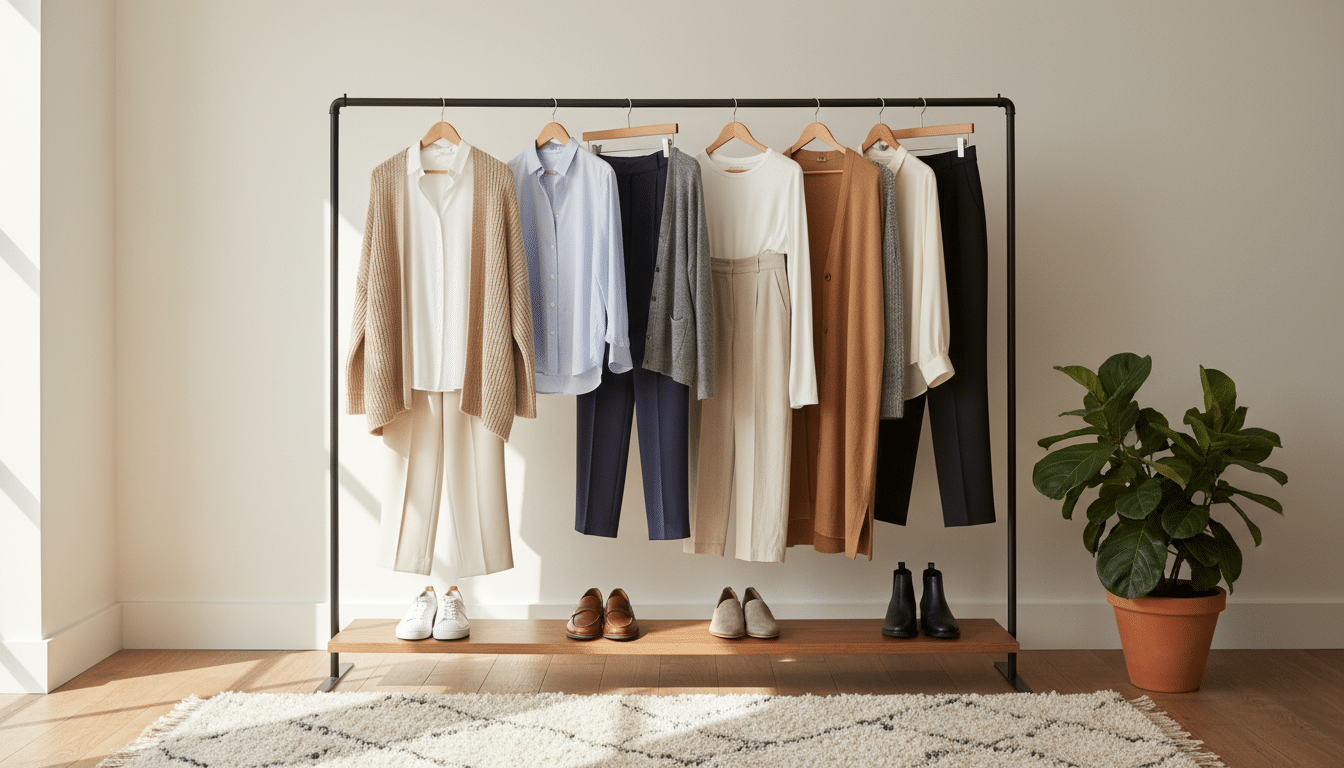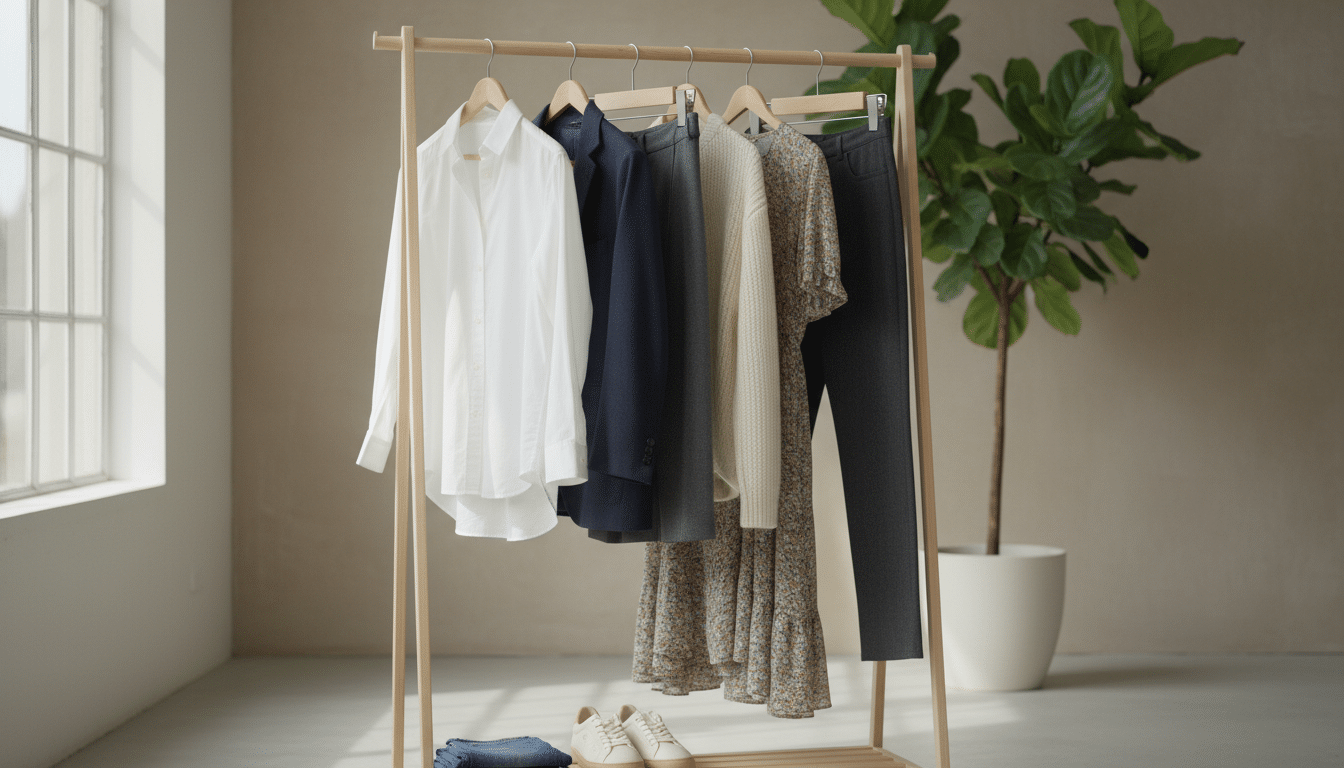
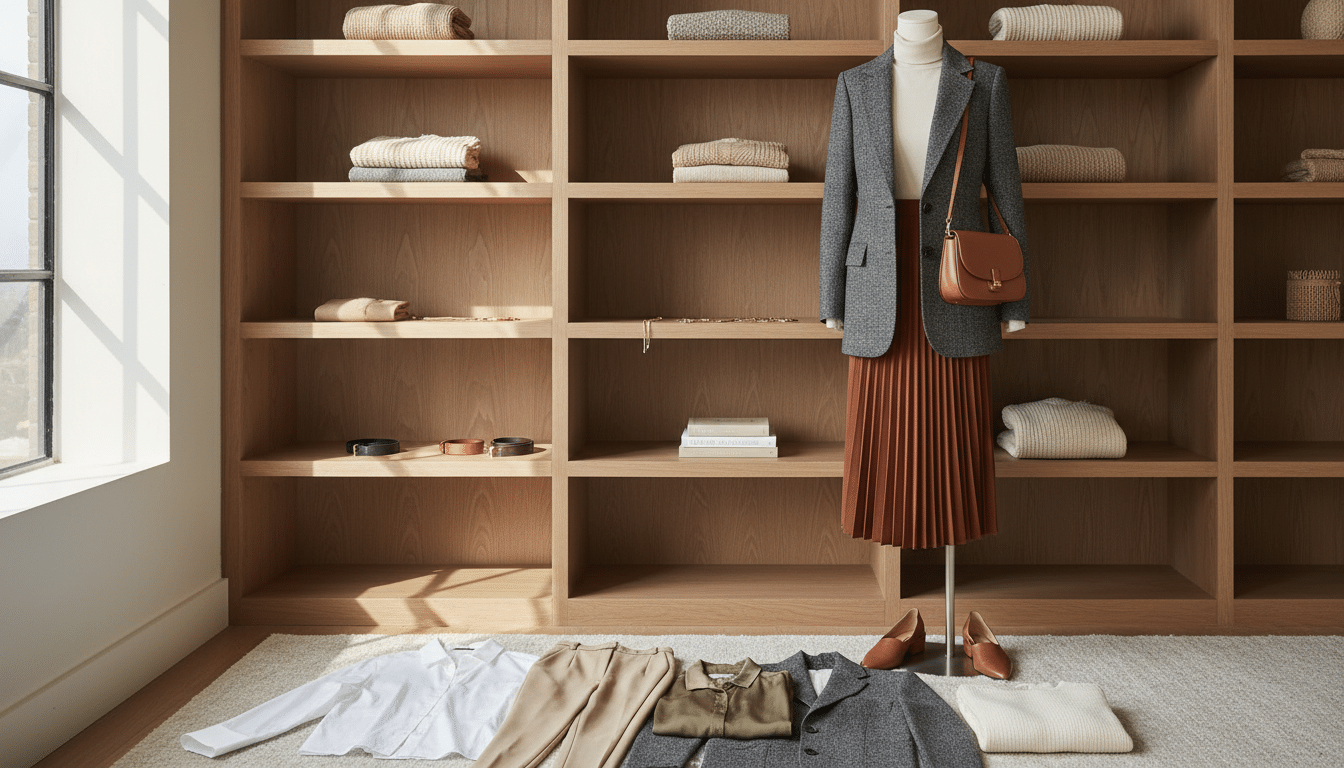
I’ll show you how to mix capsule wardrobe pieces in a simple, real way that feels like a chat at the kitchen table. I speak from doing this on rushed mornings and laundry day—so nothing is precious or perfect here.
Think of a capsule as a set of reliable building blocks. I pick colors I’ll actually wear, then use small swaps—shoes, a layer, a tuck—to turn one outfit into several. You’ll get clear, repeatable formulas that save time and reduce decision fatigue.
This approach honors comfort and movement. It’s for real life: school runs, meetings, errands, and evenings out. By the end, you’ll have an idea for daily outfits that makes getting dressed easier and more confident.
Key Takeaways
- Start with what you already love wearing.
- Choose a small color plan you’ll stick with.
- Use simple swaps to create variety without more items.
- Focus on comfort and real-life routines.
- Build repeatable outfit formulas for faster mornings.
Why I lean on a capsule wardrobe when I want to feel put together fast
When mornings are chaotic, I reach for a small set of reliable items that help me feel put together fast. It saves me time and cuts the brain clutter. I’m not talking perfection—just fewer choices that work with my life.
Less decision fatigue on busy mornings
Opening a closet that actually goes together removes the guesswork. You stop second-guessing every top and bottom. On work mornings or school drop-off, that calm matters.
More time back for real life
Fewer outfit experiments mean minutes saved. I spend less time trying things on, repacking returns, and fixing piles. That gives me time for coffee, a quick email, or playtime with the kids.
Spending less by shopping with intention
Buying fewer items changes my habits. I skip the “meh” buys. I choose things that fit my week and wear well.
A simpler, more sustainable closet
Having a smaller rotation reduces waste. Less clutter on hangers feels nicer. It also makes laundry and outfit planning simpler—one less thing on a crowded list.
- Look put together fast—even on rushed mornings.
- Get time back for the things that matter.
- Spend less by choosing quality over impulse.
- Keep a closet that supports real life, not stress.
What a capsule wardrobe really is and what it’s not
This is less about rules and more about making your daily dressing quieter and kinder to your time. A capsule wardrobe is simply a small collection of thoughtfully chosen clothing that you reach for again and again.
A small set of easy-to-wear favorites
Think reliable basics and a few flexible accents that create many outfits. Start with what you already wear. That makes building a capsule more honest and less pricey.
Not a rigid checklist or perfect number
There is no magic total you must hit. It isn’t a one-size-fits-all list. Your first draft can be messy—mine was—and that’s fine.
Why starting from scratch often backfires
Buying a stack of new items at once teaches you habits, not needs. You learn more by wearing what you already love. Ask, “What do I actually wear?” instead of, “What should I drop?”
- Capsule wardrobes grow and change over years.
- Use the first set as a point of learning, not a rule.
- Small adjustments beat a full overhaul.
A quick bit of context that makes the idea click
A little background makes the idea click—this isn’t a new internet trick but a simple rhythm people have used for years.
Where the term came from in the 1970s
The phrase began in London with Susie Faux, a boutique owner who talked about a streamlined closet built around quality essentials that work together.
Her point was practical: choose reliable items so getting dressed feels easier, not stressful.
How “Seven Easy Pieces” made mix-and-match mainstream
In the 1980s Donna Karan brought the idea into the spotlight with her “Seven Easy Pieces” concept.
She showed that a small set of core garments could cover many settings. That thinking made the approach feel modern and usable for everyday life.
- Quick background so this feels proven, not trendy.
- Origin: Susie Faux’s practical thinking in the 1970s.
- Donna Karan’s 1980s step turned the idea mainstream.
- Tie-back: use the same simple process each season in a way that fits your life.
Start with what you already wear so your outfits feel like you
Start by pulling out the clothes you actually reach for—those repeat offenders tell the truest story. Set them aside as your honest starting point. This small move makes the whole process feel doable and real.
Pull your most-worn items first and look for patterns
I pull the repeat offenders and note colors, cuts, and fabrics. Are the tops loose or fitted? Do you keep reaching for denim or soft knits? That pattern is useful information—not a criticism.
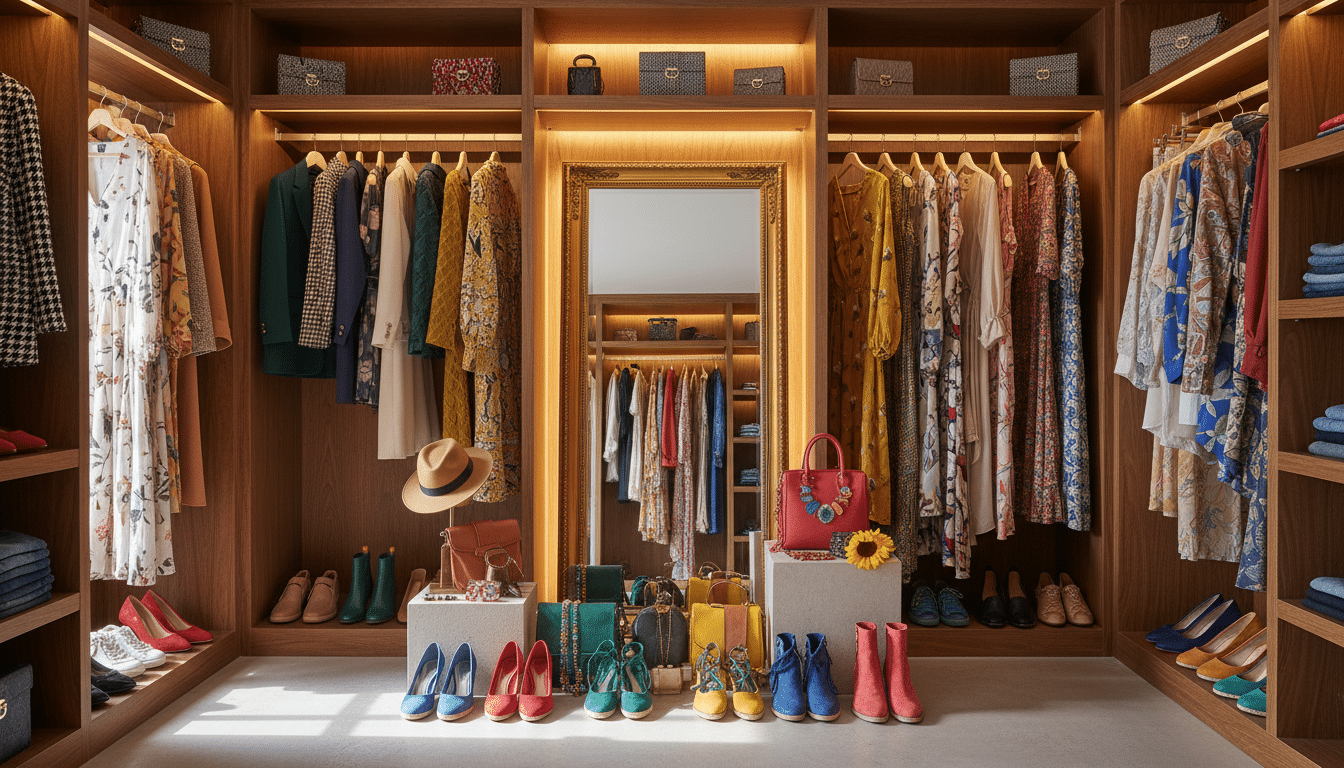
Sort the rest into simple closet categories so you can see what you own
Sort remaining clothes into broad categories: jeans, pants, skirts, tees, tops, sweaters, dresses, jackets, shoes, bags. Seeing items grouped makes gaps and overlaps obvious.
Do a gentle declutter without pressure
We’re not doing a dramatic purge. Remove obvious no’s—doesn’t fit, feels bad, or is too worn out. Keep the rest for another day.
- I’ll walk you through the easiest first step: pull your most-worn pieces and set them aside.
- Notice colors, shapes, and fabrics you choose again and again.
- This gentle step keeps your capsule feeling like you, not like a fantasy version of you.
how to mix capsule wardrobe pieces using a color palette you won’t get tired of
Pick a simple palette you actually wear, and your mornings become a lot less fussy. A clear base means most things pair without thought. Then add small notes that feel like you.
Build a mostly neutral base that makes pairing easy
I start with black, navy, gray, camel, cream, and denim. These neutrals are the backbone that lets nearly everything work together.
Add one or two accent colors you already reach for
Choose accents you truly wear—olive, burgundy, or soft blue. Keep it to one or two so the palette stays calm and flexible.
Use patterns and textures to create variety without adding clutter
Stripes, subtle plaid, denim, linen, knits, and leather give visual interest. They act like small changes without needing more items.
Quick color checks I use before I keep a piece in my capsule
- Does it work with at least two bottoms I own?
- Can it layer under my go-to jacket or sweater?
- Would one accent lift several neutral outfits?
| Base color | Suggested accents | Texture ideas |
|---|---|---|
| Navy, cream, denim | Olive or burgundy | Stripe tee, knit sweater |
| Black, gray, camel | Mustard or teal | Leather jacket, wool coat |
| White, taupe, brown | Rust or soft blue | Linen shirt, subtle plaid |
Pick capsule items that actually mix and match in real life
Pick clothing that actually fits your life: easy care, easy wear, and ready for real plans.
I look for timeless, functional, and comfortable choices over things that are perfect on paper. Fabrics that don’t itch, shoes you can walk in, and cuts that stay put are winners. That keeps style honest and useful.
Small versatility test: can you wear it at least three ways?
Try a simple test. Can one item create three distinct outfits you would actually wear? If not, it probably won’t earn a spot. A white shirt that works with jeans, layered under a sweater, or worn open over a tank passes the test.
How to avoid duplicates that don’t add outfit variety
Duplicates slip in when multiple garments do the same job. Keep the one that fits best and serves more looks. Think about your week—if you rarely wear formal looks, skip extra dress shirts.
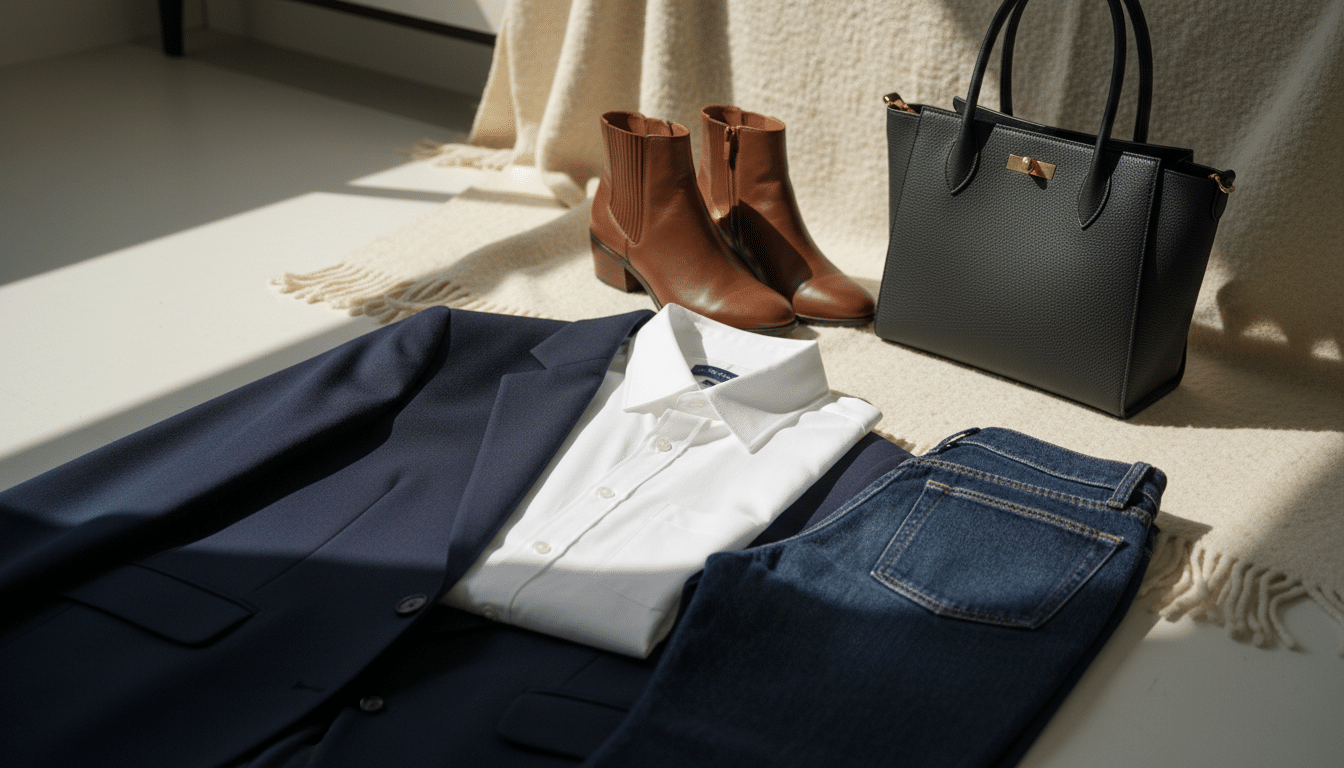
| Item type | Versatility test | Real-life example |
|---|---|---|
| White button-down | 3+ outfits | Open over tee, tucked with skirt, layered under sweater |
| Neutral knit | 3 outfits | Solo with jeans, under jacket, draped over shoulders |
| Comfortable flats | 3 ways | Errands, office, evening casual |
| Tailored blazer | 2–3 ways | With jeans, over dress, paired with trousers for work |
Build your capsule for the season you’re in right now
Focus on the season you’re in now; it makes getting dressed feel simple and honest. I set aside heavier things so the closet shows what I actually wear this month. That small shift clears visual clutter and speeds decisions.
Why storing off-season clothes makes getting dressed easier
When off-season clothes are out of sight, you see options that work today. I use a bin or a top shelf. Pulling out fewer choices helps me pick outfits fast and with less stress.
How many items you need depends on laundry, weather, and your week
There is no perfect number. Aim for enough for your life—how often you run laundry, whether the weather swings, and how varied your days are. If you do laundry weekly and rotate jeans, pants, and shorts, plan for a few more bottoms than someone washing midweek.
| Category | Helpful range | Notes |
|---|---|---|
| Bottoms | 5–7 | Include jeans, pants, shorts as needed |
| Tops (tees/tanks) | 5–7 | Easy wash-and-wear items |
| Sweaters & layers | 3–5 | Cover cool mornings and office air |
| Shoes & accessories | 4–6 | Keep choices practical for real weeks |
- Treat ranges as a starting point, not a rule.
- Adjust after a month of real wear—the season, time, and life will tell you what’s missing.
Use simple outfit formulas to put together outfits fast
Simple outfit formulas take the guesswork out of mornings and give you back minutes. I pick one anchor piece and plan three looks around it before I open another hanger. That small step saves time and stress on a busy day.
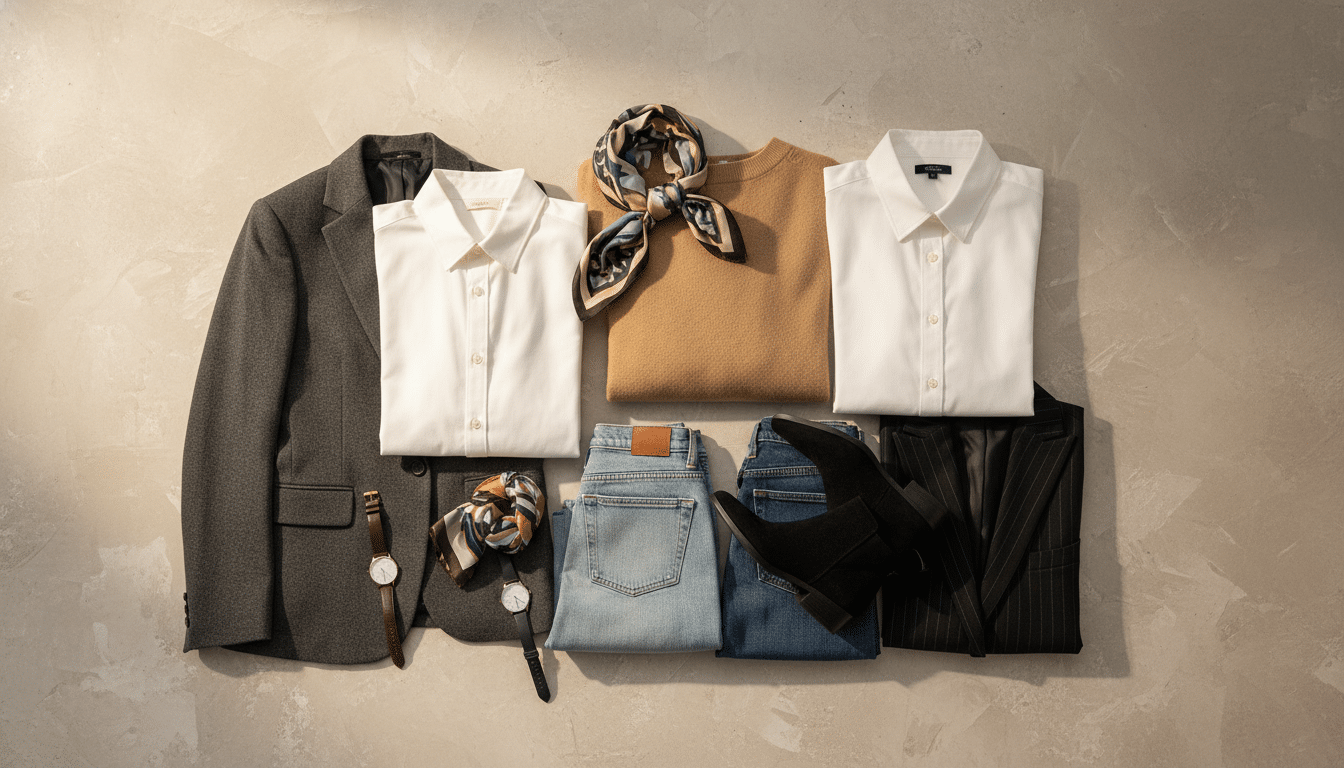
Pick an anchor and build around it
Choose one reliable piece—jeans, a skirt, or a tailored blazer. Then create versions for errands, work, and a casual evening. I aim for seven to ten outfits I can repeat without thinking.
Try the “top + bottom + layer + shoes” formula
Keep the formula in your head and swap one item to change the vibe.
- Tee + jeans + blazer + sneakers — casual work or school run.
- Silky tank + lightweight pants + cardigan + flats — relaxed office day.
- Trousers + fitted tee + jacket + loafers — errands then coffee with friends.
Dress as an intentional one-piece shortcut
A dress is a fast and polished option. Add a jacket and change shoes for night. One dress can cover three looks in a single day with small swaps.
| Anchor | Day | Quick swap |
|---|---|---|
| Neutral jeans | Errands / casual | Sneakers → ankle boots |
| Lightweight pants | Work / lunch | Tank → fitted tee |
| Simple dress | Day → night | Flats → heels, add blazer |
These small formulas make outfits easy to copy tomorrow. Pick one anchor piece, plan a handful of looks, and you’ll have a reliable way to get dressed fast.
Make your capsule outfits look balanced with proportions
Balancing roomy and fitted shapes is a simple trick that lifts an outfit instantly. I use it when I want to look put together for work or errands without fuss.
Wide-leg pants, slim tops, and why that combo works
Wide-leg pants often read relaxed. Pair them with a slimmer top and your shape stays clear. It feels clean, not tight.
Try a tucked tee or a fitted knit. The contrast keeps the look tidy and modern.
Oversized layers without feeling swallowed
Big tops can be cozy and chic. But if the top is roomy, pick a fitted base under it.
Small moves help: roll sleeves, do a front tuck, or snap a belt at the waist. One piece can feel both casual and intentional.
The rule of thirds in plain English
The rule of thirds means breaking an outfit into short, long, short. A high-waisted bottom with a tucked top is one quick example.
Or wear a longer jacket that hits mid-thigh over a slim base. It makes proportions look balanced and polished.
| Situation | Top | Bottom | Quick tweak |
|---|---|---|---|
| Casual errand | Fitted tee | Wide-leg pants | Front tuck |
| Chilly morning | Oversized cardigan | Slim jeans | Roll sleeves |
| Work-ready | Tucked blouse | High-waisted trousers | Long jacket at mid-thigh |
Get more variety from the same capsule clothing pieces with small styling switches
A few tiny changes to the same items will give you more outfit options than you expect. I use small moves—tucks, belts, and shoe swaps—to shift the mood quickly. You don’t need a lot of extras. One or two accessories do most of the heavy lifting.
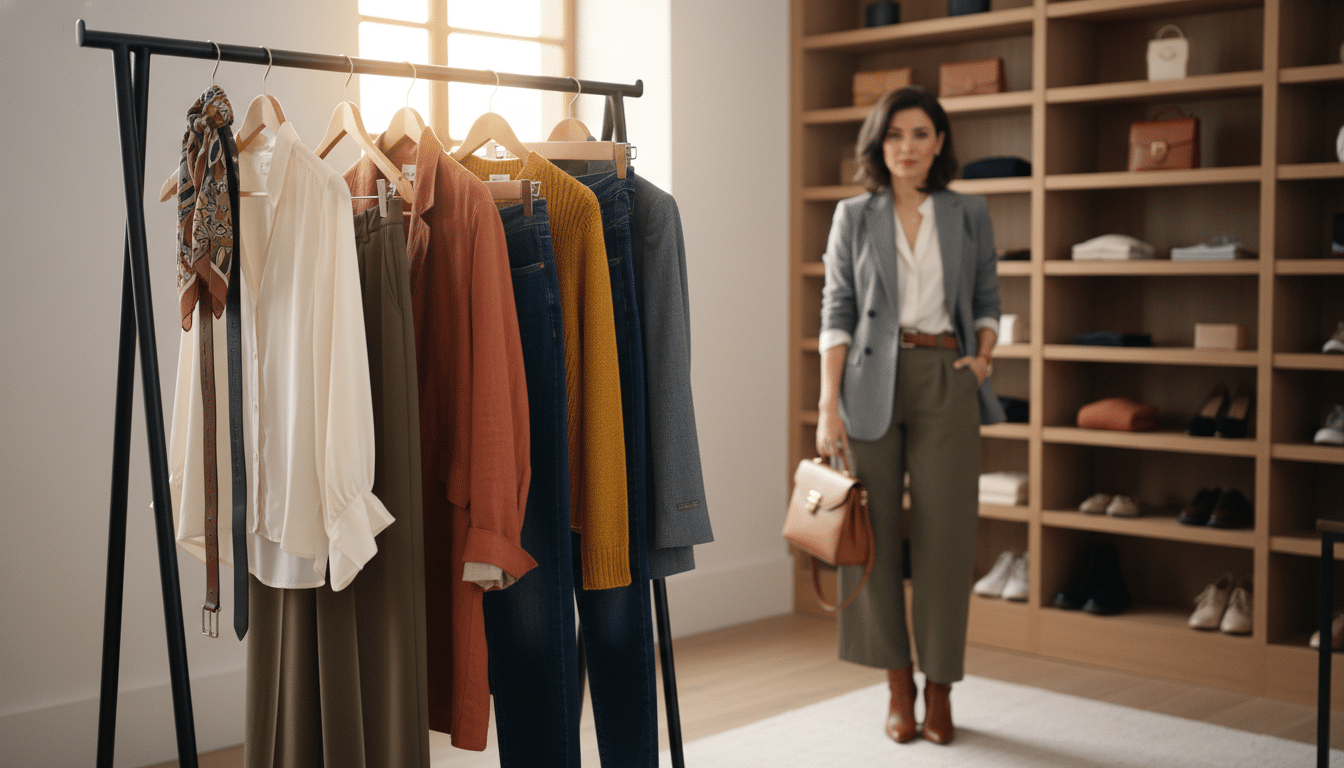
Tucks, cuffs, and hems that change the whole vibe
Try a full tuck for a polished look, then a half tuck for casual shape. Roll hems or cuff sleeves to shorten proportions and add energy. These small shifts change silhouette and make the same clothing feel new.
Belts, bags, and simple jewelry that do the heavy lifting
A structured bag and a slim belt can make jeans read work-ready. Add a pair of small hoops or a chain for polish. One well-chosen item lifts an outfit more than five unnoticed accessories.
Swapping shoes and layering for real life
Sneakers for errands, flats for a relaxed office, ankle boots for sharper looks. A lightweight cardigan or blazer solves morning chills and cold offices without fuss.
| Switch | Effect | When |
|---|---|---|
| Full tuck → half tuck | Polished → casual | Work or weekend |
| Belt + bag | Structured, intentional | Meetings or errands |
| Sneakers → ankle boots | Casual → sharper | Day to evening |
Create a bank of go-to outfits so you don’t have to think every day
Collect seven to ten outfits that you can trust; then let them carry your week. This small plan saves time and makes getting dressed feel calm. It’s not about perfection—just repeatable looks you like.
Aim for a week-plus of repeatable looks
Pick 7–10 everyday outfits that cover your regular life. Include casual, work-friendly, and one dressier option. A short set gives variety without overwhelm.
Take quick photos and save them on your phone
Snap mirror photos of outfits that feel right. Put them in a folder labeled Favorites. On rushed mornings, open the folder and grab the look you already tested.
Keep your capsule items in one clear closet zone
Designate a shelf or hang a rod for these items. Move off-season and extras out of sight. Seeing only the things that belong to the plan makes picking an outfit fast.
| Aim | Action | Benefit |
|---|---|---|
| 7–10 trusted outfits | Plan and photo each look | Less decision fatigue in the morning |
| Phone folder | Save quick mirror shots | Instant outfit ideas on busy days |
| Clear closet zone | Keep selected items together | Faster choices, neater closet |
Give this process a couple weeks. Notice missing items and add them with purpose. This gentle step is a simple way to build capsule wardrobe confidence and calm your mornings.
Conclusion
A small, sensible set of favorites should free time and guilt, not add rules. I want you to feel capable, not perfect.
Start with what you already wear. Keep seasonal items out of sight and use a simple color palette so many outfits pair easily.
Variety comes from smart swaps, balanced proportions, and tiny styling changes—not more things. If you want one small next step, pull your most-worn items, or plan 7–10 reliable looks, or pick a base color palette and build capsule wardrobe ideas from there.
You’re not aiming for perfection. You’re building a practical closet that supports your day, month, and life—jeans, dresses, shoes included. Take it slow. It will grow with you.