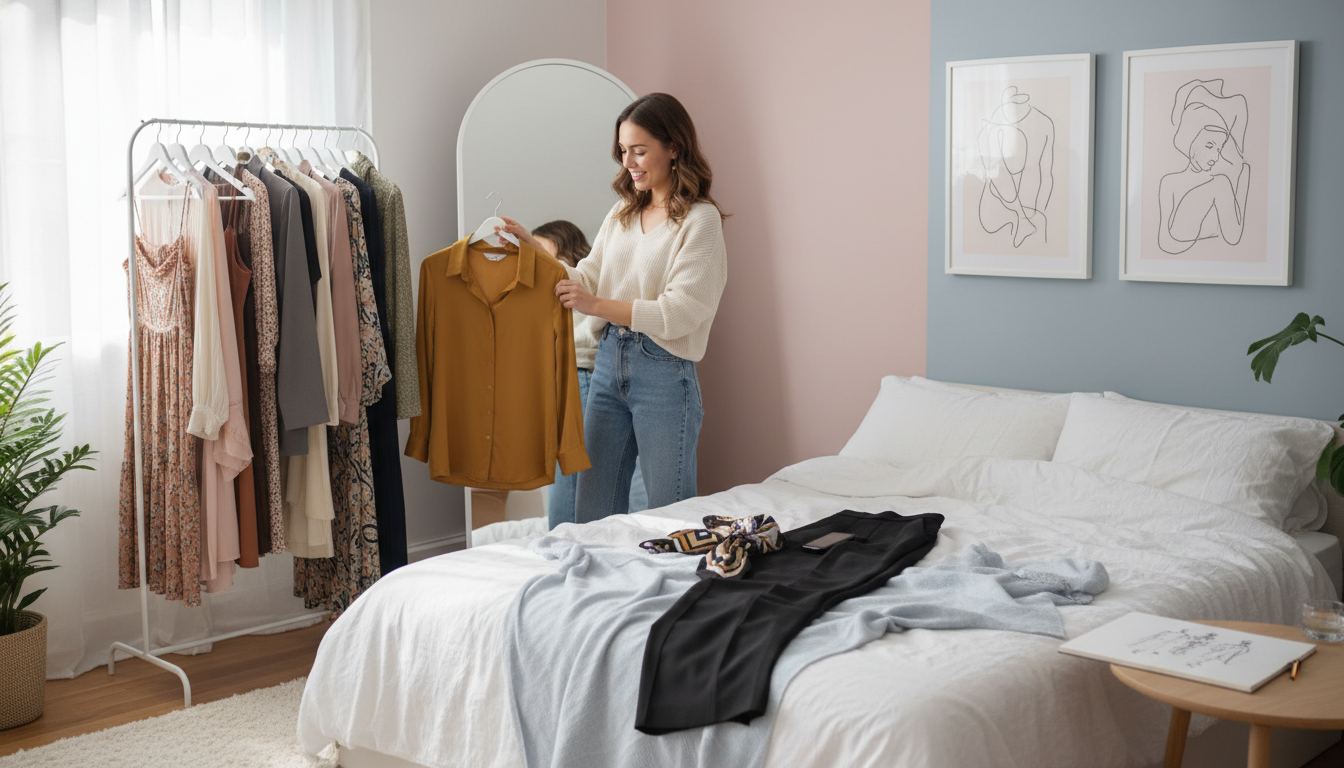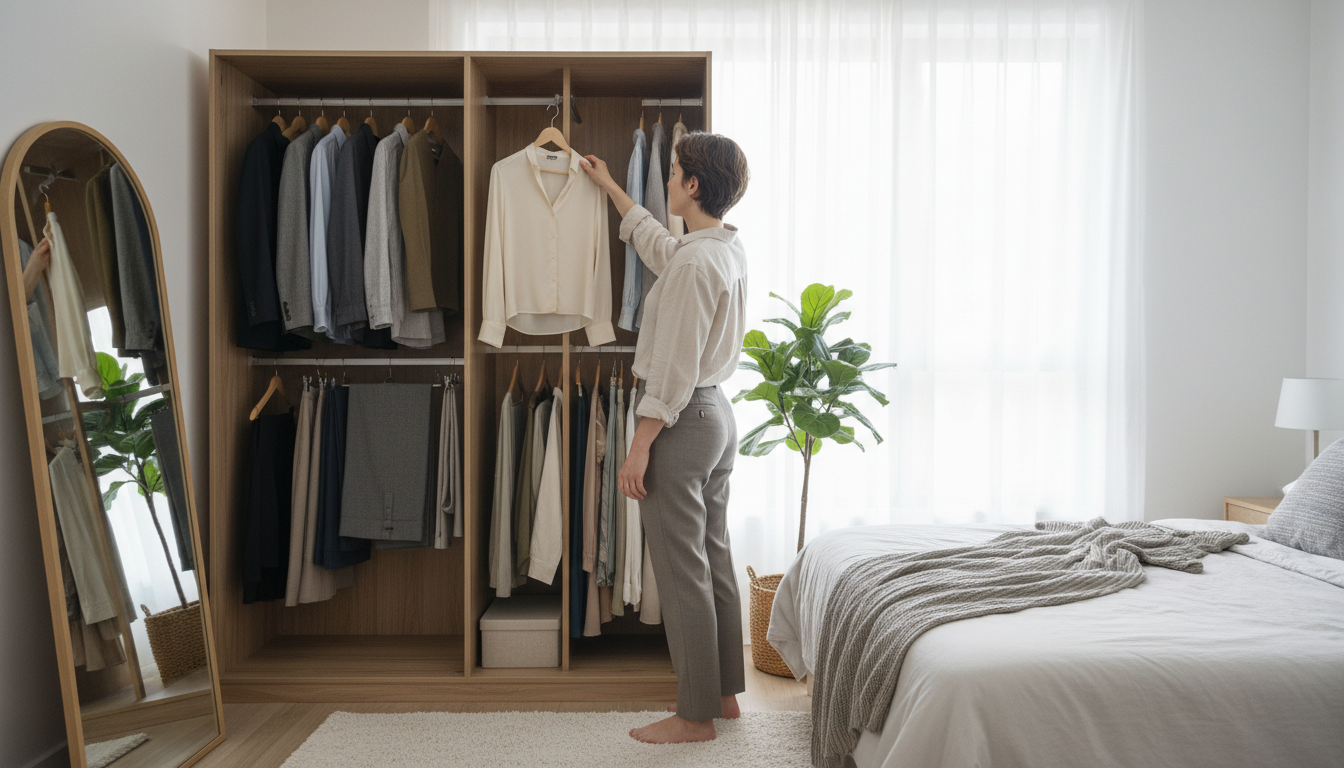
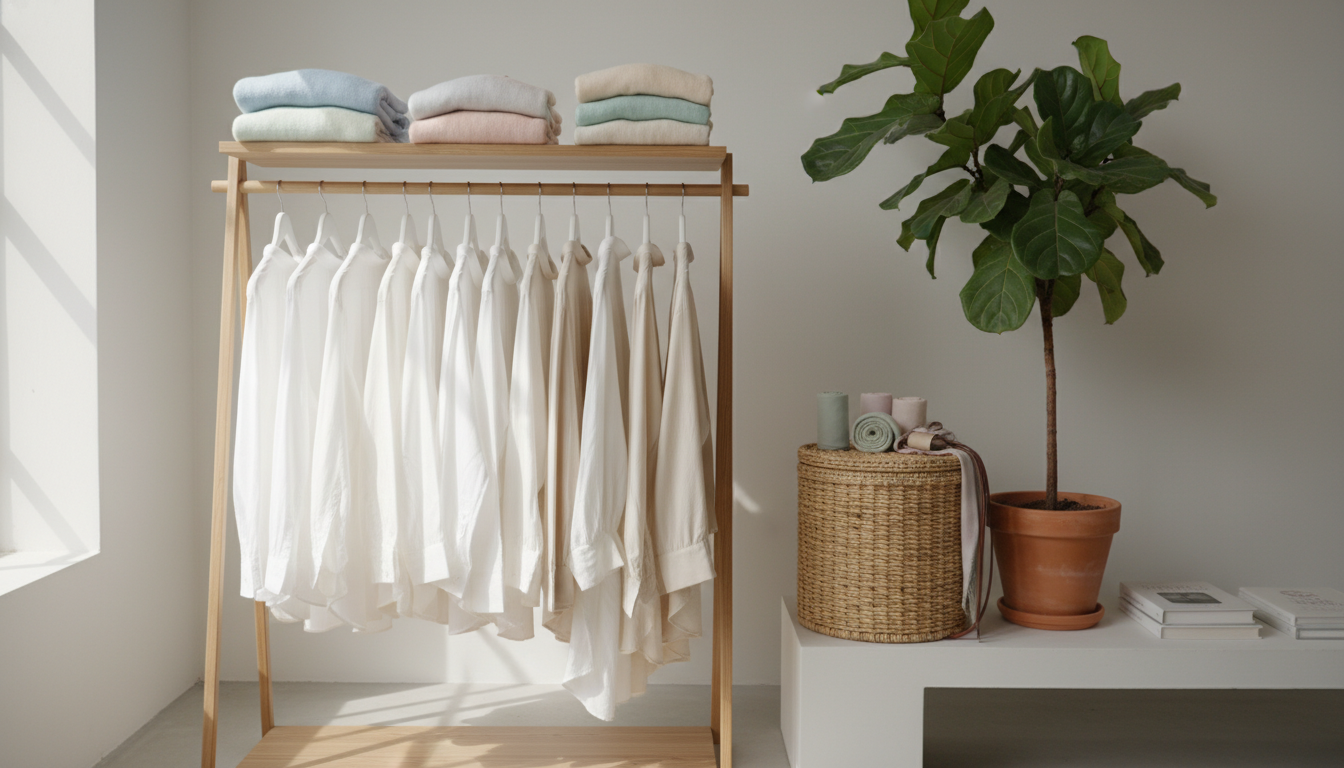
Finding a way for how to simplify your wardrobe was a major turning point for me. I remember standing before a bursting closet, feeling totally paralyzed by the sheer volume of fabric while somehow having nothing at hand. For years, I believed that more options meant more freedom, but it really just added heavy stress.
This path is about keeping items I actually love, not following some cold rulebook found on social media. Since 2010, many found that dressing with fewer clothes for a better life is actually a gift. This gentler approach helps me feel confident and ready every single day.
I will help you move past the chaos and find peace in daily style decisions together. Let us begin this journey toward a more intentional closet right now. We can achieve a space that serves us without any of the typical frustration or fear.
Key Takeaways
- Focus on pieces already reached for every morning.
- Avoid the pressure of strict minimalist rules or trends.
- Limit items for reducing daily decision fatigue effectively.
- Keep items that make me feel confident and comfortable.
- Approach the process slowly for preventing future regrets.
- Transform the dressing routine into a calm, easy experience.
Why Your Closet Feels Overwhelming Right Now
I remember standing in front of my bursting racks, feeling completely paralyzed by the sheer volume of things I didn’t even like. My bank statements showed a trail of quick trips to the mall that I barely remembered making. Every morning felt like a frantic race against the clock while I stared at a closet that was literally bursting at the seams.
I thought the answer was simply to buy more to fix the gaps. I was racing to find the latest styles, hoping a new blouse would finally make me feel put together. Instead, I just felt more crowded and more confused about my own personal style.
The Vicious Cycle of Buying and Hiding
Let me tell you what was happening behind those closed doors. I kept buying clothes thinking each new piece would finally be “the one” that made getting dressed easy. You know that cycle, right?
You buy something because it is on a clearance rack or trending on social media. It sits there with the tags on because it doesn’t actually fit your life. Then, you feel a heavy wave of guilt every single time you look at it.
I was stuck in this loop for years: buy a trend, hide the items I didn’t wear, and then go shopping again to make up for the failure. Every trip was me trying to fix a wardrobe problem that more stuff could never solve. I was spending money on “maybe” items while my favorite jeans did all the heavy lifting.
You’re Not Alone in This
If you feel stuck right now, I want you to know it is completely normal. You are not messy or bad at organizing your life. You are just human, and stores are very good at making us think we need more than we do.
I finally realized the problem was not that I had too little. The truth was that I had too many of the wrong things. Breaking this same cycle was the only way I could finally breathe again.
The relief I felt when I stopped trying to fill the gaps with more fabric was life-changing. I want that same peace for you and your wardrobe. We can move past the guilt together and find what truly works for your daily life.
| The Struggle | Why It Happens | The Real Cost |
|---|---|---|
| Trend Chasing | Wanting to stay current | Wasted money |
| Guilt Buying | Items bought on sale | Lost time each morning |
| Hidden Clutter | Hiding what we don’t wear | Mental exhaustion |
The Real Benefits of Simplifying Your Wardrobe
Once I stopped fighting with my clothes every morning, my whole world changed for the better. I used to think having more options was a good thing. I spent years stuffing my hangers with “just in case” pieces and random sales finds. Eventually, I realized that a crowded wardrobe was actually draining my energy and making me feel frantic.
More Space in Your Closet and Your Mind
The first thing you will notice is the physical space. Suddenly, you can actually see what you own. Your closet stops feeling like a cramped storage unit where things go to be forgotten.
But the mental space is even better than the physical space. When I cleared the clutter, the constant background noise of “I have nothing to wear” finally went silent. It felt like a heavy weight lifted off my shoulders because I wasn’t managing a mess anymore.
Less Decision Fatigue Every Morning
I used to waste so much energy every single morning. I would stare at my clothes, try on four different outfits, and still feel bad about how I looked. It was a stressful way to start the day.
Now? I get dressed in under five minutes. I am choosing between things I actually love instead of digging through piles of “maybes.” You deserve that extra time back for your coffee or just a few more minutes of quiet before the world wakes up.
Wearing Your Favorites Every Day
When you simplify, you finally get to wear your favorite pieces all the time. We often save our best clothes for special occasions that never seem to come. Why wait for a party to wear that soft, beautiful sweater?
I am talking about those jeans that make you feel amazing and those comfortable shoes. Imagine wearing the things you love and wear often instead of settling for the itchy or tight items. These benefits change how you carry yourself throughout the day.
Saving Money and Time
You will save money because you stop buying things to fill a void. I used to buy new shirts just to fix a wardrobe that felt wrong. Now, I know exactly what I need and what works for my life.
The total benefits of this lifestyle compound quickly. Less shopping means more freedom to do what you actually enjoy. You also spend less time doing laundry and organizing clothes you never even liked in the first place.
| Area of Life | Before Simplifying | After Simplifying |
|---|---|---|
| Morning Routine | Frantic and stressful | Calm and quick |
| Mental Energy | High decision fatigue | Clear and focused |
| Closet Space | Overstuffed and messy | Breathable and organized |
| Spending Habits | Frequent impulse buys | Intentional and rare |
Understanding Your Personal Uniform
I used to think having a “uniform” meant dressing like a cartoon character who never changes clothes. In reality, it is just about knowing what works for your specific body and lifestyle. Simplifying your wardrobe becomes much easier when you stop fighting your natural preferences and embrace your unique style.
What a “Uniform” Actually Means
When I say “uniform,” I don’t mean you have to wear identical outfits every single day like Steve Jobs. I am talking about finding your personal dress code—the specific cuts and silhouettes that make you feel like your best self. Even famous designers like Michael Kors have a signature look because they know exactly what works for them.
If you find a specific outfit that works, it makes sense to reach for it more than anything else in your closet. Building your daily look around these core items helps you feel confident without the extra mental effort. It is about honoring what you actually love instead of what a magazine tells you to buy.
Finding the Patterns in What You Love
Your closet is already trying to tell you what your favorite look is right now. Go ahead and pull out the five pieces you wear often when nobody is watching. I bet you will find they have several things in common, even if you never noticed before.
Maybe they are all the same cut of jeans, or perhaps they are all made from very soft fabrics. You gravitate toward these items because they actually feel good when you put them on. That specific comfort and confidence is exactly what we are chasing as we simplify your space.
Why Cuts and Colors Keep Repeating
I used to buy bright, colorful tops because I thought I needed variety to be “fashionable.” However, those items just sat there with the tags on while I grabbed my favorite black v-necks again. I finally realized that repeating certain colors and cuts isn’t boring; it is actually a smart way to live.
Once you honor the way you actually want to dress, shopping gets much faster and easier. You can walk right past trends that don’t fit your formula and save your energy for more important things. Look for these repeating patterns in your own favorites:
- Consistent necklines like v-necks, scoop necks, or high collars.
- Fabrics that feel gentle and breathable against your skin.
- A specific palette of colors that makes feel energized or calm.
- Outerwear like blazers or leather jackets that add instant structure.
How to Simplify Your Wardrobe Without Throwing Everything Away
I’m going to share the gentlest approach I found to clear the clutter without making a single permanent decision today. Most of us feel paralyzed by the idea of “tossing” things we paid good money for. I felt that way too, and it kept me stuck for years.
This way of simplifying is all about testing the waters. You don’t have to throw a single thing away to start feeling better. It’s about giving yourself space to breathe while keeping your safety net intact.
Start by Laying Out Your Favorites
I want you to pull out every outfit you’ve worn in the last month that made you feel good. I don’t mean “fine” or “okay,” but the pieces that made you feel like your best self. Lay these clothes on your bed so you can see them clearly.
This first step is purely about observation. By seeing your favorites in one spot, you start to notice a pattern in what you actually love. It takes the pressure off the rest of the process because you are focusing on the “yes” rather than the “no.”
Count What You Actually Need
Now, look at those outfits on the bed and count them. If you do laundry once a week and you have seven to ten outfits there, congratulations! You just found your core wardrobe right in front of you.
Most of the time, we realize we have enough to get from one laundry day to the next without touching the rest of the closet. This realization is powerful. It shows you that your daily life is already supported by a small number of items.
| Stage | Action | Outcome |
|---|---|---|
| Assessment | Lay out favorite outfits | Identify what you love |
| Trial | Hide non-favorites | Reduce daily stress |
| Review | Wait three months | Prove what you need |
The Hide-It-First Method
Here is the part that changed everything for me: don’t donate or trash the rest yet—just hide it. Get some boxes or bins and pack up the clothes you didn’t put on the bed. Put them in the garage, the attic, or under the bed for three months.
This acts as a set of training wheels for your wardrobe. You can build a capsule wardrobe for every using just the pieces you kept out. If you desperately need something from a box during those three months, you can always go get it.
Give Yourself Permission to Let Go Later
I bet you won’t even remember what is in those boxes by the time the deadline arrives. When that day comes, you can let those items go without any guilt. You now have actual proof that you didn’t need them to live your life.
This method respects your emotions and your closet space. It lets you simplify at your own pace without the panic of permanent decisions. You’re just giving yourself space to see what you truly need versus what you’re keeping out of fear.
Choosing Colors That Work for You
I used to think I needed a rainbow in my closet to be considered “fashionable.” I spent years buying bright pieces because magazines said I needed a “pop of color” to stay relevant. It felt like I was constantly chasing a trend that didn’t actually fit who I was.
Stick With What Makes You Feel Good
The truth is, you should only wear what actually makes feel-good energy a reality for you. I wear mostly black because I love how it looks and getting dressed becomes so much easier. If you feel your best in navy, gray, and white, then that is your perfect personal palette.
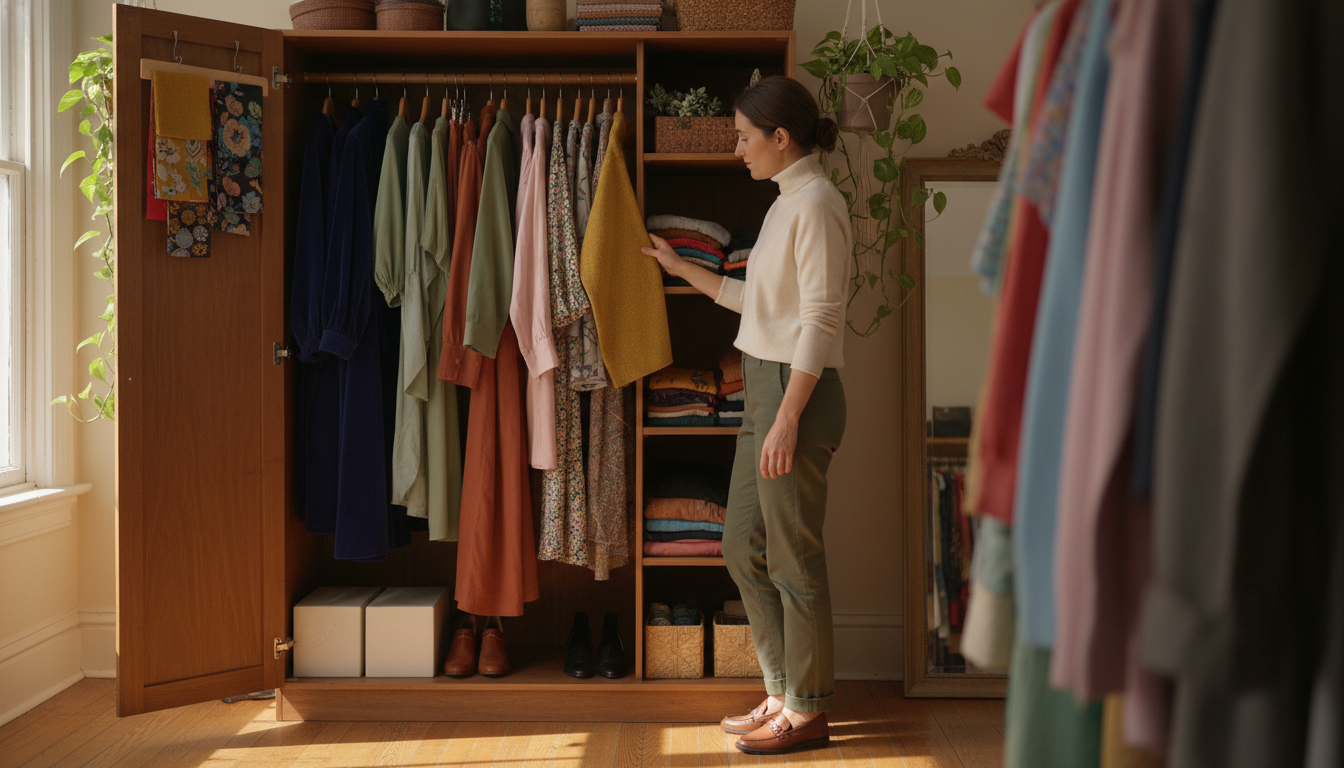
Building From Neutrals
Sticking to a few base colors, like black, charcoal, or navy, helps you build a solid starting point. Pick your neutral color first before you even think about adding anything bolder. This specific color strategy keeps every item in your wardrobe cohesive and easy to pair together.
| Palette Layer | Best Options | Why It Works |
|---|---|---|
| Base Shades | Black, Navy, Grey | Creates a strong foundation |
| Soft Neutrals | White, Beige, Cream | Adds light and versatility |
| Personal Accents | Olive, Plum, Rust | Adds depth without clutter |
Letting Go of “Supposed To” Colors
Let yourself off the hook for those “supposed to” colors that you never actually wear. You don’t have to follow seasonal colors just because they are in style this month. If a bright coral looks great on a hanger but makes you want to hide, it doesn’t belong in your home.
When I stopped buying every trendy color, I stopped wasting money on clothes that sat in the back of my closet. Sometimes the most freeing thing is giving yourself permission to be “boring” if that is what you love. Focus on the shades that make you feel like the best version of yourself every single morning.
The Math Behind Having Less
Okay, this is where it gets fun—because once you understand the math, you realize you need way fewer pieces than you think. When I looked at my closet years ago, I saw a mountain of clothing. It felt heavy and overwhelming every morning. I finally realized the total number of things I actually wore was quite small, and that was okay.
How Many Items You Really Need Between Laundry Days
Think about your laundry schedule first. If you wash your clothes once a week, you really only need enough for seven day, not an entire month. I found that having about 10 items for my bottom half was plenty for years.
My collection included four pair of shorts, a skirt, and yoga pants. I also kept four versions of my favorite jeans. Since I don’t wash my denim after every single day of wear, they stay fresh much longer and get through the week easily.
Turning 12 Pieces Into 10+ Outfits
You can actually turn 12 pieces into more than 10 outfits without anyone noticing. I love using a mix of four tops, six bottoms, and two dresses. This specific number creates enough variety to keep things interesting.
The point isn’t to hit a magic target, but to see how many items actually work together. When you stop focusing on the volume, you start seeing the potential in every single garment you own.
The Power of Layering
Layering is my favorite secret weapon for a functional wardrobe. If you have five shirts and five jackets, that math is wild! You can create 25 different outfits from those simple layers.
A black tank under a professional blazer looks very different than that same tank under a leather jacket. This strategy lets you stretch your favorites through different seasons and social settings without needing a massive closet.
When Buying Multiples Makes Sense
Sometimes, buying multiples of the same thing isn’t cheating; it’s actually smart. If I find a black tank top that fits perfectly, I might buy three of them. It is a lot better than hunting for a new style every few months.
Having several of the same item means they last longer because you rotate them. You won’t feel frantic on a busy day because your favorite shirt is dirty. This simple approach keeps my wardrobe feeling fresh and ready for anything.
| Category | Quantity | Outcome |
|---|---|---|
| Weekly Bottoms | 10 items | Covers 7 days of wear |
| Layering Math | 5 Tops + 5 Jackets | 25 Outfit combinations |
| Core Capsule | 12 Pieces | 10+ Unique looks |
| Favorite Basics | 3 of same item | Reduces wear and tear |
Building Your Essential Pieces List
Let’s talk about the specific pieces that will actually live in your closet and make your mornings easier. Building a capsule wardrobe isn’t about following a strict law. It’s about finding items that make sense for you and your home wardrobe.
What Counts as Essential for Your Life
Here’s the thing about “essential” pieces—they’re only essential if you actually wear them. I see many capsule wardrobe checklists that include a sharp blazer or crisp shirts.
But if you work from home in yoga pants, those aren’t essential for you. Start by thinking about your real days. Avoid some dream version of your life where you wear heels to the grocery store.
A Simple Starting Checklist
If you need a place to start, this basic list helps many people find their way. You don’t have to buy every one of these items at once. Use this table as a guide for your personal capsule wardrobe.
| Category | Item Count | Examples |
|---|---|---|
| Tops | 6 Items | 2 sweaters, 2 solid tops, 2 patterned tops |
| Bottoms | 3 Items | 1 pair of dark-wash jeans, 1 light-wash, 1 trousers |
| Layering | 3 Items | 1 classic blazer, 1 heavy coat, 1 lightweight coat |
| Footwear | 2 Items | 2 pairs of comfortable shoes |
Adjusting for Your Actual Lifestyle
This list is just a starting point, not a rulebook. For my style, I love simple black tanks and v-neck shirts. I usually pair them with dark denim and comfortable shoes.
If you live in Florida, you’ll need more tanks and less denim. If you’re in Maine, you’ll need more jackets and layers. These tips help you build a capsule wardrobe that works for your weather.
Don’t forget about jewelry and accessories. If you wear the same necklace every day, you don’t need a huge collection. Each outfit should feel like a true reflection of you.
Choose jewelry and accessories that highlight your favorite shirts. High-quality jackets and shoes will last for years. This is how you create a capsule wardrobe that lasts.
Finding the right pieces for your wardrobe means picking a pair of jeans you love. Whether you need a blazer, thick jackets, or summer tanks, your clothing should fit you. I always keep my favorite jeans ready. Don’t forget that jewelry and accessories are part of this too.
Dealing With the Emotional Stuff
We need to talk about the things nobody wants to admit are hiding in their closet. I am talking about those items that make you feel heavy before you even get dressed in the morning. Cleaning out your wardrobe is rarely just about the fabric; it is about the feelings we have attached to every single hanger.
I used to stare at my things and feel a wave of shame. I realized that my collection was less about style and more about past mistakes I was not ready to face. Let’s look at these emotional hurdles with some kindness and honesty.
Clothes With Tags Still Attached
Those clothes with tags still attached can feel like a heavy burden. They are little monuments to a shopping trip where you maybe spent too much or felt pressured to buy. I have been there—buying something just because it was on sale or because I thought it would change my life.
If you have not worn a piece of clothing in a year, those tags are just reminders of a “what-if” that never happened. They may not seem harmful, but seeing them daily creates a subtle layer of stress. It is okay to admit that the purchase was a mistake and let it go to someone who will actually use it.
Multiple Sizes Taking Up Space
Keeping multiple sizes in your drawers does not actually motivate you to change. I once had a “skinny” section and a “comfortable” section, and the gap between them just made me feel bad about myself. It clutters your space and reminds you daily that your body is not what you think it “should” be right now.
You deserve to open your doors and see only things that fit the body you have today. When you remove the “someday” clothes, you stop punishing yourself for being human. This simple act of clearing out different sizes makes getting dressed a much more positive experience.
| Item Type | The Emotional Trap | The Reality |
|---|---|---|
| Too-Small Jeans | “I’ll wear these when I’m fit.” | They cause daily body guilt. |
| Sale Mistakes | “But it was such a good deal!” | It’s wasted space if unused. |
| Formal Gowns | “For that fancy gala someday.” | It doesn’t fit your daily life. |
The Guilt of Bad Purchases
You might feel stuck because you worry about the money you already spent on items you don’t wear. I felt this guilt for years, keeping a coat I hated just because it was expensive. However, keeping the item will not bring that cash back into your bank account.
You don’t need to waste any more time feeling bad about your past choices. Give yourself permission to let go of the guilt along with the physical item. Once you stop looking at your mistakes every day, you free up mental energy for better things.
Aspirational Pieces You’ll Never Actually Wear
An aspirational wardrobe often consists of pieces for a life you do not actually lead. We buy for the version of ourselves who goes to glamorous events or wears uncomfortable shoes every day. If you love soft and cozy clothing, that stiff blazer will always stay on the hanger.
Be honest about who you are and what your daily life looks like right now. Stop letting these clothing pieces take up valuable mental and physical space in your closet. When you finally remove these “imaginary life” clothes, your mind and your room will feel so much lighter.
Common Mistakes I See People Make
I’ve tripped over my own feet more times than I’d like to admit while trying to thin out my wardrobe. It is so easy to fall into traps when you are feeling motivated to change. I want to share the personal hurdles I faced so you can navigate this transition with more ease.
Buying New Stuff to “Start Fresh”
The biggest mistake I see is when someone gets excited and immediately goes shopping. You might feel like you need a brand-new capsule wardrobe to finally feel organized or stylish. I did exactly this early on, buying “essential” pieces I thought I needed, only to realize months later they weren’t actually my style.
You really do not need to spend a dime to get started. Try the “hide-it-first” method by putting questionable pieces out of sight instead of donating them instantly. You should buy new pieces at your own pace so the pressure to finish a look doesn’t ruin your budget in a single day.
Worrying That People Will Notice
Are you scared your friends or coworkers will realize you are wearing the same looks every week? I used to be terrified of this judgment until I tested it myself. I wore the same exact dress to every single holiday party and event for over a year, and literally nobody said a word.
People usually notice your energy and your confidence rather than your specific fashion repeats. If you feel good in what you are wearing, that is what shines through to others. Most people are far too busy worrying about their own clothes to keep a tally of yours.
Shopping When You Should Be Simplifying
It sounds simple, but we often try to fix a messy closet by adding more “better” items. This just keeps the cycle of clutter going without solving the root issue. I found that stepping away from the stores actually gave me the clarity I needed.
- Give yourself at least three months before you add any new items to your collection.
- Focus on the pieces you already love and wear every single week.
- Stop searching for a “perfect” purchase to solve your style frustrations.
Keeping Everything “Just in Case”
We all have those pieces sitting in the back of the wardrobe for an event that might never happen. Holding onto a lot of “maybe” items creates a capsule wardrobe built on guilt rather than utility. If you haven’t touched an item in a year, it is likely just taking up mental and physical space.
| The Mistake | The Reality | The Better Approach |
|---|---|---|
| Buying for a new life | You waste money on the wrong style | Use what you own for 90 days first |
| Keeping “just in case” | It clutters your mental space | Let go if not worn in 12 months |
| Fear of outfit repeating | Nobody actually notices the repeat | Focus on how the outfit makes you feel |
Creating a successful capsule wardrobe is about subtraction, not addition. Give yourself permission to let those “just in case” items go to someone who will actually use them. You deserve a space that only holds things that make you feel like your best self right now.
Conclusion
Looking back at my journey, simplifying my wardrobe was one of the most rewarding things I have ever accomplished for my daily peace. I sincerely wish I had taken that initial step several years ago. Reflecting on the path, the process completely transformed my perspective on life. You don’t have to be perfect from day one.
Think of your capsule wardrobe as a long-term journey rather than a weekend chore. It takes time to discover what you truly wear often. Start with the “hide-it-first” idea to test your boundaries. Give yourself three months to see what you actually miss. These capsule wardrobe beginner tips help reduce the stress of letting go.
A capsule wardrobe isn’t about hitting a specific number or feeling deprived. It is about a capsule that fits your actual lifestyle. Your capsule should feature a color and style that makes you feel good. I used to think I needed a lot of clothing. This idea helped me realize that a smaller capsule wardrobe offers more fashion freedom and better outfits.
Every capsule wardrobe looks different because every life is unique. A capsule for one person might be different from another’s capsule. This idea of a capsule way of living is about ease. I promise the capsule wardrobe will make your work much easier. Use these beginner fashion tricks and style tricks to help your capsule work for you.
Get started today with one small step toward clarity. Try a minimalist fashion capsule challenge like Project 333. You have nothing to lose but closet chaos. Doing your capsule wardrobe is easier than just thinking about your capsule. This capsule wardrobe path leads to outfits for months to come. Your capsule will work for your fashion needs every day. Your simplified wardrobe will finally feel complete.