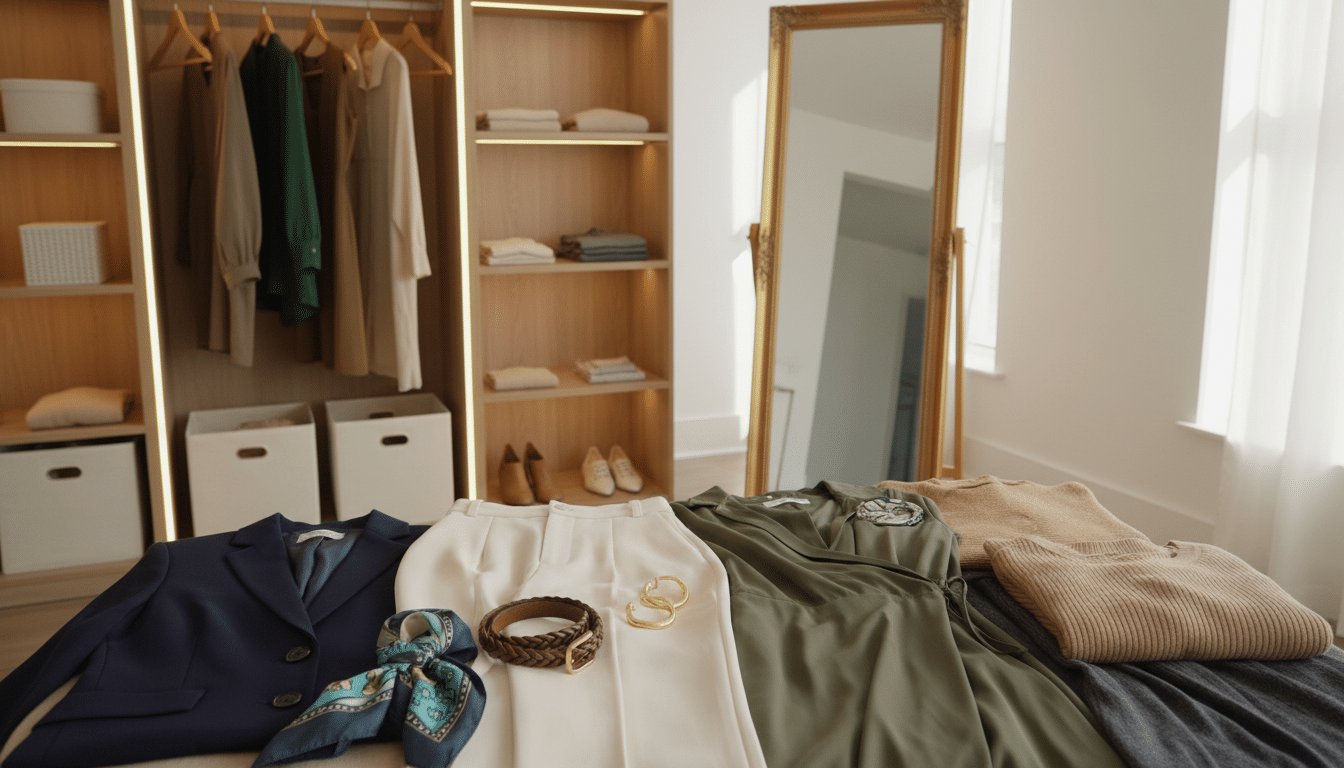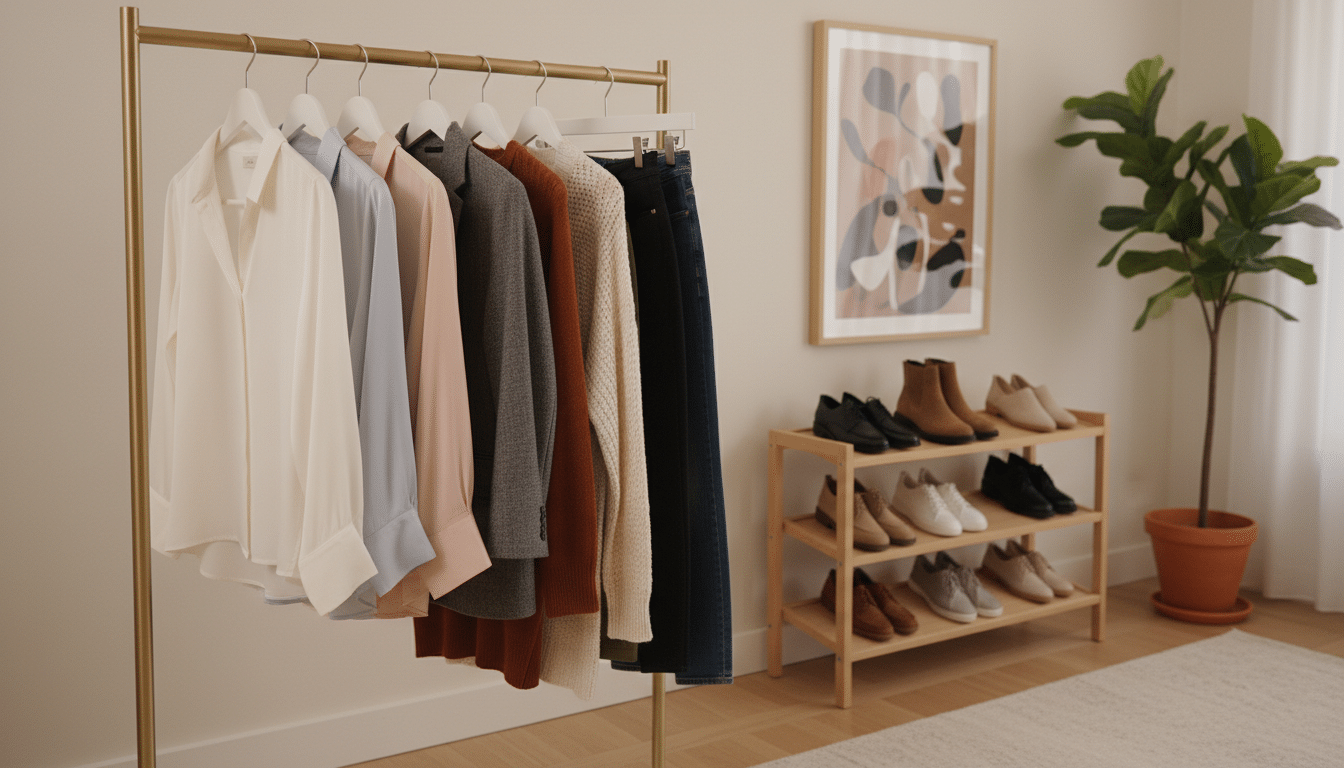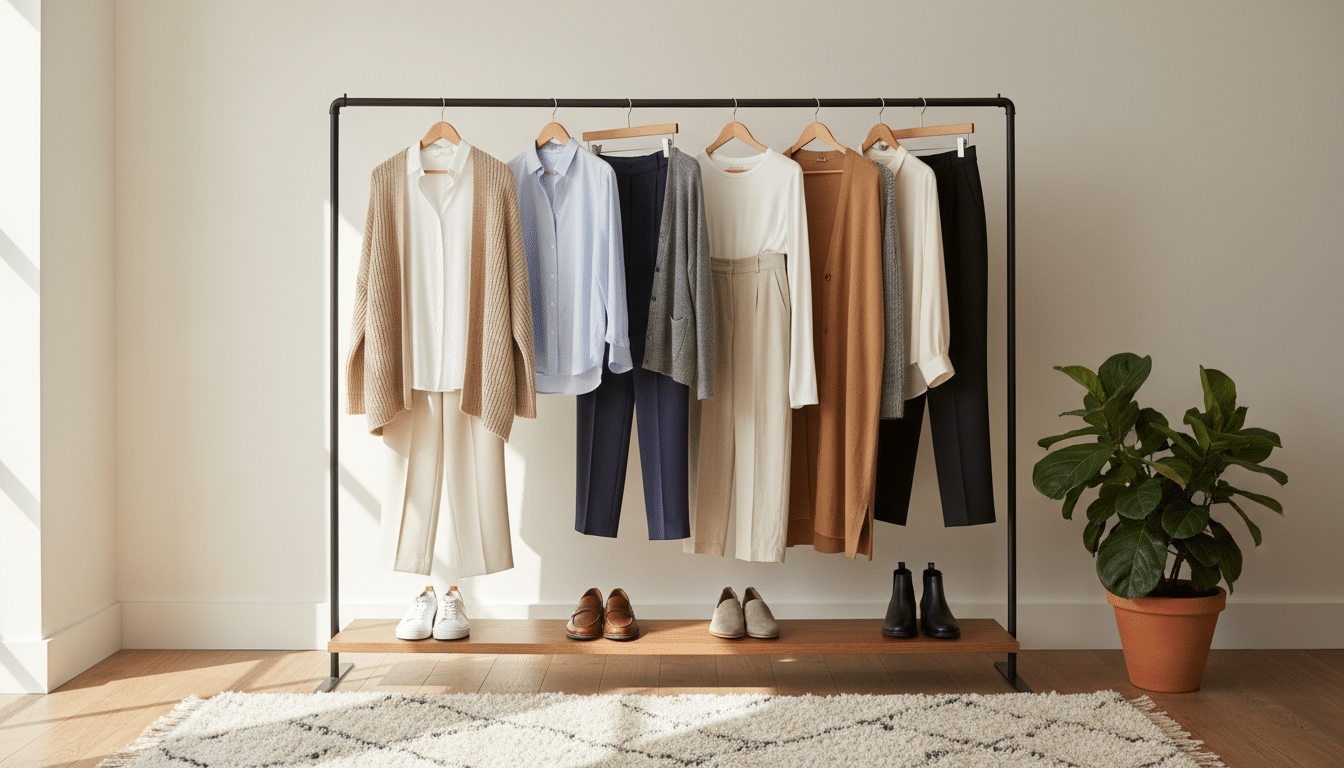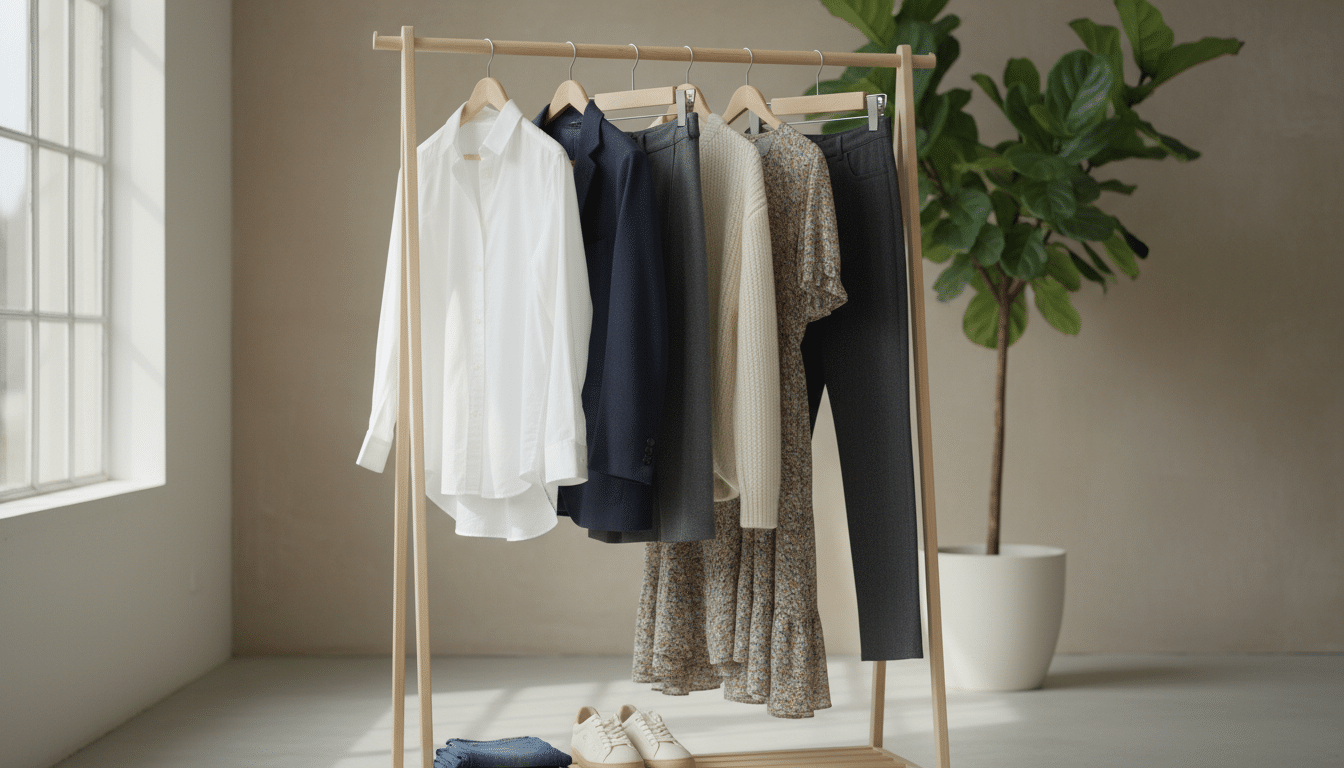
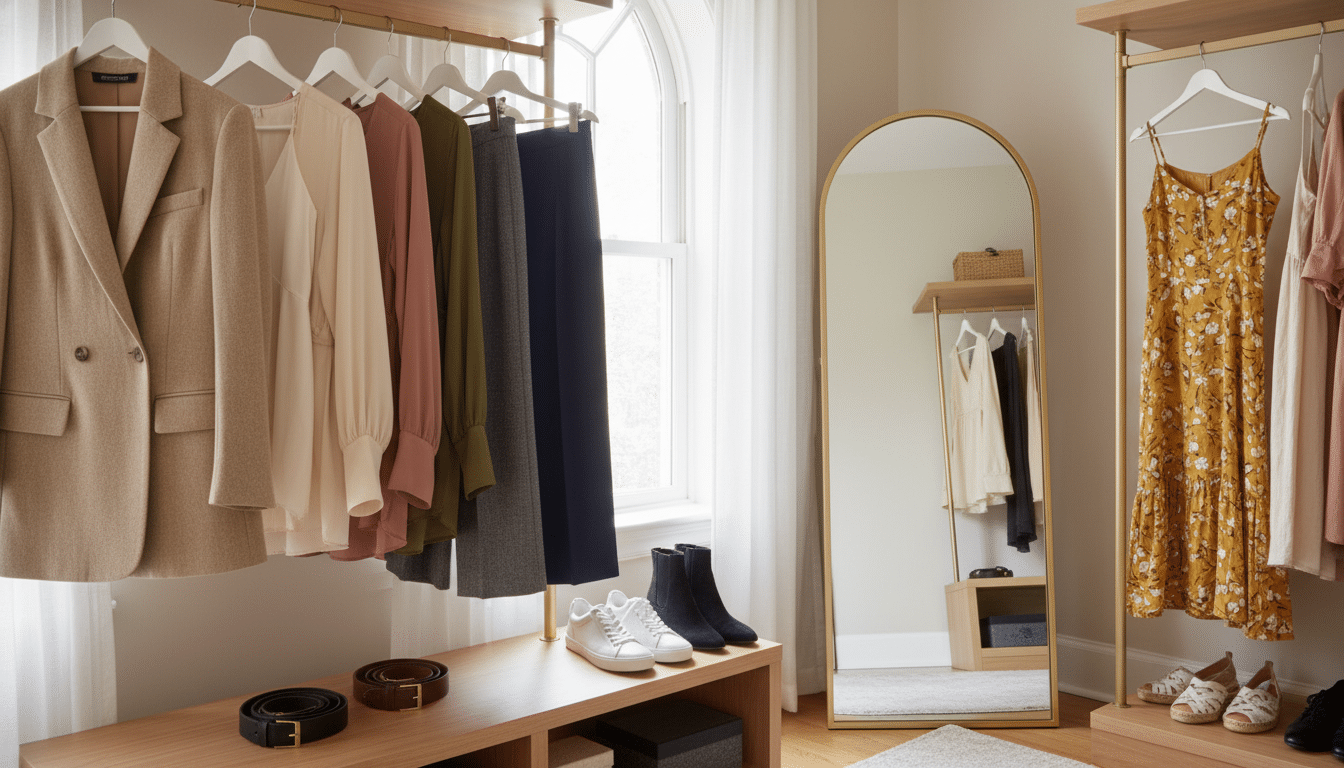
I started this seasonal capsule wardrobe guide because mornings should feel easier, not frantic. You’ll learn to mix a small set of pieces so you make more outfits with less stress—especially when errands, work, and kids crowd your day.
I’ll walk you through simple steps I use: pick a calm color palette, choose the right number of pieces, and swap items as the weather shifts. This isn’t about tossing clothes or wearing the same thing every week.
Think of it as a gentle reset for your closets—practical moves that fit real life in the U.S. You can start with what you already own, keep comfort first, and still feel put together for school drop-offs, meetings, or quick trips.
Key Takeaways
- Start small: use pieces you already like to reduce decision fatigue.
- Rotate items by season so your closet stays focused and useful.
- Choose a simple palette to build outfits fast.
- Comfort and function matter—fit your daily life, not a trend.
- Treat this as a helpful reset, not a pass/fail project.
Why your closet feels harder than it should
Some mornings your closet feels like a puzzle you didn’t ask to solve. I see this a lot—people with full hangers who still struggle with getting dressed.
Signs you’re dealing with wardrobe overwhelm
- You have many clothes but say “I have nothing to wear.”
- Overflowing drawers, or outfits left half-made on the floor.
- Too many returns from online shopping or impulse buys that sit unused.
- Multiple outfit changes before leaving—then still feeling unsure.
- Laundry cycles that make mornings feel impossible.
| Common sign | What it often means | Quick fix idea |
|---|---|---|
| Lots of clothes, no go-to outfit | Choices don’t work together | Pick 8 favorites that mix well |
| Returns and regret buys | Shopping without a plan | Shop with a short list |
| Outfits on the floor | Outfit decisions delayed | Save outfit photos for mornings |
What I mean by “real life” dressing in the U.S.
Real life often means hot afternoons with cold AC, car commutes, school drop-offs, casual offices, and surprise weather. Your closet can be full of nice things that simply don’t match your day-to-day needs.
What a capsule wardrobe actually is (and what it isn’t)
Imagine a short list of go-to items that do most of the work for your week. I mean a small collection of thoughtfully chosen, easy-to-mix pieces you reach for without thinking.
A simple definition you can use
A capsule wardrobe is a compact set of clothing, shoes, outerwear, and accessories that mix well. The goal is function: fewer decisions, more outfits that feel like you.
Where the idea came from
The idea began with Susie Faux in the 1970s. Donna Karan then popularized it in the 1980s with her “Seven Easy Pieces.” This has been evolving for years—so it’s not just a social trend.
Why strict numbers often backfire
- Rigid rules make you feel you failed if you don’t hit an exact number.
- Perfect lists ignore what you actually wear day-to-day.
- Treat your first edit as a draft—you can change it as you learn.
| What it is | What it isn’t | Quick note |
|---|---|---|
| Functional, mixable items | A forced uniform | Include shoes and accessories; skip pajamas |
| Personal and practical | All beige or boring | Keep a few fun pieces that still match |
| An adaptable plan | A strict rule to pass/fail | Use common lists (like 333) as options, not laws |
What changes when you build capsule wardrobes for the seasons
Swapping items in and out with the weather can change how your closet feels and how you move through your day.
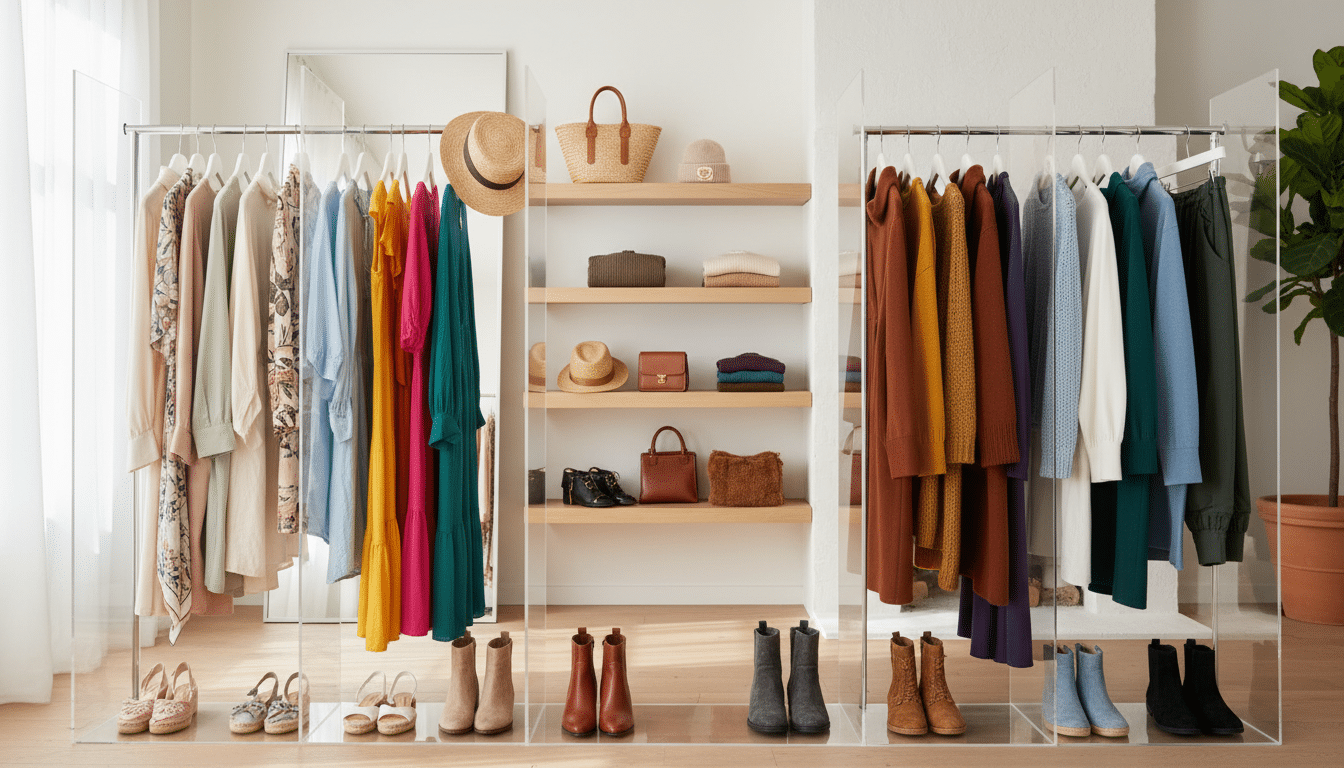
I find two clear approaches: a year-round capsule wardrobe you can live with, or a set of in-season capsules you rotate. Both work. Pick the one that fits your life in the U.S.—hot summers, snowy winters, rainy springs, or office A/C.
Seasonal vs. year-round
A year-round capsule keeps more variety on the rail. That helps if you travel or hate swapping boxes. But it can feel cluttered in places with true winters or blazing summers.
Why build for the season you’re in
When you only see clothes you can wear now, mixing is faster. Linen pants become denim in fall. Sandals give way to boots in snow. Light sweaters bridge cool mornings and hot afternoons.
- Move off-season items out of sight to reduce mental clutter.
- Keep a small bridge group—jeans, tees, a light sweater—that works across seasons.
- Keep color and personality; cohesion, not boredom, is the point.
How a capsule wardrobe makes daily life easier
When outfits stop competing, getting dressed becomes quick instead of draining. I want this to feel like practical help—not a chore. Below are clear ways a pared-down closet frees up energy and time.
Less decision fatigue when you’re getting dressed
Too many options tire your brain. With a few trusted pieces, choices shrink. You reach for jeans, a tee, and a layer—and you’re out the door.
More time back from shopping, returning, and reorganizing
Less browsing means fewer impulse buys and returns. That saves time you can spend on your morning coffee or a short walk.
Spending less because you shop on purpose
When you buy with intent, clothes earn their place. You stop collecting “almost” items that never get worn.
A more sustainable closet with fewer impulse buys
Buying less reduces waste. It’s a small step that helps the planet and your budget.
- Make sure it earns a spot: fits your life, feels good, easy care, mixes well.
- Think of this process as support for your day—more ease, fewer regrets.
| Time sink | Before | After |
|---|---|---|
| Shopping | Endless browsing | Short, focused trips |
| Closet edits | Long, stressful sessions | Quick seasonal swaps |
| Getting ready | Multiple outfit changes | One reliable outfit |
Start with your real lifestyle, not a fantasy one
Start from how your days actually look, not from a picture-perfect closet you don’t live in.
Your week in outfits: work, weekends, events, travel, and WFH
I walk you through a simple week-in-outfits process. List your typical week: office days, WFH, errands, nights out, and travel. Then note one outfit you’d wear for each.
That shows the types of clothing you need. It reveals gaps fast—like many going-out tops but few casual layers.
Laundry rhythm matters more than you think
Ask yourself: how often do you do laundry? If weekly, pick basics you can repeat without hiding stains. If every other day, you can own fewer tees and still save time.
Comfort, care, and weather: the deal-breaker checklist
Use this quick checklist on each item before it earns a spot in your closet:
- Comfort — will you reach for it on a rushed morning?
- Weather-appropriate — does it work for your local climate?
- Fits now — not a size you hope to return to.
- Easy care — can you wash it in a normal cycle?
- Mixes — does it pair with two or more pieces you already own?
| Life type | Core pieces | Laundry step |
|---|---|---|
| Office & events | 2 trousers, 3 blouses, 1 blazer | Wash weekly; keep extra basics |
| WFH & errands | 3 tees, 2 joggers, 1 light layer | Wash every 2–3 days; choose machine-wash fabrics |
| Travel & weekends | 2 versatile dresses, 2 jeans, 1 jacket | Pack for a month mindset; pick quick-dry pieces |
Choose a color palette that makes mixing and matching simple
A thoughtful palette is the fastest way to make your pieces play nicely together. It trims choices and helps you build outfits without thinking too hard.

Easy neutrals that do the heavy lifting
Pick two or three neutrals you already wear. Good options: black, navy, gray, brown, camel, taupe, cream, and white.
Keep most bottoms in those tones. That way tops and shoes become easy switches.
How to add one or two accent colors without chaos
Choose accents that feel like you—muted green, dusty pink, or soft blue work well. Use them in tops, scarves, or shoes so they pop without taking over.
Using prints and texture as “fun” without losing cohesion
- Pick prints that include at least one neutral from your palette.
- Use texture—a ribbed knit or suede shoe—to add interest while keeping the base colors steady.
- If nothing matches, check for one color that’s out of the group and swap it out.
| Role | Example | Tip |
|---|---|---|
| Neutral base | Navy jeans, cream tee | Buy durable basics |
| Accent | Muted green scarf | Keep to 1–2 accents |
| Texture/print | Striped top with gray | Ensure one neutral ties it in |
Color can belong in a capsule wardrobe—you don’t have to play it safe. Cohesion matters more than strict rules. Start small and adjust as you go.
The easiest way to build a capsule wardrobe is to start with what you already wear
Start where you already live—in the clothes you actually reach for each week. This first step keeps the process gentle and real.
Pull your favorites first
Take a quick sweep and pull out the tops, pants, and shoes you wear most. These favorites are your foundation. Notice repeat colors, shapes, and go-to outfit formulas.
Sort what’s left into simple groups
Put remaining clothes into clear categories: jeans, pants, tees, sweaters, dresses, coats, shoes. Seeing them makes gaps and overlaps obvious.
Gently declutter without drama
Focus only on clear no’s: won’t fit, hurts to wear, or doesn’t match your life. Use a maybe bin for anything you worry about losing.
- Step 1: Pull favorites.
- Step 2: Sort by category.
- Step 3: Remove obvious no’s, add maybe bin.
| Action | Why it helps | Quick tip |
|---|---|---|
| Pull favorites | Shows what you actually wear | Start with a week’s worth |
| Sort items | Reveals patterns and gaps | Use labeled piles or bags |
| Gentle declutter | Reduces decision fatigue | Keep a maybe bin for 30 days |
If you want a simple next step, see how to start a capsule wardrobe with what you own. Treat this as a first draft—adjust as you learn.
A practical capsule wardrobe size (without getting stuck on a number)
You don’t need a magic number to feel dressed — you need a number that fits your life. I want this to be useful, not restrictive. Think of a range you can live with, then test it.
Why “enough” beats “perfect”
Enough means you can get through laundry days, weather swings, and a surprise event without stress. Tiny-number challenges often backfire. If you hate laundry or sweat in summer, strict limits make mornings worse.
Realistic ranges for most people: a flexible guide
Most people land around 30–50 total items. That includes tops, bottoms, dresses, underwear, and accessories. Shoes and outerwear need extra flexibility — they respond to comfort and weather.
- Tops: 10–18 pieces (depends on laundry and work type)
- Bottoms: 4–8 pieces
- Dresses/jumpsuits: 1–4 pieces (only if you wear them)
- Shoes and coats: allow 4–6 pairs/pieces
| Life type | Suggested total items | Quick note |
|---|---|---|
| Office & events | 35–50 | More blouses and a blazer |
| WFH & errands | 30–40 | More tees, fewer dressy pieces |
| Active lifestyle | 32–45 | Include washable athletic pieces |
Ask yourself: climate, dress code, laundry schedule, and how many repeats feel okay. Start with this list, wear it for a few weeks, and adjust one step at a time.
Capsule wardrobe essentials by category (use this as a reference, not a shopping list)
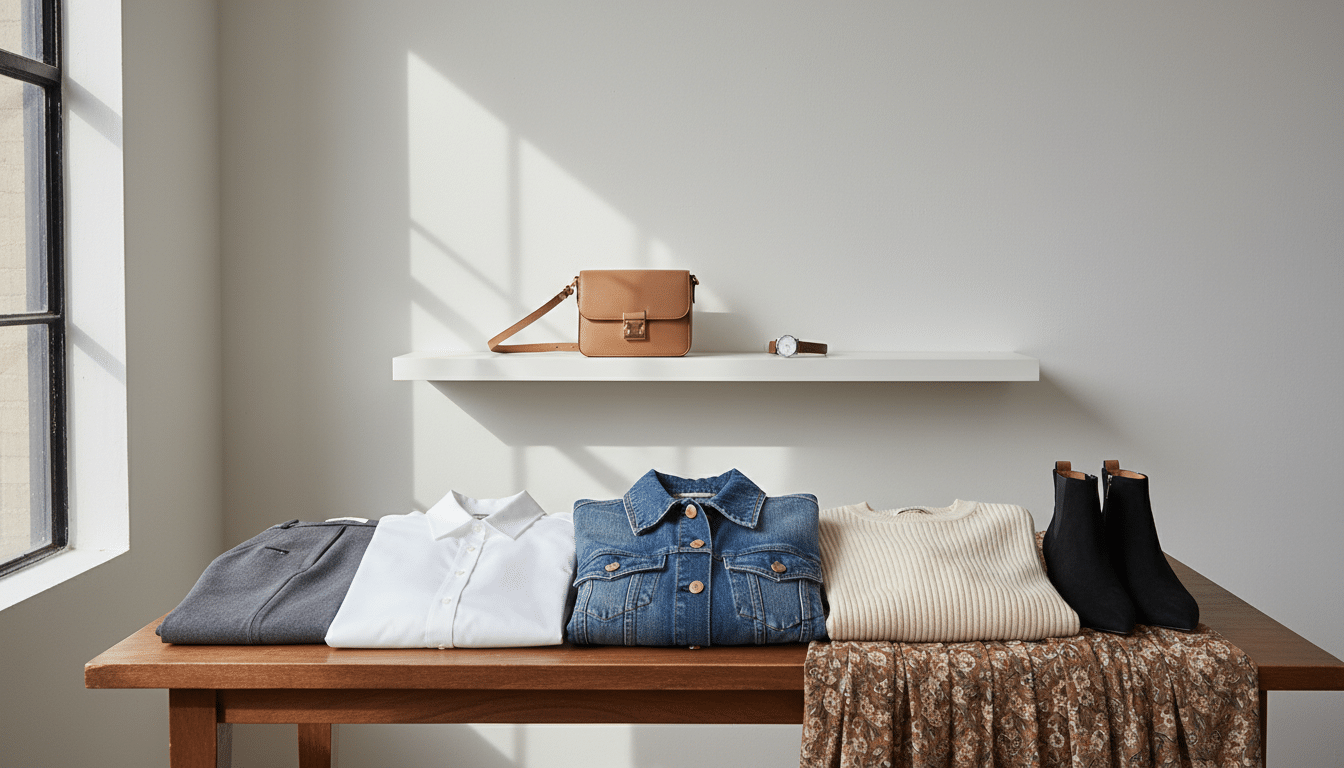
Use this as a quick checklist to compare what you own with what you actually wear. I’ll walk category by category and keep it practical—shop your closet first.
Bottoms
Bottoms anchor outfits and get heavy rotation. Aim for 5–7 pieces: straight-leg jeans, a wide-leg pair, tailored pants, a skirt, and a short or two for warm days.
Everyday tees and tanks
High-rotation basics make mornings fast. Keep 5–7 tees or tanks. Duplicates of a favorite white tee can be smart if you wear them often.
Tops and blouses
These add easy polish. Pick 3–5 shirts or blouses that work with jeans and trousers—a button-down and a blouse you can half-tuck go a long way.
Sweaters and knits
Choose 3–5 layering knits. Cardigans and thin crewnecks bridge cool mornings and warm afternoons.
Dresses
Only if you wear them. Keep 2–3 versatile dresses or jumpsuits that mix with your layers.
Layers, shoes, accessories
- Layers/outerwear: 3–5 finishers (denim jacket, blazer, trench, warm coat).
- Shoes: 4–5 comfortable pairs—sneakers, ankle boots, flats, sandals, weather-proof option.
- Accessories: 4–6 items—belt, tote, crossbody, simple jewelry to vary looks.
| Category | Why it matters | Example pieces |
|---|---|---|
| Bottoms | Anchor outfits | Jeans, trousers, skirt, shorts |
| Tops | Polish or casual | Tees, button-downs, blouses |
| Layers & Shoes | Finish and comfort | Blazer, coat, sneakers, boots |
How to build outfits that look put together with fewer pieces
Begin with one reliable item and watch how quickly other pieces fall into place. I use this all the time—pick a strong piece and make small choices around it. This saves time and keeps getting dressed simple and calm.
Start with one strong piece and build around it
Choose a favorite pair of jeans, a sweater, or a blazer. Then add two or three pieces that mix match well with it. You’ll get several outfits without buying more.
Proportions that work
Balance wide shapes with slim ones. Wide-leg jeans look grounded with a fitted top. An oversized sweater pairs best with straight or slim pants. Try and see what feels right on you.
The rule of thirds and small tweaks
Use the rule of thirds: divide your outfit into top, middle, and bottom layers. A tucked tee, a belt, or a cropped jacket can make an outfit look finished fast.
| Outfit formula | When to wear | Small tweak |
|---|---|---|
| Jeans + tee + blazer | Errands, casual office | Front tuck + belt |
| Trousers + tank + cardigan | Meetings, lunch | Swap sneakers for loafers |
| Dress + denim jacket + sneakers | Weekend, travel | Add layered necklace |
Save photos of your favorite outfits. On busy mornings, copy a look you already know works. That small habit makes your capsule feel effortless and personal.
Season-by-season swaps that keep your wardrobe feeling fresh
Small, intentional swaps keep your closet useful as the weather shifts—no full redo required. I focus on tiny edits that make outfits work for your week.
Spring: light layers for unpredictable temps
Keep a light jacket, two cardigans, and water-ready shoes. Layer a tee, thin knit, and a rain-friendly jacket for cool mornings and warm afternoons.
Summer: heat-friendly fabrics and easy outfits
Choose breathable linen or cotton and 3–5 high-rotation basics. A simple dress or tee + shorts formula saves time when you sweat more.
Fall: texture, layering, and transitional shoes
Bring in knits, denim, and ankle boots. Swap sandals for closed shoes and add a mid-weight jacket to bridge warm days and crisp nights.
Winter: warmth without bulk
Pick warm base layers, a cozy mid-layer, and one outer coat you actually like. If heavy coats bother you, try an insulated vest plus a warm scarf.
Where to store off-season items
Use under-bed bins, labeled tote bags, or a top-shelf shelf to keep out-of-season items out of sight. That keeps your daily closet calm.
- Quick checklist: what still fits, what wore most, what to replace later.
- Rotate one box of items each change of season—small edits beat big stress.
| Swap | Example | Why it helps |
|---|---|---|
| Light layers | Cardigan, rain jacket | Handles swings in temp |
| Breathable basics | Linen tee, cotton dress | Comfort in heat |
| Storage | Under-bed bin, tote | Reduces closet clutter |
Making room for trends, vintage, and “fun pieces” without blowing up your capsule
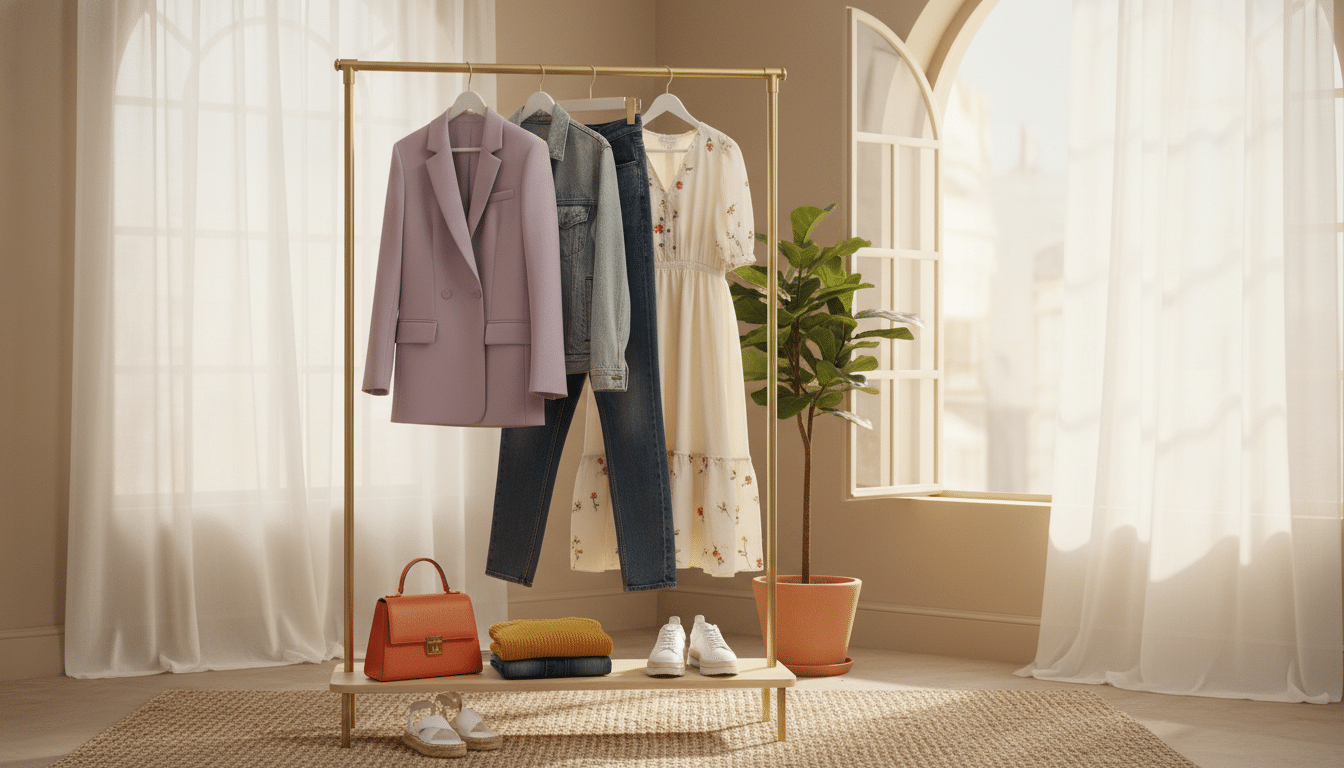
You can love bold finds and still keep a calm closet. I use a basics + extras approach so my core pieces do the heavy lifting, and a few playful items keep outfits interesting.
The basics + extras approach
Keep a steady foundation of neutral tops, reliable bottoms, and shoes you actually wear. Then add two to four fun items that rotate every few months.
These extras should mix with at least three basics so they don’t feel like one-off purchases.
How to pick a fun item that still pairs well
Choose prints or colors that include one neutral from your palette. A printed skirt that pairs with three tees, or a bright cardigan that works with two pairs of jeans, is a win.
What I invest in versus buy cheaper (quality checklist)
- Invest: boots you wear weekly, a great coat, your best jeans cut.
- Buy cheaper: trendy tops, seasonal tees, novelty jewelry.
| Decision | Example | Why it works |
|---|---|---|
| Invest | Leather ankle boots | Lasts years; pairs with many outfits |
| Budget buy | Graphic tee | Fun now; replace if it fades |
| Quality check | Fabric feel, seams, returns | Make sure it holds up and fits your life |
How to maintain a capsule wardrobe over time
Maintenance is the step that keeps a pared-down closet working for real life. Think of the first set you build as a draft—something to wear, test, and change. That mindset makes the process kinder and less final.
Treat your first attempt like a draft
Wear your list for a few weeks. Note what you reach for and what sits unused. Use that feedback to tweak the list—swap pieces that never leave the hanger and keep the ones you love.
The one-in, one-out rule that actually helps
- If you bring a new item in, remove one that you no longer wear.
- Allow exceptions for true replacements—worn-out basics that need like-for-like swaps.
- Keep a short list on your phone of items to replace later so you shop with intent.
Quick seasonal check-ins to prevent clutter creep
Do a 20-minute closet reset at the start of each season. Use a short checklist: what you wore nonstop, what stayed on the hanger, what needs repair, and what gap made mornings harder.
| Step | What to look for | Quick action |
|---|---|---|
| Wear test | Pieces you reach for | Keep or duplicate |
| Ignore list | Items untouched | Donate or store |
| Repair/replace | Damage or fit issues | Repair, or add to replacement list |
These small steps make maintenance feel like relief, not another chore. Over years, a gentle process like this keeps your closets calm and your mornings easier.
Common sticking points (and what I’d do instead)
Let’s unpack the worries that keep people staring at a full closet and still feeling stuck. I hear the same fears over and over—so I kept each fix small, practical, and low-stress.
“I’m afraid I’ll get rid of something I need”
Do this instead: make a maybe box. Pack the things you worry about letting go of and set a reminder for 30–90 days.
If you haven’t reached for an item by that revisit, donate or store it. This keeps options without panic.
“Nothing matches”
First diagnose: too many colors, clashing styles, or missing connectors like neutral tops or shoes.
Fix plan: pick 2–3 core neutrals and 1–2 accents. Rebuild outfits around those anchors using what you already own.
“I love clothes and I don’t want a boring closet”
You can keep your personal style. Use a basics + extras approach—keep reliable pieces and rotate 3–4 fun items.
Accessories, prints, and a small special-events stack let you stay playful without clutter.
“My body is changing and my closet is stressful”
I speak to this gently: focus on what fits now. Choose breathable fabrics, stretchy waistbands, and easy layers.
Swap a handful of pieces for comfort-first options that still make you feel put together in real life.
| Sticking point | What to try | Why it helps |
|---|---|---|
| Fear of losing items | Maybe box + 30–90 day revisit | Reduces regret and saves time |
| Nothing matches | 2–3 neutrals + 1–2 accents | Makes outfits mixable fast |
| Style boredom | Rotate 3–4 extras; use accessories | Keeps things fresh without overflow |
Conclusion
Before you close this tab, take one easy step that changes mornings.
Start with your real life. Pick the season you’re in, pull favorites, and note the items that show up most. That quick list becomes your working checklist.
Next, build 7–10 repeatable outfits from those pieces. Wear them for a few weeks and treat the process like a draft. I test and tweak as I go—same approach I recommend to you.
Keep a running list of gaps for future shopping. Let your personal style lead the choices—comfort and confidence first.
Final thought: build a capsule wardrobe to support your days now, and let it evolve as your life does.