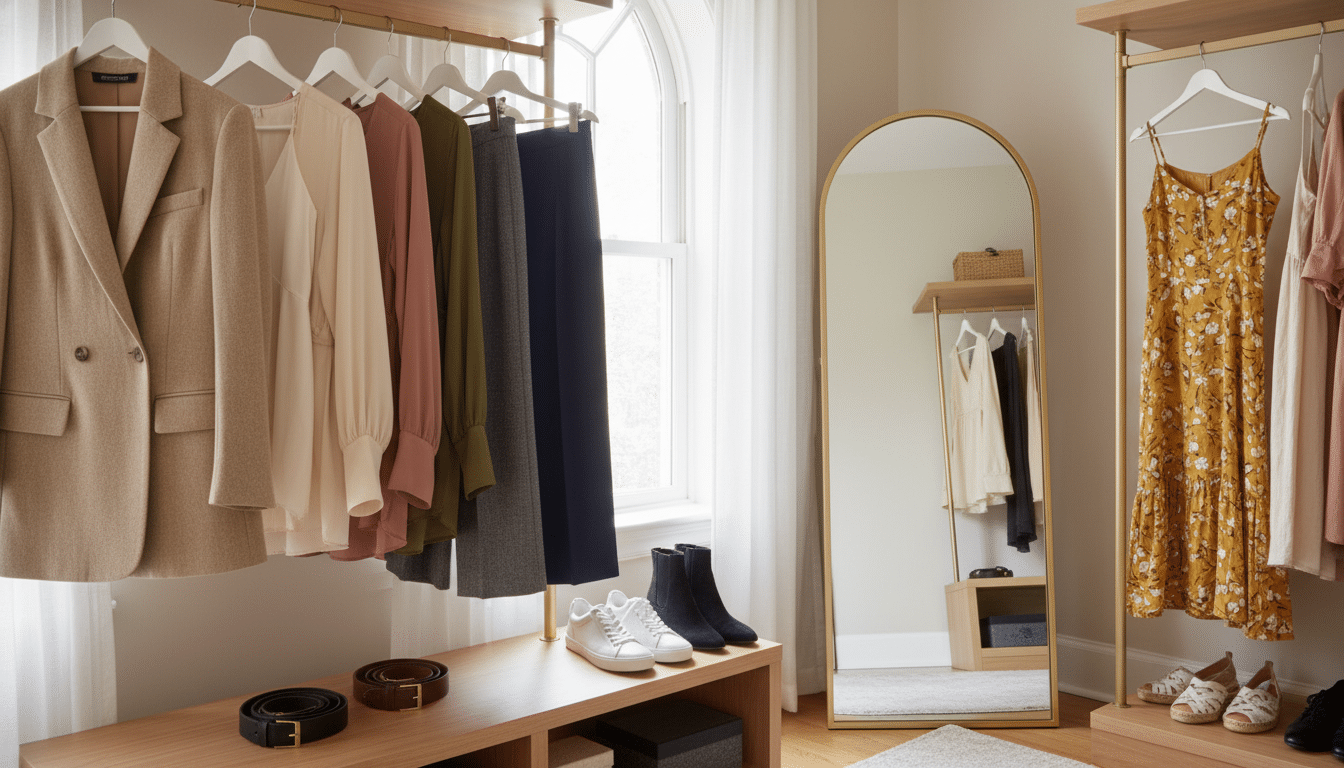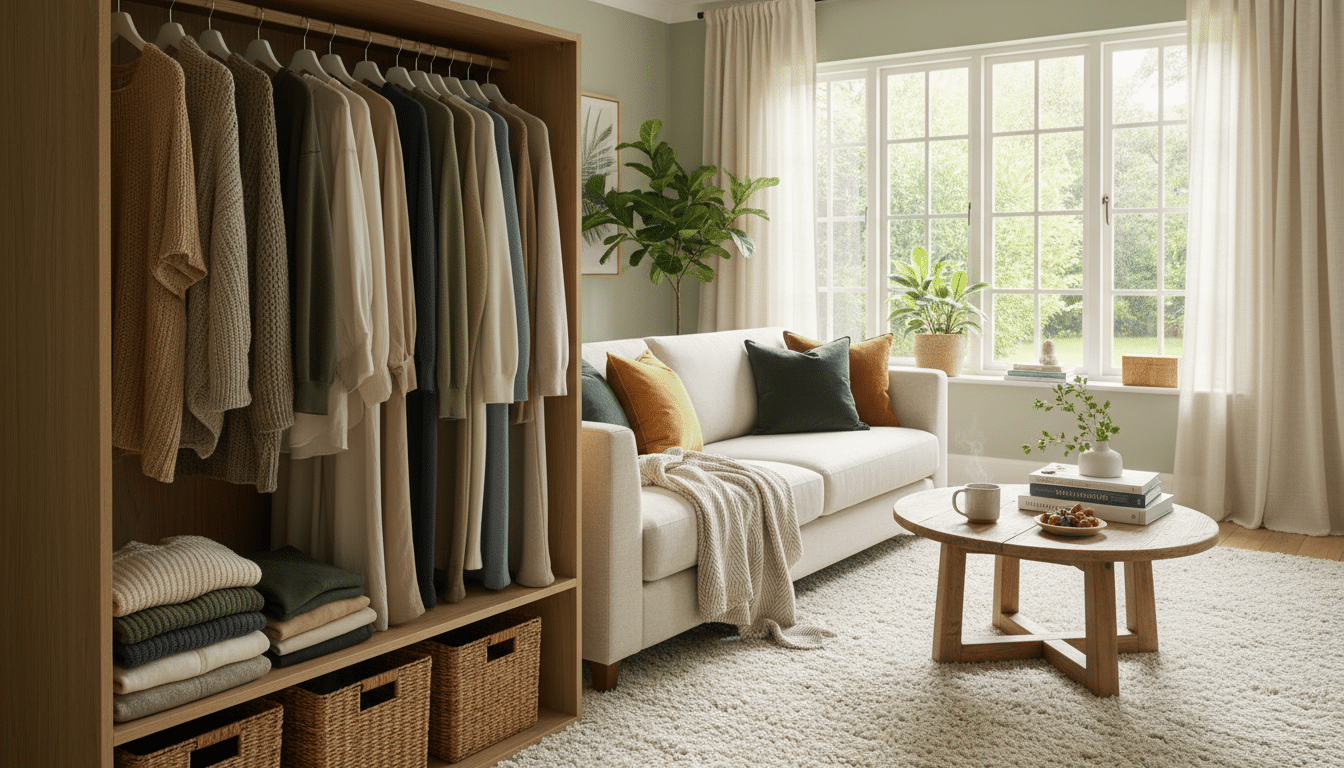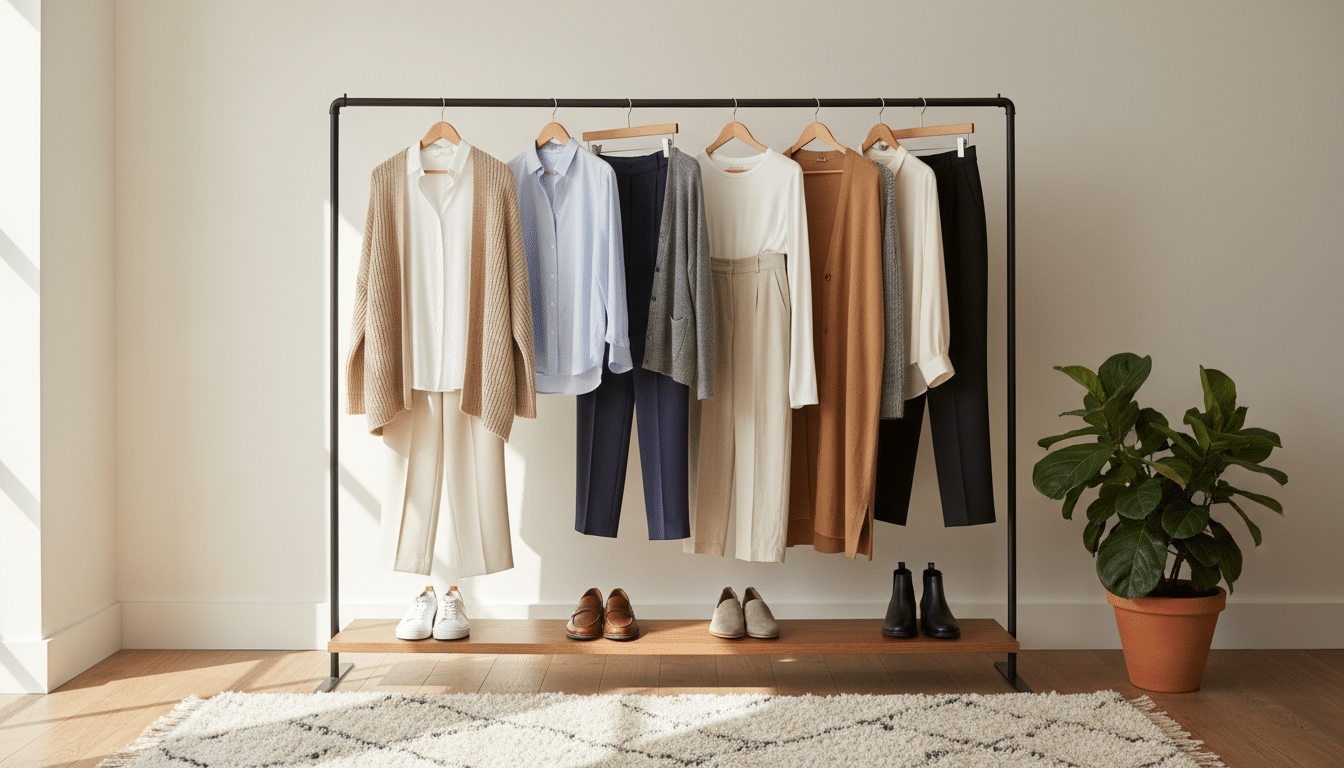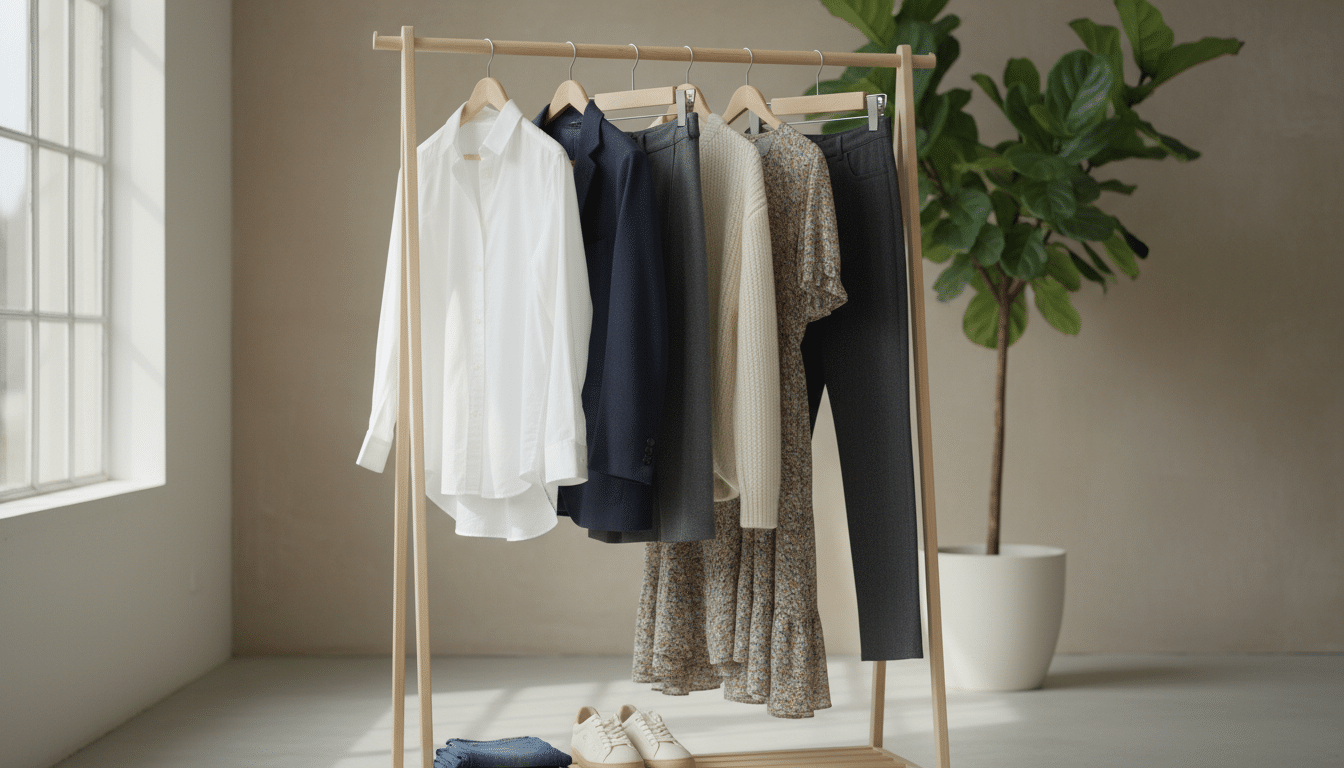
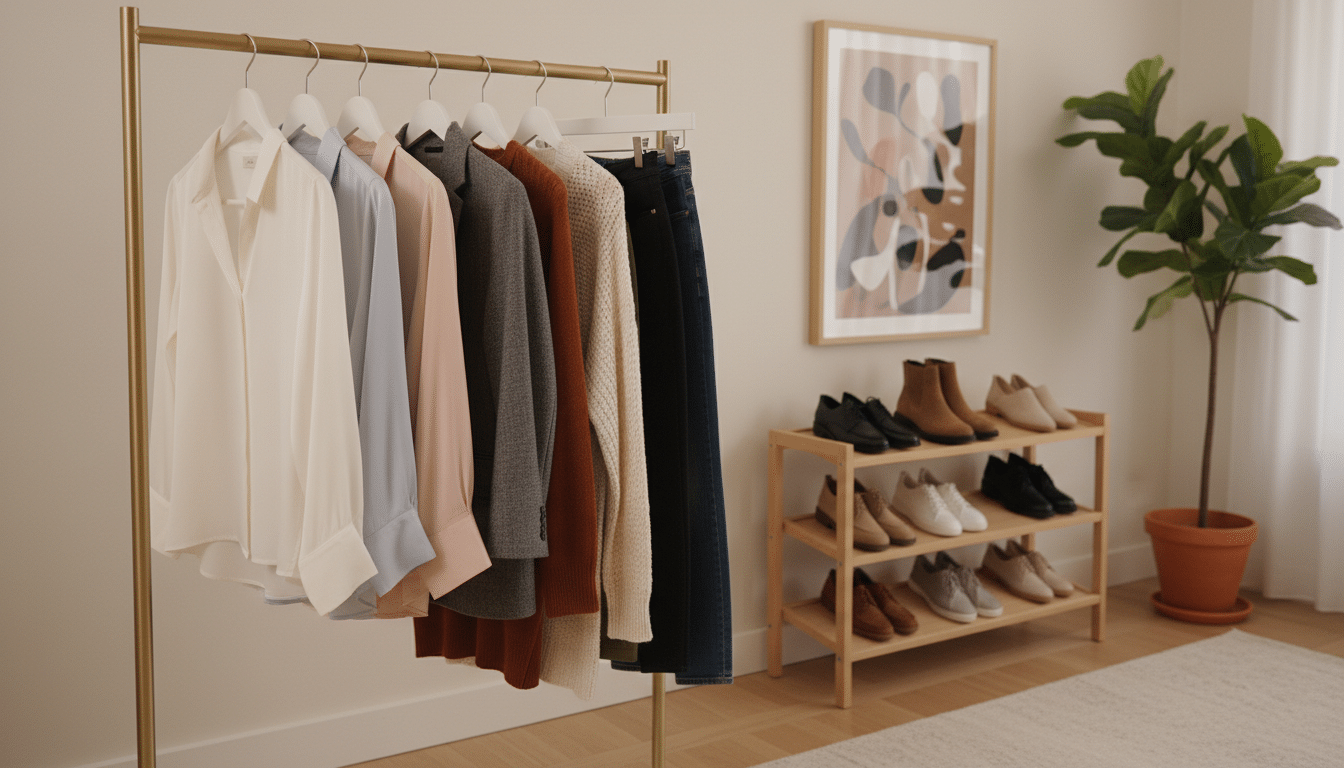
I’ve built my life around one simple idea: a capsule wardrobe for work and home that bends with my day instead of splitting me into two people.
Think of it like a small set of favorites that mix and match—soft textures, steady neutrals, a few upbeat pieces—and you can go from desk to drinks without a second thought. I’ll be honest: this is about cutting decision fatigue and stopping impulse buys that never play nice together.
We’ll start with what you already own, pick a calm palette, and lean on swaps—shoes, layers, a bold accessory—to change the mood fast. No rigid rules. Just practical moves you can try tomorrow, no shopping required.
Key Takeaways
- You don’t need two separate closets—one small set can cover most days.
- Begin with pieces you like; edit before you shop.
- A simple color plan makes mixing easy.
- Versatile layers and shoes shift an outfit quickly.
- This approach saves time, space, and stress each morning.
What I mean by a capsule wardrobe (and why it makes mornings easier)
Picture a small set of clothes that simply get you dressed—fast and without fuss. That’s the practical idea I use: a capsule wardrobe is a compact collection of pieces that mix well so you can make lots of outfits without digging through a stuffed closet.
A simple definition you can actually use
I keep it basic: choose items you reach for most and that pair easily. When pieces match, you stop wasting time trying on five versions of “meh.” You get dressed faster and feel less frazzled.
Where the idea came from and why the rules got confusing
The concept goes back to Susie Faux in the 1970s and later to Donna Karan’s “Seven Easy Pieces.” Over the years the talk shifted into rigid counts—own exactly X items—which often missed real life. I prefer a flexible approach that grows from what you actually wear.
The real-life wins: less decision fatigue, more time, fewer impulse buys
- Less decision fatigue: fewer outfit tries in the mirror.
- More time: quicker mornings and fewer returns after impulse purchases.
- Fewer impulse buys: when things already fit your set, you shop with purpose.
No guilt, no strict rules. Treat this as a helpful framework you adjust over the years so your clothes support your days—not the other way around.
Start with your real week, not your “someday” style
Let’s base this on real life: list the kinds of days you have, not the ones you wish you had. I keep this step practical and nonjudgy—just a quick tally to guide what stays and what goes.
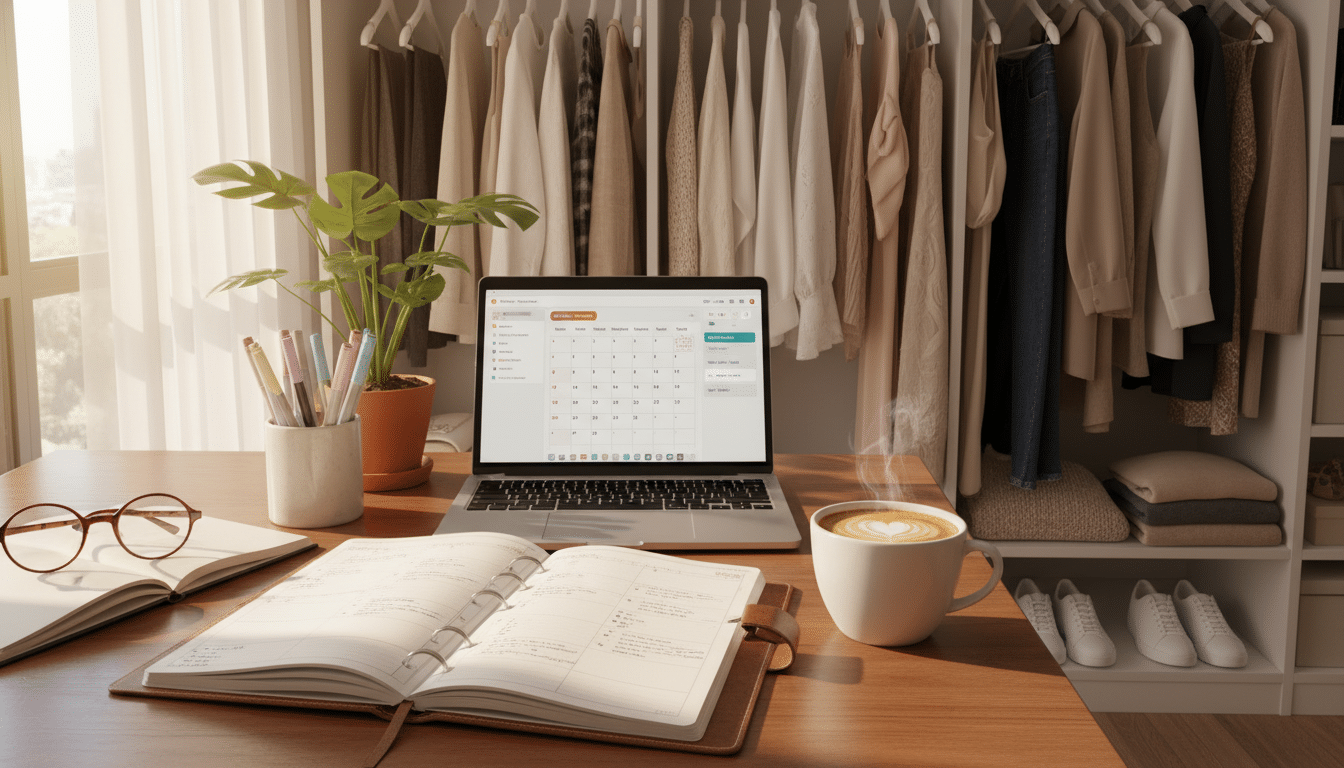
A quick lifestyle check: office days, WFH days, errands, weekends
Write down a normal seven-day stretch. Count office meetings, WFH hours, school drop-offs, chores, and weekend plans. Be honest—if you’re home four days, your capsule needs more comfy pieces, not extra office options.
The “packing for a month” mindset that keeps this practical
Imagine leaving tomorrow with a suitcase for a month. What would you realistically pack to live your life now?
- I prompt you to choose items you actually reach for—not Pinterest pieces you’d never wear.
- Comfort matters: if something makes you tug at it all day, it’s not a core piece.
- Let laundry rhythm, climate, and your size needs decide how many items you keep per season.
The goal is simple: enough repeatable outfits to cover your week without stress. If you want quick inspiration, check these repeatable outfits that always work.
Pick a color palette that makes mixing and matching easy
Choose a palette that does the heavy lifting so you don’t have to. I keep this simple — mostly neutrals with one or two accents that I already wear. That way every top and bottom tends to play well together.
Mostly neutrals that actually help
Neutrals quietly match for you when you’re tired. Common picks: black, navy, gray, camel, cream, white. Pick the ones you own most often and that flatter your skin tone.
Accent colors without extra fuss
Add one or two accent colors you love — burgundy, olive, or a warm red. The test is simple: if that color works with at least two bottoms and one layer, it stays.
An easy example to try
Try navy + cream + gray. Use texture — denim, knits, and a structured jacket — to keep looks interesting while keeping your options low. You don’t lose personality; you gain outfits that actually get worn.
How I build a capsule wardrobe for work and home with what you already own
Start by lining up the clothes you reach for when time is short. I mean the real winners—the jeans that fit, the tee you grab without thinking, the coat you always wear.
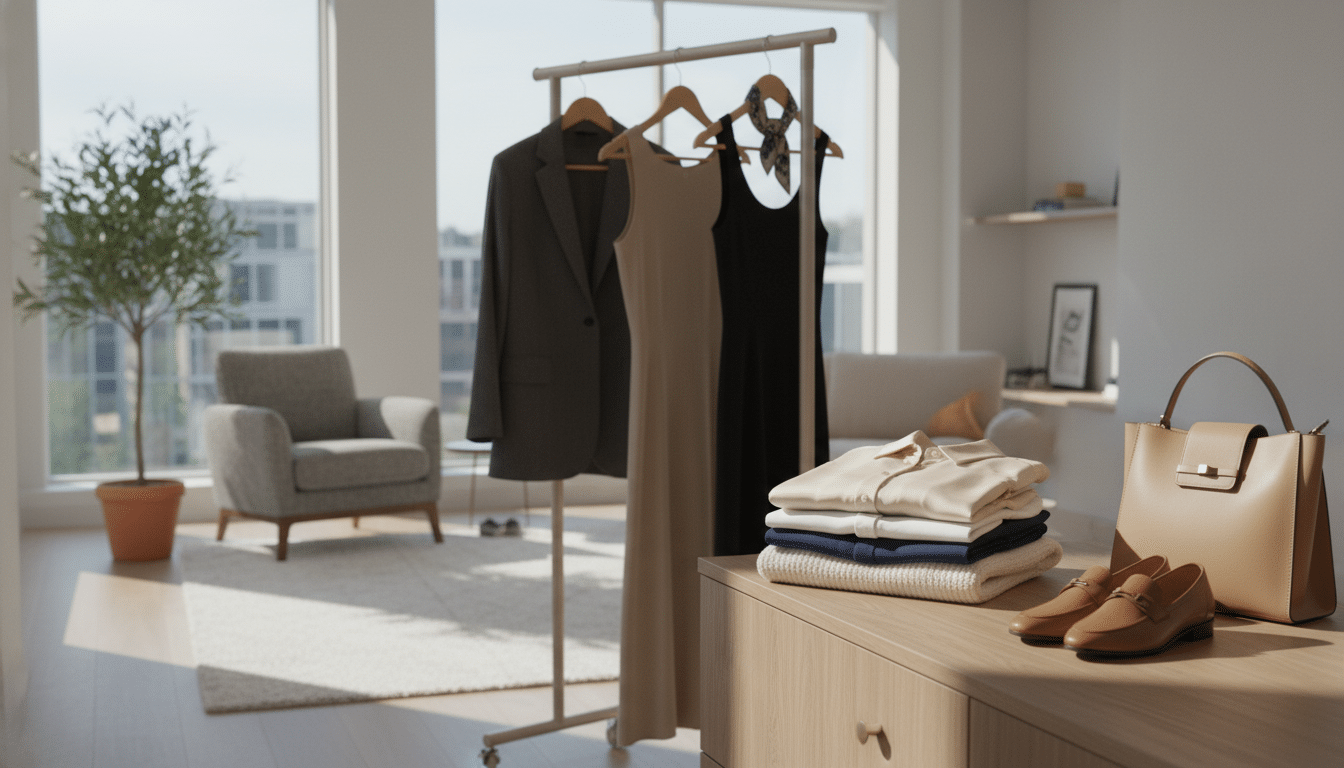
Pull repeat pieces first
I take out the items I wear weekly. Those pieces form the spine of the set. If it fits well and feels easy, it stays.
Sort by category so your closet makes sense
- Group jeans, pants, tops, sweaters, dresses, layers, shoes.
- Seeing them helps you mix outfits fast.
Gently declutter and choose “enough”
Set aside things that pinch, itch, or never match anything. Build for the current season, not the whole year.
| Category | Keep | Maybe | Set Aside |
|---|---|---|---|
| Jeans | Best-fit pair | Trendy cut | Too tight/old |
| Tops | Reliable tee, blouse | Bright print | Scratchy or stained |
| Layers & Shoes | Cardigan, blazer, sneakers | Occasional jacket | Worn-out heels |
Treat this first draft as a trial. Wear it for a few weeks, note what you miss, and tweak the fit and size slowly.
The core pieces that usually do the most work in your wardrobe
I rely on a short list of reliable items that quietly do the heavy lifting every week. These are choices I wear without thinking—pieces that mix easily and feel like me.
Bottoms that anchor outfits
Start with a few solid bottoms: straight-leg jeans, tailored trousers, ankle pants, and a midi skirt. Jeans often act as the casual anchor, while trousers and dress pants pull a look toward the office or a meeting.
A midi skirt works both ways. With sneakers it reads relaxed. With flats or low heels it looks polished.
Tops you can dress up or down
Keep several tees in smooth knits, a crisp button-down, and a couple of simple blouses. A tee with good shape looks neat under a blazer or alone at home. A button-down can be tucked, layered, or worn open over a tank.
Layers that change the vibe fast
A blazer instantly ups a tee. A cardigan or denim jacket keeps things easy. Have one neutral coat that fits most outfits so your outerwear doesn’t fight the look.
Shoes that cover your real life
Pick sneakers for long days on your feet, flats and loafers for smart comfort, and one low-heel pair for events. Every pair should pair with at least three other pieces so you build outfits, not single-use items.
Easy ways to switch an outfit from home casual to work-ready
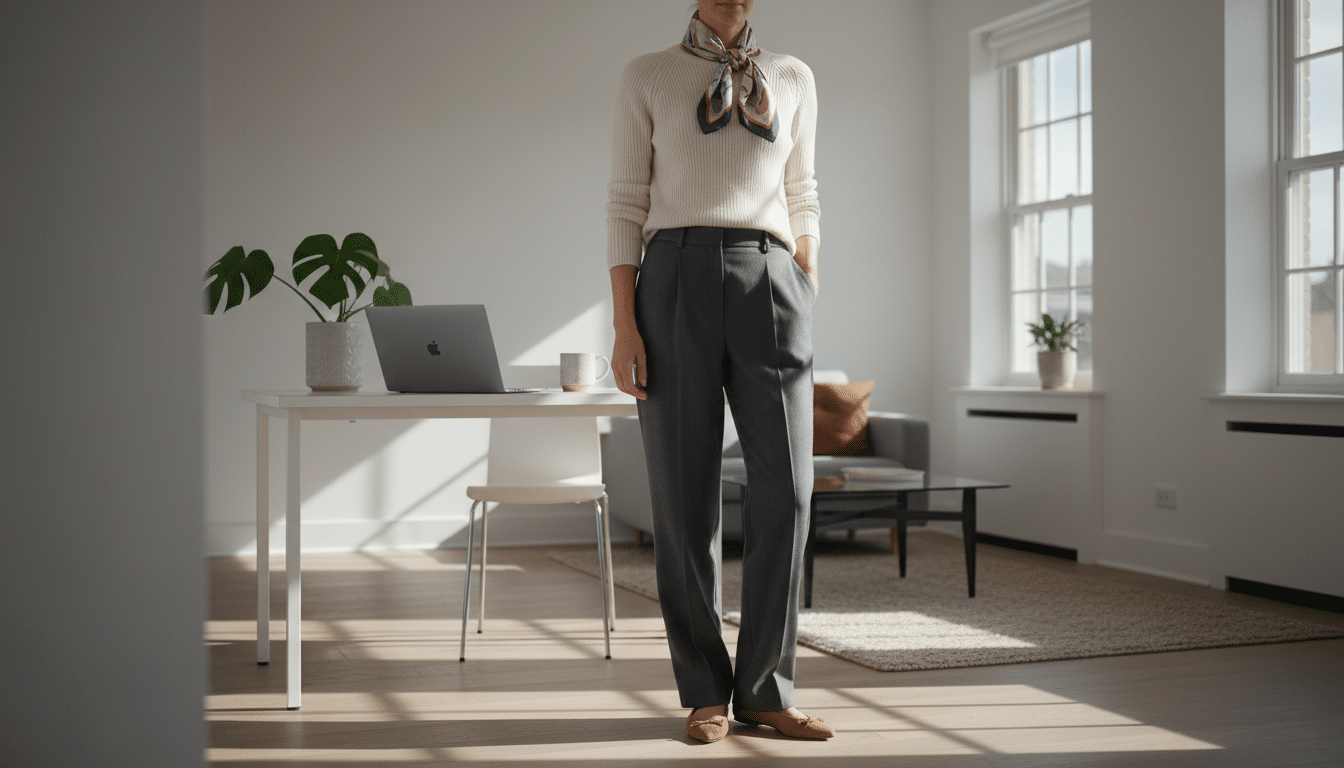
A five-minute swap can turn a weekend-at-home look into something meeting-ready. Keep the same top and change one or two pieces. That small edit is often all you need.
Swap the bottoms
Jeans at home. Trousers or ankle pants for the office. A pencil skirt also lifts a simple tee. That single swap changes the whole energy of your outfits.
Use layers on purpose
Throw on a structured blazer over a tee. It reads intentional fast. A lighter jacket over a blouse can soften a dress without making it casual.
Accessorize thoughtfully
Choose sleeker jewelry and a structured bag to look put together. Small metal pieces and a neat strap do more than you expect. They make an easy outfit feel chosen, not accidental.
Shoes make the outfit
Closed-toe leather often reads more professional than jute or canvas. Swap sneakers for a low-heel or loafers when you need to dress up. Pick a comfortable pair if you’ll walk—practicality wins.
- Keep one pair of trousers that fit well.
- Keep a blazer that flatters your shape.
- Keep one structured bag and a few simple jewelry pieces.
Outfit formulas I rely on when I don’t want to think
Some days I want a foolproof outfit in under five minutes—these are the formulas I reach for. They help me create quick outfits that feel intentional without extra effort.
The “same outfit, upgraded” move
Keep the top you love. Swap the bottoms for tailored trousers or a skirt. Change sneakers for closed-toe flats or loafers and grab a structured bag. That single trio—bottoms, shoes, bag—turns casual into polished fast.
Balanced looks: proportions and the rule of thirds
Think in thirds: high-waisted pants, a tucked shirt, and a mid-length layer. Wider-leg pants work best with a slimmer top. These small shifts improve the fit and make a pair of pieces read more composed.
Small styling hacks that make you look put together
- Tuck neatly—clean tuck beats messy every time.
- Add a belt when you need shape; one pair can change silhouette fast.
- Pick one statement detail—bold earring or a neat bag—rather than piling on things.
How to make your capsule actually feel easy day to day
Make getting dressed feel like a tiny, solved problem each morning. The trick isn’t just fewer things—it’s a simple system you use every day.
I build a set of 7–10 go-to outfits I actually wear. These are everyday looks, not special-occasion outfits. I snap quick phone photos of each look. On slow mornings I open the photos and copy a combo. It saves time and decision energy.
Create a set of go-to outfits and save photos
Pick outfits that match your real week. Aim for versatility—mix a top with two bottoms, and one pair of shoes that work with both.
Save the photos in a folder or notes app labeled by day or mood. Photos act like a cheat sheet when your brain is offline.
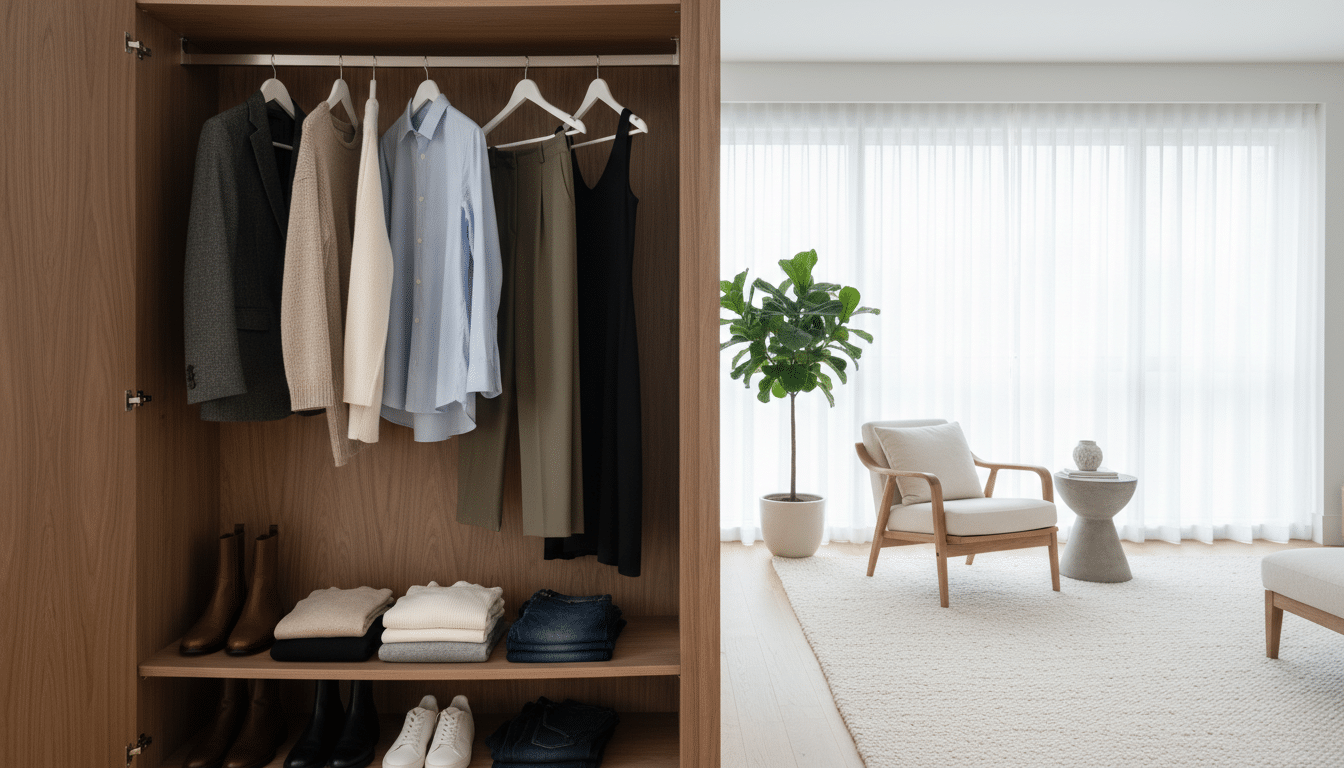
Set up your closet so your capsule is what you see first
Designate a visible area where your core pieces hang together. Move off-season or non-core items out of sight—use a bin, shelf, or another room.
When your daily pieces are first in view, you’ll wear them more. This small change turns the project into a routine.
| Step | Why it helps | Quick tip |
|---|---|---|
| Make 7–10 outfits | Reduces choice overload | Include shoes and a bag in each photo |
| Save phone photos | Speeds morning decisions | Use a labeled album or note |
| Visible core area | Removes visual clutter | Store off-season items elsewhere |
Common sticking points (and what I’d do instead)
When your daily set trips you up, I recommend small moves that make the biggest difference. These fixes are gentle and practical—things I’d tell a friend over coffee.
If your workplace is conservative versus casual, start with shoes and accessories
If your office reads more formal, tweak the details first. Closed-toe leather loafers, pointed flats, or a neat tote change the tone fast.
Simple metal jewelry or a polished watch quiets a casual tee without swapping everything. These shifts make existing outfits read professional without losing your personal style.
If you want new clothes, fill gaps slowly
Resist the urge to buy a full set at once. Wear your chosen pieces for a few weeks. Gaps reveal themselves in real time.
When you do shop, add one item at a time: trousers that fit, a blazer that pairs with three tops, or a neutral knit. Buy with purpose, not panic.
If you worry about boredom, try accessories not more items
Accessories are quick wins. A scarf, a belt, or a bold earring shifts how an outfit feels without adding clutter.
If an extra item makes sense long-term, pick pieces that work across several outfits. It’s okay to have a slightly larger capsule to match both your life and personal style.
| Sticking Point | Quick Fix | Slow-Buy Item |
|---|---|---|
| Too casual for meetings | Polished leather shoes, structured bag | Neutral blazer that fits most tops |
| Impulse shopping urge | Wait two weeks; note what you actually miss | Well-fitting trousers or a versatile knit |
| Bored with looks | Swap accessories or try a belt | One standout jacket that pairs with many items |
Conclusion
Treat this as an ongoing project that bends with your weeks. Start small: map a real week, pick a calm palette, and keep the items you already wear most. Make tiny upgrades with layers, shoes, or a single accessory when something feels off.
Pay attention to what you reach for and what you skip. Edit gently over a few weeks. No strict counts, no stress—just practical tweaks that save time and reduce morning fuss.
If getting dressed feels calmer and you still feel like yourself in your clothes, the system is working. That feeling matters more than any number of pieces in a closet.