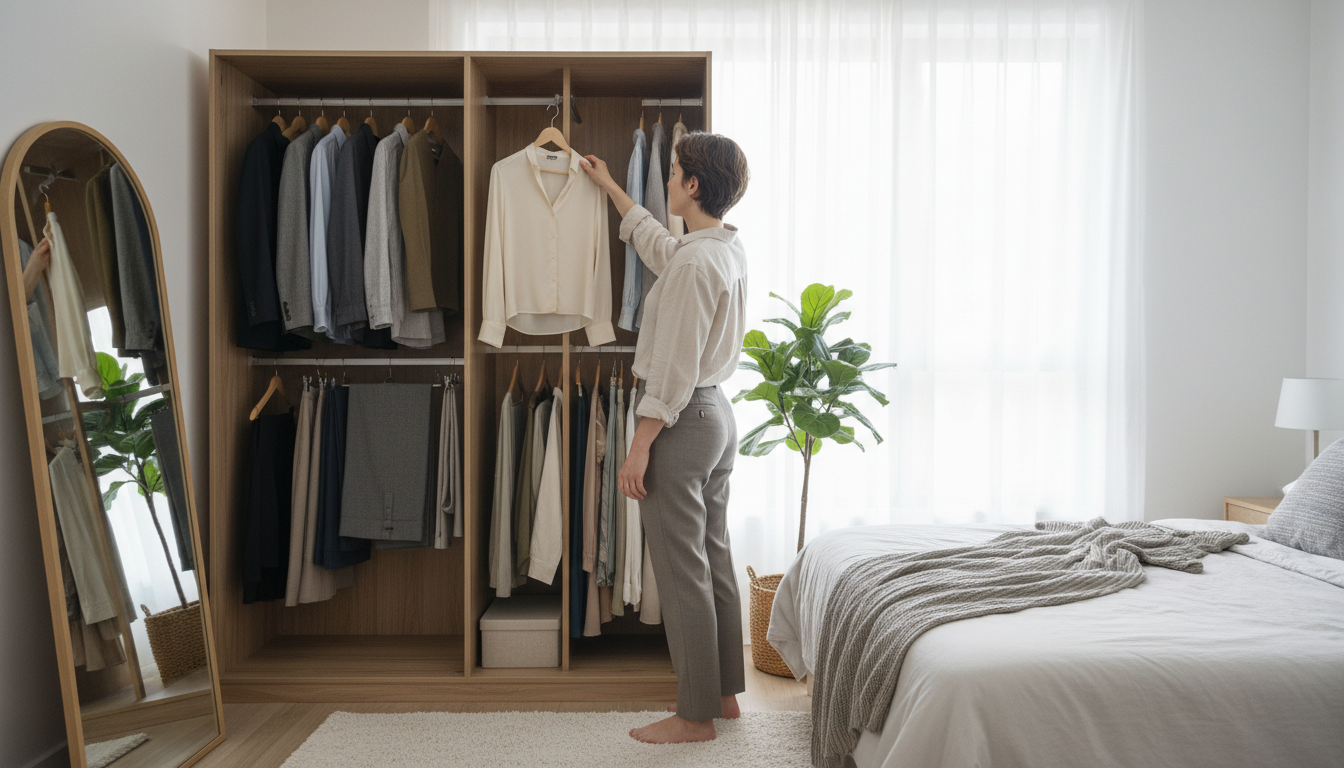

I still remember the calm of a closet that finally made mornings simple — and you can get that too. A capsule approach turns a handful of reliable pieces into fast, confident outfits you actually wear.
Start with neutral tones, then add one or two accent colors to lift your look. Choose fabrics and fits that feel good on your body, not runway samples you never wear.
When you build 7–10 go-to outfits up front, decision fatigue fades. Your wardrobe will save money and time, and your closet will feel calmer.
I’ll walk you through what to invest in, what to skip, and real-life examples like a dark-wash jean, a white tee, and a black blazer. These basics mix and match so your mornings are quick and your style stays steady.
Key Takeaways
- Use a capsule plan to reduce choices and save money.
- Build outfits from neutral cores and 1–2 accent colors.
- Create 7–10 go-to outfits to simplify mornings.
- Pick fabrics and fits you’ll wear often, not trends.
- Invest in a few versatile pieces, and save on the rest.
Everyday style starts with a few great basics
Start with a small pile of go-to pieces and you’ll cut morning stress fast. A white button-down, straight-leg jeans, a neutral cardigan, and a blazer form a simple core that works across seasons.
Think of this as a capsule: a compact set of pieces that mix and match. Spend less on tees you replace often and invest in a cashmere turtleneck or tailored black pants that last for years.
Choose fabrics that feel good and wash easily. That saves time and makes it more likely you’ll reach for the same favorites every day.
- Edit to a tight set of everyday basics you can dress up or down.
- Keep most pieces neutral so they play well together and create a polished look.
- Add one or two accents that reflect your personal style and repeat them across the capsule.
Start small and add items as you learn what you love. A tidy wardrobe with fewer, better pieces frees you from “I have nothing to wear” and gives you more time each day.
Use your personal style filters: cut, color, cloth, and comfort
Use the 4Cs—cut, color, cloth, comfort—to pick pieces that actually work for you. This keeps your capsule wardrobe useful and reduces wasted buys.
Cut: silhouettes that flatter your shape
Pick silhouettes that suit your body. Try straight, wide-leg, or bootcut bottoms and compare front-view photos to decide.
If gaps happen on button-downs, try fashion tape or a roomy shirt or classic tee instead.
Color: choosing neutrals and accents that mix and match
Start with neutral color choices—black, navy, gray, camel, cream—and add one accent you love. Hold fabrics to your face in natural light to see what makes your skin look fresh.
Cloth: cotton, wool, cashmere, and when to skip synthetics
Use cotton for tees and shirts, wool for structure and warmth, and cashmere for soft layers without bulk. Skip synthetics that itch or make you sweat.
Comfort: pieces you’ll actually wear on repeat
Ask, “Would I wear this all day?” Try items on, move around, and snap photos. Keep only the wardrobe items that feel great and look effortless.
- Choose cuts that flatter your silhouette.
- Build a neutral base and one accent color.
- Favor cotton, wool, and cashmere for longevity and feel.
- Keep only items that pass the comfort test.
Build a mix-and-match capsule that fits your life
Begin with what you wear on repeat; those favorites will form the backbone of your capsule. Pull everything you love from your closet first. That gives you quick wins and shows the core pieces that work for your days.
Wardrobe audit: keep loves, sort the rest, spot the gaps
Make a simple list by category—jeans, tops, sweaters—so you can see duplicates and missing items. Try things on. Mark what you will keep, mend, or donate.
Start with staples, then add season-specific items
- Start with everyday staples, then add a few season options.
- Don’t fixate on a number; many capsules range 30–50 items, but choose what saves you time.
- Try on full looks and save photos of 7–10 go-to outfits for quick mornings.
| Category | Keep | Gap |
|---|---|---|
| Jeans & Pants | 2 pairs | One tailored black pant |
| Tops & Tees | 5 items | Lightweight long sleeve |
| Layering | 3 pieces | Light jacket for cool mornings |
Keep your capsule visible in one part of the closet. Fill gaps slowly; good pieces can last years and save you time every day. Edit every few months so the wardrobe keeps working for you.
Color strategy that makes basics look intentional
A clear color plan makes every outfit feel intentional without effort. Keep most of your closet neutral so pieces pair easily. This saves time and helps your wardrobe feel calm.
Neutral base to anchor your capsule
Start with a neutral base: black, navy, gray, camel, and cream. These tones make mixing simple. Your capsule will work like a set of building blocks.
Accent colors that pull the look together
Add one or two accent colors that flatter your skin. Repeat that hue across a scarf, tee, or cardigan so outfits read as planned, not random.
- Pick a neutral base so everything works together without thinking.
- Choose one accent you love—olive, burgundy, or baby blue—and repeat it across items.
- Keep prints within your palette so patterns play well with core colors.
- Try-on test: make three outfits with any new piece before you buy.
- Use metal tones as accents—gold warms camel and cream; silver suits navy and gray.
When the palette clicks, your wardrobe items and pieces go further. Small choices make your basics feel purposeful and easy to wear.
Fabrics and feel: what makes basics look luxe
Feel matters as much as fit; the right fabric can lift simple pieces into something you reach for every week. Natural fibers add texture and age well, so a small capsule can feel richer without extra fuss.
When to invest: cashmere, wool, and leather
Cashmere gives warmth with less bulk. A classic crew or turtleneck in cashmere works under blazers and lasts if you care for it.
Lined wool trousers hold shape and skim the body. They make hems sit clean and keep your silhouette sharp.
Leather shoes and belts age beautifully. Condition them and they can be repaired and worn for years; vintage leather is a sustainable pick that keeps items useful longer.
Cotton workhorses and breathable linen
Choose cotton for tees and button-downs. It breathes, washes well, and feels good all day next to skin.
Linen is great for hot months. It wrinkles, but that relaxed texture reads intentional with the right pairing.
Care tips that keep pieces looking new
- Wash sweaters in a bag on delicate or hand wash, then dry flat.
- Store knits folded to avoid stretching and use a sweater comb to remove pills.
- Condition leather occasionally and spot-treat scuffs to extend wear for years.
- Read care labels—proper care is the cheapest way to stretch the life of capsule pieces.
| Fiber | Best for | Care tip | Longevity |
|---|---|---|---|
| Cashmere | Light, warm sweaters | Hand wash or delicate bag; dry flat | 3–10 years with care |
| Wool | Trousers, coats | Air between wears; spot clean; dry clean if lined | 5–15 years |
| Cotton | Tees, shirts | Machine wash cold; reshape damp; hang or fold | 2–6 years depending on wear |
Denim and pants that always look polished
The right denim and tailored trousers lift simple outfits every time. Pick cuts that flatter your body and mornings get much easier.

Straight, bootcut, wide-leg, and skinny—finding your fit
Try on multiple silhouettes—straight, bootcut, wide-leg, and skinny—to see what flatters your shape. Take a front and side photo. That quick check shows how the line works on you.
Dark-wash jeans, black pants, and gray flannel trousers
Dark-wash jeans in bootcut or wide-leg sit nicely over boots and read polished. Black pants and gray flannel trousers pair with brown, navy, or black for weekday and evening wear.
Leggings and ponte for comfort-forward days
Ponte and leggings give a smooth line when you want comfort. If your waist feels squeezed, size up or pick a higher rise so outfits look smooth front to back.
- Bring your usual shoes when trying on—hem and break matter.
- Start with one great pair that fits now, then add a second cut for variety.
- Use simple swaps so your capsule and wardrobe pieces work as a set.
| Style | Why it works | Try with |
|---|---|---|
| Straight | Classic, balances hips | Blazer, tee |
| Bootcut/Wide-leg | Gives room over boots | Chunky boot, sweater |
| Skinny/Ponte | Clean line, layers well | Long coat, loafers |
Shirts, tees, and the button-down you’ll wear everywhere
One great shirt can change how a whole outfit reads and how you feel. Start by treating tees and blouses as functional parts of your wardrobe, not wardrobe drama.
Stock low-cost cotton tees in multiples and replace them often. They take the most wear, so buy cheap, wash cold, and air-dry when you can. Check opacity by doing the hand-under fabric test in store.
Low-cost tees to replace regularly
Buy three to five plain cotton tees from stores like Uniqlo or similar retailers. Rotate them so each lasts longer. Choose crew or V-neck shapes you wear most and repeat those necklines across colors in your capsule.
White button-down vs. silky blouse
A fitted cotton button-down brings structure for meetings. A silky blouse drapes and lifts denim or trousers for evenings. Keep at least one crisp white shirt and one fluid blouse for desk-to-dinner ease.
- Stock up on low-cost cotton tees and refresh them often.
- Choose a cotton button-down for structure and a silk-like blouse for drape.
- Try an oversized button-down, a hidden snap, or fashion tape if gaping happens.
- One polished shirt or blouse can pull your whole outfit together fast.
| Item | Why it works | Care tip |
|---|---|---|
| Cotton tee | Everyday workhorse | Wash cold, air-dry |
| Cotton button-down | Structured, versatile | Iron or steam for crispness |
| Silky blouse | Dresses up denim | Hand wash or delicate cycle |
Layering basics that elevate any outfit
A smart layer can turn a plain outfit into something put-together in seconds. Think of layering as a quick way to add warmth, texture, and polish without effort.
Blazers: wool, leather, and cropped options
Start with one blazer you love. A wool blazer gives structure and sharpens tees and jeans. A leather blazer adds edge and will last if you care for it.
Try a cropped option if you want to balance proportions with high-waist trousers or skirts.
Jackets: denim, vegan leather, and the khaki trench
A dark denim jacket in a slim fit looks polished and pairs well with dresses and trousers. Choose a lightweight vegan leather jacket if you prefer low-maintenance materials.
Keep a khaki trench for rainy days and quick errands—a forever piece that reads intentional every fall.
Knitwear: turtlenecks, crewnecks, cardigans
Lean on knit pieces for warmth and easy layering. A turtleneck slips under blazers. Crewnecks sit well over button-downs. Cardigans make casual looks feel complete.
Outer layers: peacoat, wrap coat, and down vest
For colder days, pick a peacoat or wrap coat to elevate work and evening outfits. A down vest adds warmth without bulk for weekend runs and travel.
- Keep layers in neutrals so they work across your capsule and wardrobe.
- Mix textures—wool, smooth leather, and soft knits—to make simple pieces feel rich.
- Use the “third piece” rule: tee + jeans + a great layer = instant polish.
| Layer | Why it works | When to wear |
|---|---|---|
| Wool blazer | Structure, sharp silhouette | Office, meetings, polished weekends |
| Dark denim jacket | Casual polish, versatile | Weekends, layered over dresses |
| Khaki trench | Weather protection, classic | Commuting, errands, transitional seasons |
Footwear and accessories that refine your look
The right shoes and a few small accessories lift a simple outfit into something you wear with confidence. Think practical pieces that do most of the work for you.
Everyday sneakers, loafers, ballet flats, and pumps
Own one clean pair of sneakers that pairs with jeans, trousers, and casual dresses. They keep weekends easy and errands fast.
Loafers or ballet flats give polish without heels. A black pump is the one piece that moves from desk to dinner without a swap.
Boots for cooler months
Flat knee-high boots pair well with skirts and dresses. Heeled booties bridge casual and dressy with denim or a midi.
Belts, bags, scarves, and simple gold jewelry
Pick a simple black belt you’ll wear with denim, trousers, and layered dresses. Keep bags neutral and streamlined so they work across your capsule wardrobe.
Add a scarf and small gold hoops to finish looks with little effort. Choose leather where you can; it lasts longer and can be repaired.
- One pair of everyday sneakers that cleanly pairs with most casual items.
- Ballet flats or loafers for low-heel polish.
- Black pumps for day-to-night ease.
- Knee-high flats and heeled booties for fall and winter versatility.
- Neutral bags, a simple black belt, a scarf, and small gold hoops as finishing touches.
| Item | Why keep | When to wear | Keep or skip |
|---|---|---|---|
| Everyday sneakers | Comfort + wide use | Weekends, travel, errands | Keep |
| Black pump | Day-to-night utility | Work, dinners, events | Keep |
| Knee-high boots | Skirts, dresses, warmth | Fall and winter | Keep if you wear skirts |
| Simple leather belt | Tie outfits together | Denim, trousers, dresses | Keep |
Choose items that pull double duty. I favor pieces that solve more than one outfit problem. That way your capsule grows smarter, not heavier.
Looking stylish in basic clothes
True confidence starts when your core pieces fit well and feel effortless. When clothing moves with you, your natural posture does the rest. You look relaxed and ready.
Keep a tight edit of your wardrobe. Choose neutral tones and add one or two colors that flatter your skin. That small palette helps outfits snap together fast.
- Fit and comfort matter most; a good cut makes basics read intentional.
- Repeat favorite pieces—signature looks feel polished, not boring.
- Layers and shoes change the mood of the same core outfit.
- Keep your wardrobe visible so you can pick winners at a glance.
| Focus | Why it works | Tip |
|---|---|---|
| Fit | Creates clean lines | Tailor key pieces |
| Colors | Neutral base + accents | Pick 1–2 repeating hues |
| Layers | Adds variety | One blazer and one jacket rotate well |
Start where you are and build slowly. Small, well-chosen pieces grow a capsule that keeps you comfortable and confident. If you want to know more about my approach, read my approach.
Outfit formulas that work every time
Simple outfit rules save time and make your capsule feel like it was built for you.
Rule of thirds and proportion balancing
Use the rule of thirds: tuck a top into high-rise pants or add a longer third layer. That trick lengthens the leg line and makes an outfit read intentional.
Balance proportions by pairing wide-leg trousers with a slim top and pointed shoes. Slim pants pair well with relaxed tops to keep shapes interesting.
Layering tricks: tees, button-downs, blazers, coats
Layer a tee under a button-down shirt, then add a blazer for easy polish. Repeat this formula with a cardigan or coat when it’s cooler.
Dress up or down with shoes and accessories
Shoes and accessories change an outfit fast. Dress up jeans with pumps or pointed flats. Dress down tailored pants with clean sneakers.
- Use the rule of thirds: high-rise pants + tucked top = longer legs.
- Add a third layer—blazer, cardigan, or coat—to create clean vertical lines.
- Layer a tee under a button-down shirt, then top with a blazer for a go-to formula.
- Repeat a favorite combo weekly and snap photos for quick reference.
| Formula | Tops | Shoes |
|---|---|---|
| Slim + wide | Fitted tee or button-down | Pointed flats or low heels |
| Relaxed + slim | Oversized sweater or blouse | Sleek sneakers |
| Layered third | Tee → button-down → blazer | Loafers or ankle boots |
Want more quick templates? See these everyday outfit ideas to copy and use this week.
Seasonal basics checklists for year-round style
Plan your year with a short seasonal checklist so shopping and edits feel simple. Treat each season as a small capsule you can build, store, or swap. Use the lists below to spot gaps before a sale or to pack for a trip.

Spring essentials
- Lightweight cashmere or fine-knit sweater for cool mornings.
- Waterproof raincoat to keep layers dry.
- Chinos or light pants for versatile outfits.
- One-button blazer that layers easily over tees and shirts.
Summer essentials
- Ribbed cotton tanks and breathable shirts for hot days.
- Cotton printed dresses and a simple dress you can wear often.
- White jeans that pair with sandals or a tee.
- Flat leather sandals you can walk in all day.
Fall essentials
- Leather blazer for polish and warmth.
- Khaki trench and a peacoat for varied weather.
- Midi skirt for weekends and office days.
- Flat boots that move easily from errands to evenings.
Winter essentials
- Heavy sweaters and warm layering pieces.
- Wool trousers or gray flannel pants for work and warmth.
- Black cashmere wrap coat and a warm down vest.
- Tights for extra warmth under skirts and dresses.
Keep your palette steady across seasons so pieces still mix. If budget is tight, tackle one season at a time and build the capsule slowly. Use these lists to make a quick shopping or edit session that actually saves time later.
| Season | Key piece | Why it matters |
|---|---|---|
| Spring | One-button blazer | Layers easily, dresses up jeans |
| Summer | White jeans | Brightens outfits and pairs with tanks |
| Fall | Khaki trench | Weather-ready and classic |
| Winter | Black cashmere wrap coat | Warm, polished, long-lasting |
Trends on your terms: make them work with basics
Small trend tweaks can refresh your wardrobe without overhauling it. Trends feel easier to try when your capsule is already doing the heavy lifting.
Try one trend with a steady base
Start with a favorite outfit and add a single trend piece so the look stays balanced. That keeps your daily routine calm and the outfit wearable.
Shacket, sweatshirt-with-collar, and neutral picks
A shacket layers nicely over leggings or jeans and pairs well with simple sneakers or boots. A sweatshirt layered over a collared shirt or turtleneck gives a modern, relaxed vibe.
Pick trendy pieces in your capsule palette so they pair with your existing items. If a leather jacket is your thing, choose a cut that flatters your shoulders and waist.
- Start with your base outfit, then add one trend so the look stays balanced.
- A shacket works over leggings or jeans and pairs easily with sneakers or boots.
- Layer a sweatshirt with a collared shirt or turtleneck for an updated casual look.
- Choose trendy basics in neutral colors to keep them capsule-friendly.
| Trend | Why it works | How to wear |
|---|---|---|
| Shacket | Casual layer, adds texture | Over jeans or leggings, sneaker or boot |
| Sweatshirt + collar | Updated casual, warm | Wear over shirt or turtleneck, smart sneakers |
| Leather jacket | Timeless edge, durable | Pick flattering cut; pair with neutral jeans |
Trust your gut—if you don’t love a trend, skip it. Set a small trend budget each season and keep tags on. Test any new piece at home with three outfits before you commit.
Smart shopping: investment vs. save, new vs. secondhand
Smart shopping means spending where durability matters and saving where wear is high. A small plan helps your wardrobe work harder and saves you time each week.
Where to spend a little more
Invest in tailoring, good fabric, and timeless cuts. A tailored blazer or trousers change how all your pieces hang. That one altered piece makes many outfits pair better.
Where to save
Save on cotton tees, tanks, and fast-fashion pieces you replace often. These items stain or stretch quickly. Buy several low-cost tees and rotate them instead of splurging.
Secondhand and vintage options
Buy secondhand for leather belts, jackets, and boots. Vintage leather often lasts decades and can be repaired. Thrifting also keeps cost down while adding character to your capsule wardrobe.
- Invest where it shows: tailoring and quality fabric.
- Save on everyday cotton tees and high-wear items.
- Choose secondhand leather for durability and sustainability.
- Try on and move around before you buy—good clothing saves time later.
| Category | Best choice | Why |
|---|---|---|
| Tailoring | New | Improves fit and extends life of jeans and trousers |
| Tees & tanks | Save | High turnover; buy multiples at low cost |
| Leather belts & jackets | Secondhand | Durable, repairable, better cost-per-wear |
| Core wardrobe pieces | Invest | Timeless shapes last through seasons |
Comfort meets confidence: age, lifestyle, and fit
I wear what helps me move through a real day with ease. Your wardrobe should do the same—support your life, not dictate it.
Start with comfort. If a piece pinches, pulls, or needs constant fixing, you’ll skip it. Choose lengths and rises that let you stand tall; good posture changes a look more than a trend ever will.
If leggings or soft pants are your go-to for busy mornings, build outfits around them. Add a tailored blazer or a crisp shirt to lift the outfit while keeping the comfort you need.
- Your comfort is the foundation—don’t ignore it.
- Pick rises and hems that flatter and help you feel confident.
- Try different necklines and sleeve lengths to find what you love.
- Forget “age-appropriate”—wear what makes you happiest and most authentic.
- Keep only pieces that earn their place by working across multiple outfits.
| What to focus on | Why it matters | Quick tip |
|---|---|---|
| Comfort | You’ll actually wear the garment | Move around before you buy |
| Fit | Creates confidence and clean lines | Tailor key pieces |
| Versatility | Less clutter, more outfits | Choose pieces that layer well |
Wear and re-wear your favorite piece in new ways. Repetition builds a signature style and keeps your capsule working for the life you have now.
Care and maintenance that keeps basics sharp for years
Small care steps save you time and money over the long run. I keep a short routine that protects my capsule and wardrobe. You’ll find the effort is tiny and the payoff big.
Cleaning, storage, and small repairs
Wash cotton tees on cold and air-dry to keep shape and color longer. Cotton holds dye better when cool, and air-drying cuts shrinkage.
Hand-wash or use a delicate cycle for cashmere, then dry flat and store folded. Treat each cashmere sweater gently and use a sweater comb for pills.
Condition leather bags and shoes twice a year. Resole shoes when the tread wears thin; resoling extends their life dramatically.
- Spot clean tailored pants and blazers to avoid needless dry cleaning.
- Store off-season clothing clean, folded, and in breathable bags to protect the closet.
- Sew loose buttons and small seams right away—two minutes now saves a piece later.
- Keep cedar blocks in your closet to protect wool and cashmere from moths.
| Item | Care Tip | Why it helps |
|---|---|---|
| Cotton tees | Wash cold, air-dry | Keeps fit and color |
| Cashmere sweater | Delicate wash, dry flat | Prevents stretching |
| Leather shoes | Condition, resole | Lasts years, saves money |
| Tailored pants | Spot clean, steam | Avoids excess dry cleaning |
Troubleshooting: “nothing to wear” and weak links
If you keep saying “nothing to wear,” start with a short, honest edit. Sort your closet by category. Lay out jeans, tops, outer layers, and shoes. Seeing items side by side makes gaps obvious.
Identify gap pieces and swap what doesn’t pull its weight
Ask: does this piece pair with at least five things? If not, it may be a one-trick item. Swap it for a neutral that unlocks more looks.
- Sort by category to spot true gaps—jeans, tops, layers, and shoes.
- If an item only works with one outfit, replace it with a versatile basic.
- Add gap pieces like a neutral belt or black flats; they often unlock many outfits.
- Keep a short wish list so you buy with intention, not impulse.
Photo your outfits to repeat winning looks
Try on full looks and take photos. Save the winners in a folder labeled by season or mood. When mornings are rushed, pull a saved outfit and go.
| Category | Symptom | Swap |
|---|---|---|
| Jeans | Only one way to wear | Add a dark pair that pairs with blazers and tees |
| Tops | Too many trend pieces | Replace one with a neutral tee or blouse |
| Layers | No versatile outer piece | Choose a blazer or denim jacket that pairs widely |
Edit monthly. Small tweaks prevent closet creep and keep your capsule wardrobe working for real life.
Conclusion
Make your wardrobe work like a small toolkit. Each piece should solve a problem so mornings take less time and feel calmer.
I use a neutral-forward capsule with one or two accent colors. Anchor your looks with jeans, a pair of pants, a good shirt, a blazer or jacket, a sweater, and one easy dress or skirt.
Invest where it lasts—tailoring, cashmere, wool, leather—and save on cotton tees. Keep outfit photos, mend small issues fast, and edit a little each season so the capsule stays useful.
Now pick two fresh outfits from what you own and wear them this week. You’ll find repetition builds confidence and value.