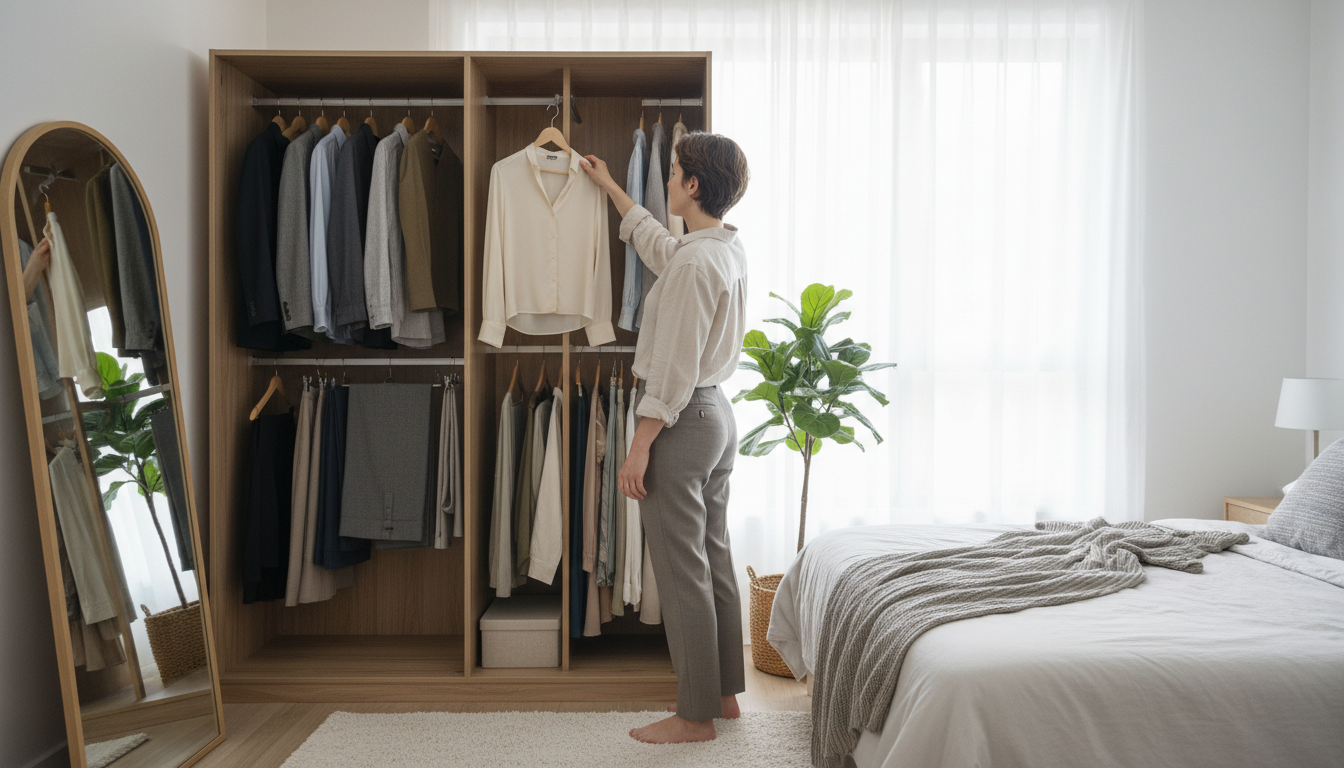

I say this with a smile: a little structure beats morning chaos every time. The phrase what to wear when you’re not sure sits heavy in many closets, but a simple rule set turns that weight into ease.
I’ll walk through a Hierarchy of Color that makes building an outfit fast. Core colors like black, gray, white, and navy become anchors in your wardrobe. Then we add texture and a hero piece so each look feels like your style.
I use practical formulas so you save time and leave with confidence. Pick one strong item, add a top and a thin layer, then tweak a tuck or sleeve roll. This approach helps women get dressed with less fuss and more calm.
Key Takeaways
- Set 40–45% of your closet as core colors for easy mixing.
- Choose one hero piece that lifts many looks.
- Use a simple three-step outfit formula for faster mornings.
- Small tweaks make basic pieces look intentional.
- Prioritize lasting style over trends for long-term ease.
Why getting dressed feels hard some days—and the easy fix
There are days when getting dressed eats up time and energy. Many people notice a slow morning that makes the whole day feel like a slog.
Clothes can feel wrong after a body change or when the closet is full but nothing fits. Unclear office rules and outfit fatigue add mental weight. That eats minutes and steals calm.
The simple way out is guardrails. Pick fewer, better basics that match your lifestyle and office. A small tailoring budget fixes shoulders, hems, and waists. When things sit right, confidence follows fast.
- Accept low-energy mornings—plan three ready outfits for messy days.
- Edit items that makes feel wrong for your current shape or routine.
- Keep a short list of pieces you actually reach for and donate the rest.
Stacking one small piece—a blazer, a flat, a necklace—changes the vibe in seconds. With a trimmed wardrobe and tiny tailoring, choosing takes minutes instead of time and worry.
Style over fashion: Dress for your personality, the occasion, and your day
Style is the shortcut that turns a messy closet into calm. Think of fashion as the backdrop. Personal style is how you place pieces so they match mood and plans.
Start small. Name three words you want outfits to say — maybe relaxed, polished, modern. Use those words like a filter each morning. That keeps choices honest and useful.
From trends to personal style: building outfits you’ll actually wear
Trends shift every few years. Your style should last longer. When the wardrobe fits your routine, you reach for things more often. That cuts decision stress.
- Skip trends that clash with real life; keep items you’ll wear 30 times, not three.
- Wear special pieces now. The silk blouse can be a lunch outfit, not just “someday.”
- Build around a few reliable anchors so style stays practical, not precious.
| Focus | What changes | Result |
|---|---|---|
| Fashion | Styles that shift every few years | Fresh looks but short-lived relevance |
| Personal style | How pieces reflect personality and routine | Outfits you actually wear often |
| Wardrobe actions | Edit, celebrate, repeat | Less clutter, more satisfaction |
Pick the way you want to show up each morning. Dress for the day ahead and for the person you are. That simple shift makes getting ready easier and more sustainable.
what to wear when you’re not sure: three reliable systems that always work
Morning choices shrink when you use a simple system. Pick one of three methods and you’ll grab an outfit faster and with less fuss.
The color hierarchy shortcut for instant matching
Make 40–45% of your wardrobe core colors: black, gray, white, navy. When most pieces live in that range, things snap together. Add tonal shades and textured neutrals like camel or chocolate next. Keep bold colors and prints small so they highlight, not overwhelm.
The outfit formulas that remove decision fatigue
Use the 1-2-3 move: one top in a core color, two bottoms in a core color, and three—layer in core, color, or a print. It’s a great way to win busy mornings. If stuck, try monochrome; head-to-toe in one hue looks like you planned it.
- Pre-pair a few items by color so a ready pair is always handy.
- Tonal textures add depth without clashing with core pieces.
- These systems cut fashion noise and save time.
| System | Core idea | Quick win |
|---|---|---|
| Hierarchy | Core → tonal → bold | Automatic matches |
| 1-2-3 | Top + bottom + layer | One-minute outfits |
| Monochrome | One hue head-to-toe | Polished with no guesswork |
Start with a hero piece: the one item that makes you feel great
Choose an anchor piece and build the rest around its mood. I pick one item I’m excited to wear and keep the plan simple.

Blazer, jacket, or boots as your anchor
Pick a blazer, jacket, or boots that instantly lift your mood. Let that item set the outfit’s tone.
How to build around jeans, pants, or a favorite sweater
Start with jeans, pants, or a sweater you wear often. Add the hero piece plus one dressy and one casual layer.
- Try the 2-by-2 rule: two polished items and two relaxed items.
- Mix a blazer with sneakers, or pair boots with a tee and tailored pants.
- Keep favorite items on one rail so grabbing them is fast.
Simple styling tweaks: tucking, rolling, and adding a shirt layer
Small moves change the whole look. Do a half-tuck, roll sleeves, or leave a couple buttons open on a shirt.
| Anchor | Build Around | Quick tweak |
|---|---|---|
| Blazer | Jeans + tee | Half-tuck |
| Boots | Sweater + pants | Roll cuff |
| Jacket | Dress + shirt layer | Open buttons |
Wear pieces now, not later. A simple anchor item makes feel confident and carries that mood through the day.
Core-tonal-bold: use color the smart way so everything pairs
A clear color plan cuts decision time and lifts every outfit.
Core colors that always mix and match
Make 40–45% of your wardrobe core colors: black, gray, white, navy. These shades act as a base.
They work across seasons and pair with nearly any item. Keep most tops and bottoms here and shop fewer lonely pieces.
Adding tonal texture and a pop of color with confidence
Add tonal shades next: camel, charcoal, chocolate, ivory. Pick textures like ribbing or herringbone for depth without busy prints.
Save bold hues and prints for the smallest slice. Use one bright piece—a scarf, bag, or blazer—to lift an outfit without overwhelming it.
- Core base so mixing is easy.
- Tonal textures keep looks rich and calm.
- One pop piece brightens while the rest supports it.
| Layer | Examples | Quick tip |
|---|---|---|
| Core | Black, gray, white, navy | Keep 40–45% of closet |
| Tonal | Camel, charcoal, chocolate, ivory; ribbed knits | Add texture, not pattern |
| Bold | Scarves, blazers, prints | Use one piece as the accent |
The 1-2-3 outfit formula: top, bottom, layer—done
Start with a simple rule: one top, one bottom, one layer, and you’re ready. Keep the base pieces in core colors so matches are automatic. Then pick a layer as either a neutral, a textured tonal, or a pop of color.
Women’s quick example
White St. John scoop neck (top) + black Anine Bing bias midi (bottom) + green Frame blazer (layer).
Add sleek shoes and a small bag. The base stays neutral and the blazer supplies the mood.
Men’s quick example
White Mack Weldon tee (top) + black Paige jeans (bottom) + textured Liverpool cardigan (layer).
Finish with clean white sneakers for a modern, casual CEO vibe.
- Think in threes: core top, core bottom, then a layer — done in under two minutes.
- Keep layers by the door for faster grabs.
- Rotate layers by season so the formula works year-round.
- Want color? Make the layer the pop and keep the base neutral.
- Create two more combos and you’ll have three outfits ready for the week.
| Step | Example (women) | Example (men) |
|---|---|---|
| 1 — Top | White St. John scoop neck | White Mack Weldon tee |
| 2 — Bottom | Black Anine Bing bias midi | Black Paige jeans |
| 3 — Layer | Green Frame blazer | Textured Liverpool cardigan |
Monochrome made modern: one color from head to toe
A single hue can make mornings feel effortless and chic.
I like the “one and done” rule. Pick a single color and wear it from head to toe. It removes guesswork and looks polished fast.
Women’s example
Try a cherry-red ribbed short-sleeve knit by Boss with matching red wide-leg pants by Theory. Fit and fabric matter more than flash.
- Pick one color and wear it head to toe for an instant, polished look without matching stress.
- Try a ribbed red sweater with matching wide-leg pants for a bold, modern moment.
- If bright isn’t your thing, choose all navy, all gray, or all camel for a softer feel.
- Keep silhouettes clean and the fit right so the outfit reads tailored, not heavy.
- Add texture—ribbing, suede, or a subtle sheen—to keep the combo interesting.
- Keep accessories simple so the color does the talking.
| Element | Why it matters | Quick tip |
|---|---|---|
| Color | Unifies the outfit and reduces decision time | Start with a core color, then try bolder shades |
| Fit | Makes monochrome look tailored rather than flat | Choose clean lines and correct hem lengths |
| Texture | Adds depth without breaking the color story | Mix knit, leather, or suede for contrast |
Dress-code chameleon: look right anywhere when you’re unsure
A single outfit can carry you through a surprise invite or an unexpected meeting with ease. This is Primer’s chameleon setup: a herringbone blazer, thin cashmere sweater, dark gray slim jeans, and suede chukka boots. Each item dresses up or down in seconds.

The versatile combo
The textured blazer lifts a simple sweater and jeans. The cashmere layer keeps the look refined while staying comfy. The boots add polish without shouting.
Dial up or down
Slip off the jacket and the outfit feels casual and calm. Keep the blazer on, add a watch or clean shoes, and it reads dressier.
Reading the room without overthinking
Scan what people are wearing at the door. Swap sneakers for boots or change shoes and you’ll match the vibe fast. Fit matters—make sure each piece flatters your body so the outfit looks intentional.
- Flexible items last for years and save time.
- Try clean sneakers for casual, Chelsea boots for formality.
- This combo gives quick confidence across dates, interviews, and after-work hangs.
| Item | Why it works | Quick swap |
|---|---|---|
| Herringbone blazer (Target) | Textured polish; layers easily | Remove for relaxed look |
| Thin cashmere sweater (Amazon) | Soft, refined base layer | Keep on for warmth and calm |
| Dark gray jeans + suede chukka boots | Neutral foundation; shoes add polish | Swap boots for sneakers for casual |
Balance and proportion: make outfits look intentional
A quick mirror check can tell you if a look reads planned or accidental. Spend thirty seconds and run three tiny tests. Each one fixes balance fast and keeps mornings calm.
The three-color rule and the color sandwich trick
Keep most outfits to three colors so the overall vibe stays calm. Repeat one color at the top and bottom — shoes with a shirt or bag with a hat — and the whole outfit will feel tied together.
If two bold things fight, remove one. The color sandwich helps the eye travel and makes the outfit look cohesive without extra thought.
BIG-SLIM-SKIN: volume, sleek pieces, and a touch of skin
Try one voluminous item paired with one sleek piece. Wide-leg pants with a fitted top, or an oversized sweater with straight bottoms, balances scale nicely.
Add a hint of skin or definition: a half-tuck, open neckline, or pushed sleeves. That small reveal keeps proportion fresh and makes the style feel intentional.
- Check top length in the mirror; a tuck fixes swallowed shape.
- If things still feel heavy, swap one item for a slimmer version.
- Small adjustments beat a full outfit change and keep mornings smooth.
| Quick check | How it reads | Fast fix |
|---|---|---|
| Three colors | Calm and pulled | Remove one extra color |
| Volume vs sleek | Balanced proportion | Add fitted top or slim pant |
| Skin/definition | Intentional and light | Half-tuck or open cuff |
Fit, tailoring, and comfort: the fastest way to make outfits look better
Fit wins every time — a tiny tweak makes clothes feel custom and quiets closet doubt.
I watch clients choose less and feel calmer. When pieces sit right on the body, mornings take less time and confidence follows.
When to tailor blazers, trousers, and shirts
Start with the shoulders on a blazer; that’s the part that changes a whole jacket.
Hem trousers to match your shoes and taper a waist so your natural shape reads clearly.
Shorten sleeve length on shirts so cuffs and watches look intentional, not accidental.
Quality over quantity: pieces that make you feel like you
Buy fewer, better items that last years. Quality basics save time and reduce closet churn.
Expect a tailor visit — most off-the-rack clothes need small tweaks. Book one session and fix three items at once.
- Fit is the fastest upgrade; clothes that sit right build instant confidence.
- Plan small alterations: shoulders, hems, and slight waist tapering.
- Comfort matters — if it pinches or rides, you won’t reach for it.
- Let personality guide fabric and cut choices so pieces match your life.
| Alteration | Why it helps | Quick result |
|---|---|---|
| Shoulder nip (blazer) | Frames the body and keeps lines clean | Jacket looks tailored |
| Trousers hem | Matches shoe height and posture | Pants hang correctly |
| Waist taper | Shows shape without clinging | Outfit feels intentional |
| Sleeve shorten | Neat cuff and watch display | Smart, polished sleeve |
Small tailoring wins make look effortless, not fussy. Try one session and see how few changes change everything.
Fast swaps for real life: work, dates, travel, and weekends
A few smart substitutions will carry an outfit from desk to dinner without stress. These swaps are simple, repeatable, and easy to remember when time is tight.
Power casual office
Throw a blazer over a fine-gauge sweater, add tailored pants, and finish with loafers or clean sneakers. That one pair of polished shoes lifts the whole look.
Swap the sweater for a thin knit on warmer days. Keep a spare blazer near the door so grabbing it takes seconds.
Date night ready
Choose dark jeans with boots and a lightweight jacket. A refined shirt underneath makes the outfit feel put together without fuss.
If the spot is trendier, trade loafers for sleek low-profile sneakers and pare accessories back for a modern edge.
Travel and weekends
Layer neutrals that mix easily and pick flexible, low-profile shoes for security lines and long seats. Wrinkle-resistant pieces save time and unpacking stress.
For weekends, a knit set plus a denim jacket passes the brunch test. Add or remove a layer, and show a hint of skin at the neckline or wrist for a lighter feel.
- Pack a compact kit in your tote: lint roller, stain pen, quick fixes so you’ve got options fast.
- Keep a small “go bag” of outfit add-ons—belt, scarf, spare shoes—so plans can pivot without a full change.
- Build capsules around a core blazer and a reliable pair of jeans for easy combos all week.
| Scenario | Key pieces | Quick swap |
|---|---|---|
| Office | Blazer, sweater, tailored pants | Loafers → clean sneakers |
| Date | Dark jeans, boots, lightweight jacket | Refined shirt under jacket |
| Travel | Layered neutrals, flexible shoes | Wrinkle-resistant fabrics |
Need more casual outfit ideas? See this short guide for easy looks that just work: casual outfit ideas for women.
Conclusion
A few simple systems make mornings calmer and give the wardrobe clear purpose. Use the color hierarchy, the 1-2-3 formula, or a monochrome plan and outfits snap together.
Pick a hero piece and build around it. Read the room fast with a chameleon combo. These moves lift confidence and keep style practical.
Tiny tweaks—half-tucks, rolled sleeves, proportion checks—change how clothes read. Tailor pieces you love so they fit your life and feel like you.
Try one color this week and build two easy looks. You’ve got the tools. Dress the way you want: calm, capable, and yourself.