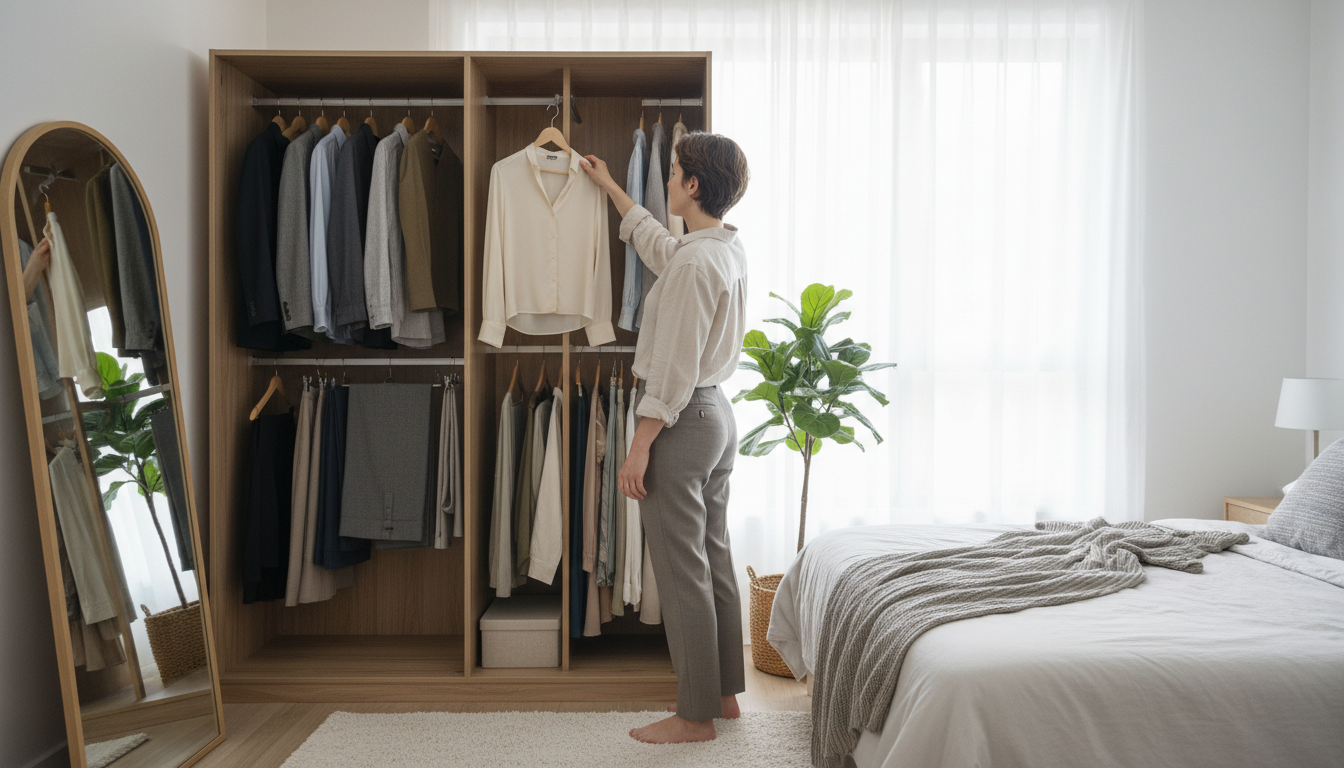

fashion habits for simple life is something I started after staring at a packed closet and still feeling stuck. I kept a small set of favorites and found I could dress faster and feel calmer every day.
I tried a minimalist approach like Project 333 and limited myself to about 33 items. That cut my dry cleaning and let most pieces be washed at home.
Once I cleared out extra things, mornings became less stressful. I saved time, spent less, and got more joy from the clothes I kept.
This is about tiny shifts you can use on busy days. You don’t need special skills—just small, repeatable moves that match your real style and routine.
Key Takeaways
- Pick a small, trusted set of pieces you love and wear them often.
- Fewer items means fewer choices and faster mornings.
- Choose washable fabrics to reduce dry cleaning and save time.
- Try one change this week and add more when you’re ready.
- A lighter wardrobe can bring more calm and daily joy.
Start your day strong: get dressed first to set the tone
Putting on real clothes first thing has quietly become my most reliable morning win. It takes one choice and gives the rest of the day momentum.
The compound effect of a 20-minute get-ready routine
A focused 20-minute routine boosts mood and focus. Wash your face, do quick hair, add a simple top, non-athleisure pants, and shoes. This small habit stacks daily wins into bigger results over weeks.
Try a 7-day “get dressed” challenge and note the changes
Try this challenge: get dressed every morning for seven days and jot a note each night about your mood and productivity. Many women report better relationships and more “yes” moments when they feel ready to go.
- Lay out tomorrow’s outfit the night before to save time.
- Set a 20-minute timer and keep the routine tight.
- Track small wins and one clear change you notice each night.
- After a week, review your notes and keep the lessons that matter.
Build a tiny-but-mighty closet with a capsule approach
I built a tiny closet after realizing I grabbed the same handful of pieces every week. Try a short test: limit yourself to 33 items and wear only those for three months. Project 333 began on October 1, 2010, and that rule includes clothes plus accessories like jewelry, sunglasses, and bags.
Follow clear steps you can do this weekend. First, gather everything so you see what you own. Then edit: keep what fits your week—work, errands, nights out.
Hide the rest in a bin. Tuck it away for three months and avoid shopping during the test. Many people find they already wear about 33 favorites.
| Stage | What to do | Quick benefit |
|---|---|---|
| Gather | Pull every item out of closets and drawers | See the real picture of your wardrobe |
| Edit | Choose pieces that fit, feel good, and match your week | Fewer choices each morning |
| Hide | Box extras, skip sales, and wear only the 33 items | Save time and money; gain joy in easy decisions |
After three months, review what you missed. Add only what fills real gaps so your wardrobe works for years. This small test cuts laundry fuss, stops impulse shopping, and shows which things truly bring you joy.
Create outfit formulas you can repeat without thinking
Over time I learned a few repeatable looks that save time and mental energy every day.
Outfit formulas are simple combos you grab fast. Think tee + jeans + sneakers or a midi dress + cardigan + flats. They cut decision fatigue and get you out the door with less fuss.
Pick two or three go-to formulas that match your work day, weekends, and evenings out. Keep the pieces named exactly on your phone so you can rebuild the look without hunting.
Repeat the favorites. The more you wear a combo, the faster you get ready and the more consistent your style feels.

- Layer smart: a blazer or denim jacket turns a basic base into a ready-for-anything outfit.
- Include shoes in the formula — white sneakers, simple flats, or ankle boots remove guessing.
- Swap a seasonal layer when weather changes but keep the base the same.
- If you’re stuck, snap a mirror photo of any look you love; it becomes a quick personal lookbook.
Choose a color palette so everything mixes and matches
A defined palette turned my chaotic closet into a calm, easy-to-use space.
Pick two core neutrals and two signature colors you enjoy wearing. I use navy and gray as bases, then add a warm rust and soft teal as picks that feel like me.
Pick your core neutrals and two signature colors
Keep most pieces in the neutral pair. That makes tops and bottoms pair without thinking. Your signature colors should be small in number and repeated across tops, scarves, or a bag.
Use seasonal accents without cluttering your style
Add seasonal pops like a scarf or sweater. These accents refresh looks across the year without adding lots of extra items.
- Shop your closet first to spot repeat shades you already reach for.
- Edit pieces that don’t fit your palette; it makes choices easier each morning.
| Palette Step | Action | Benefit |
|---|---|---|
| Choose neutrals | Pick two base colors (e.g., black & tan) | Lots of easy combos, less decision fatigue |
| Add signatures | Select two colors you love to wear | Personal touch without clutter |
| Seasonal accents | Use small pieces to refresh outfits | New looks through the year with few extra items |
This way, your closet and dresser space feel calmer. You’ll find getting dressed is a quicker, more confident way to start the day.
Simplify laundry and care so clothes last and routines shrink
I stopped guessing how to wash things and started a short plan that actually stuck. That choice cut trips to the cleaner and kept my favorites in steady rotation.
Make a quick-care matrix: wash, line-dry, and skip the dry cleaner
Create a little chart that labels every item as machine-wash, delicate bag, or line-dry. You save time when laundry day comes because you no longer waste minutes guessing.
- Pick fabrics that handle washing at home: cotton, modal, and certain poly blends. These items stay wearable with less fuss.
- Line-dry knits and delicate tops on a rack to keep shapes and avoid extra trips to the cleaner.
- Wash in cold, zip and button items first, and use a mesh bag for bras and thin tees to stop snags.
- Keep a small stain kit by the washer—a gentle remover pen and soft brush—to treat spots fast and save pieces you love.
- Steam quick touch-ups instead of ironing. A few passes freshen things fast and cut prep time.
- Build a weekly wash window—same day, same hour—so laundry is predictable and never stacks up.
| Action | Why it helps | Quick tip |
|---|---|---|
| Create care labels | Fewer guesses on laundry day | Use a simple sticker system on hangers |
| Line-dry knits | Protects shape and extends wear | Use a compact drying rack by the washer |
| Skip dry cleaning | Save money and time | Only send truly delicate pieces out |
Shop with intention: rules that save time, space, and money
I use a simple buying rule now: aim to wear an item as many times as its price in dollars. That cost-per-wear idea keeps shopping focused on pieces that actually get used.

Use cost-per-wear to guide choices
If a pair of shoes costs $100, plan to wear them at least 100 times. This rule helps you choose quality and fit over impulse thrills.
Keep a brand-and-size note on your phone
Make a short list with your sizes by brand, favorite fits, and inseams. You’ll order faster and return less, which saves time and money.
Avoid sales triggers while testing new approaches
When you try a capsule test, mute sale emails and unfollow tempting accounts for a month. This reduces impulse buys so you learn what you truly need.
- Shop your list, not the rack: buy only the gaps you actually noticed.
- Use a 72-hour waiting list for uncertain buys; if it still matters, get it.
- Prefer washable fabrics that fit your weekly routine so pieces earn wears fast.
| Rule | Why it helps | Quick action |
|---|---|---|
| Cost-per-wear | Stretch value of each purchase | Estimate expected wears before buying |
| Phone size note | Fewer returns, faster orders | Save brands, sizes, and fit notes |
| Mute sales | Protect your test and budget | Unsubscribe or archive sale emails |
These steps cut clutter and keep shopping intentional. Try them and you’ll protect your money while making better choices that fit daily life.
Design your closet like a flow system, not a storage unit
I rebuilt my closet into a working system so clothes move, not pile up. Treat the closet as a small production line: each piece has one path from wear back to its home. That reduces clutter and last-minute searches.
Single-touch process: wear, stage, launder, return
Use one staging spot near the washer. After you wear something, hang or place it there. When laundry day comes, wash and return items to their place the same hour.
This single-touch loop stops piles from spreading across the room. It saves you time and keeps your wardrobe working.
Keep a tight accessories drawer to support fast outfits
- Keep one small drawer for everyday jewelry, a watch, and sunglasses. Fewer things means faster choices.
- Two baskets in the same area—laundry and return—keep movement steady and predictable.
- Store most-worn pieces at eye level and add hooks for “wear again” items so chairs stay clear.
- Group tops, pants, and layers together so your eye finds outfits fast.
Make simplicity your rule of life at home and in your wardrobe
A Sunday reset quietly became my ritual when I wanted fewer decisions and more calm at the start of the week. It helps me slow down and focus on what matters, both at home and in my closet.
Do a Sunday reset for outfits, shoes, and weekly choices
Spend 20–40 minutes on Sunday. Scan the week’s calendar and pick two or three outfits that fit the days ahead. Lay them out so mornings move fast.
Prep shoes and bag by the door. Return stray pieces to their place. Put one doubtful item in a donate bag to keep the room tidy.
- Keep the rule: remove what adds friction and keep what brings relief and happiness.
- Let your wardrobe lead. When fewer choices feel good, apply that mindset around the house—bathroom counters, entry tables, and one kitchen drawer.
- Take five minutes each Sunday to review: what worked, what didn’t, and one tiny change for next week.
- Plan a yearly pause around the season you tend to overbuy. A single annual check keeps spending gentle and the closet calm all year.
If you want more quick tips on building easy daily routines, check this useful guide: easy outfit tips.
Conclusion
I found that one small morning choice ripples through the whole day. Put on an outfit first and you free minutes, calm your mind, and set a steady tone for the hours ahead.
Let a tiny wardrobe of favorite items carry the load. Use two or three outfit formulas, pick washable clothes, and keep a short list on your phone so choices arrive fast and without fuss.
Keep the closet flowing: wear, stage, wash, and return. That reduces stalled laundry and clears space in your room and home so the wardrobe earns its place.
Try a 7-day get-dressed challenge, pick a core palette, and do a Sunday reset. If you want a quick guide to help get started, check this dress simple guide.
Repeat these small steps and you’ll notice more joy, more time, and fewer decisions each year.